Papyrus Sallier 2
- Gallery: Room 1
- Culture: 19th Dynasty
- Date: 1200BC-1194BC (circa)
- Object type: papyrus
- Materials: papyrus
- Museum number: EA10182,2
- Museum: The British Museum
- Collection record: British Museum website
- Image © The Trustees of the British Museum, shared under a CC BY-NC-SA 4.0 licence.
Listen to the free audio guide
About this object
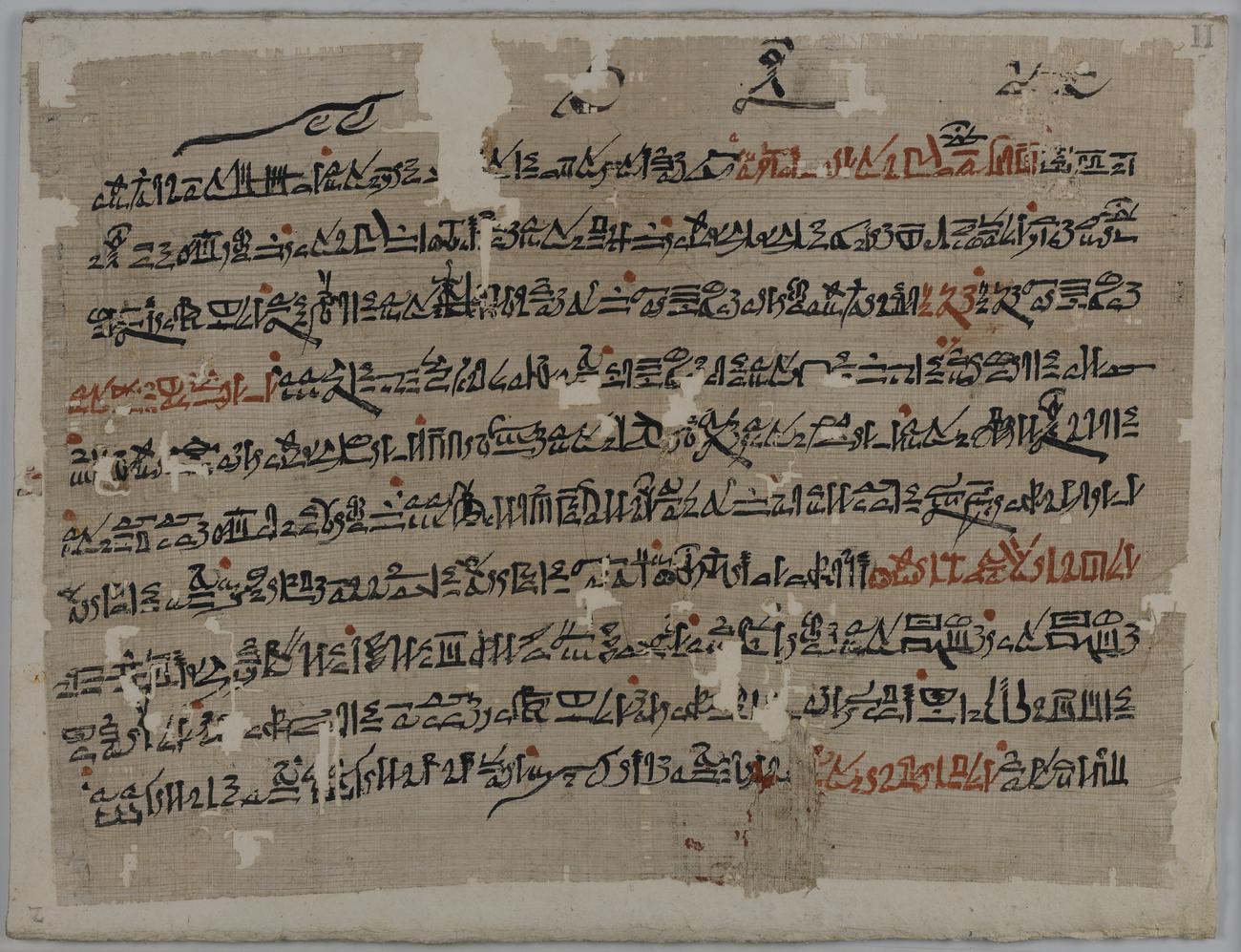
Before you is "Papyrus Sallier 2," a 19th Dynasty artifact that reveals a literary gem from ancient Egypt. This papyrus preserves a copy of "The Teaching of King Amenemhat," a philosophical text that was written as early as 1955 BC but continued to be copied for centuries afterward.
The text here begins mid-narrative, with the dead king warning his son about betrayal. The hand of a scribe is evident in the neat rows of hieratic script, and you’ll notice corrections in the margins—perhaps from a teacher supervising the student scribe.
Look closely at the red ink passages; they serve as headings, a common feature in ancient Egyptian literary texts. The small red dots above lines, called verse points, help break the text into rhythmic sections.
This manuscript was dedicated to a teacher named Qageb and reflects the enduring power of a king’s words over 700 years after they were first written.
See it in person
Papyrus Sallier 2 is on display in Room 1 at the British Museum on Great Russell Street, Bloomsbury, London — free to enter. Choose British Museum on audioguide.london and take a photo of it to hear this free audio guide in six languages — no app download needed.
New, in beta. British Museum support has just launched and is still improving: over 1,000 objects so far, with more added all the time.