Oxus Treasure: jug
- Gallery: Room 52
- Culture: Achaemenid
- Date: 5thC BC-4thC BC
- Object type: jug
- Materials: gold
- Museum number: 123918
- Museum: The British Museum
- Collection record: British Museum website
- Image © The Trustees of the British Museum, shared under a CC BY-NC-SA 4.0 licence.
Listen to the free audio guide
About this object
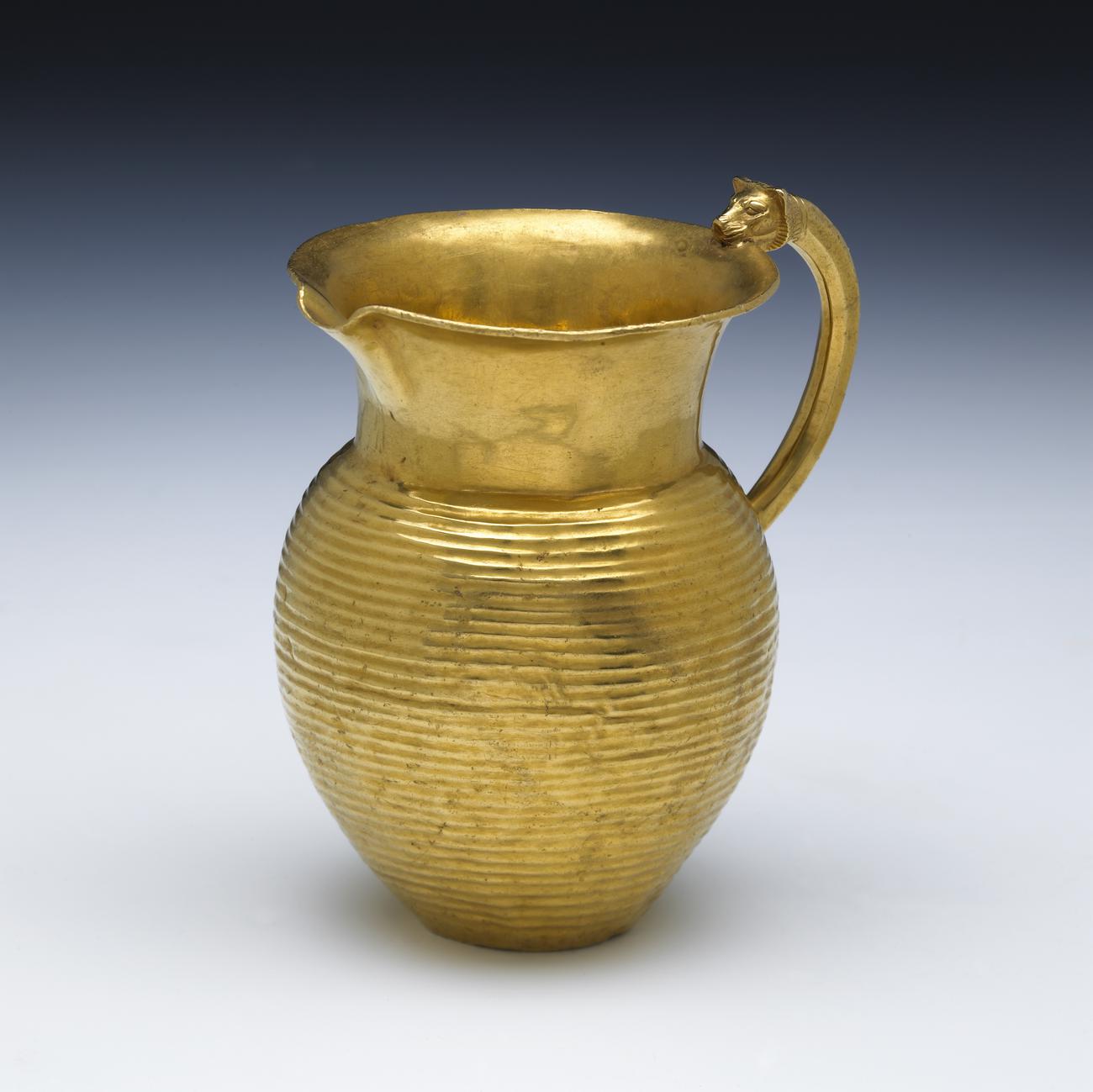
This is a magnificent gold jug from the Oxus Treasure, created in ancient Achaemenid Persia, around the fifth to fourth century BCE. What catches the eye is its elegant, oviform shape with horizontal fluting that narrows toward the base. Its handle is octagonal and crowned by a striking lion’s head, as if the creature is biting into the rim.
The jug was made using the lost wax method, a highly advanced casting technique that reveals extraordinary craftsmanship. Notice the central point on its underside—this marks where it was attached to a lathe spindle during shaping. The inside still shows tool marks from the cutting process, while the outside is carefully polished.
This piece was part of a larger hoard discovered at Takht-i Kuwad—an archaeological site that continues to reveal the artistic sophistication of ancient Persia. The design reflects a blend of form and function, with a bold lion and intricate floral details capturing both power and beauty.
See it in person
Oxus Treasure: jug is on display in Room 52 at the British Museum on Great Russell Street, Bloomsbury, London — free to enter. Choose British Museum on audioguide.london and take a photo of it to hear this free audio guide in six languages — no app download needed.
New, in beta. British Museum support has just launched and is still improving: over 1,000 objects so far, with more added all the time.