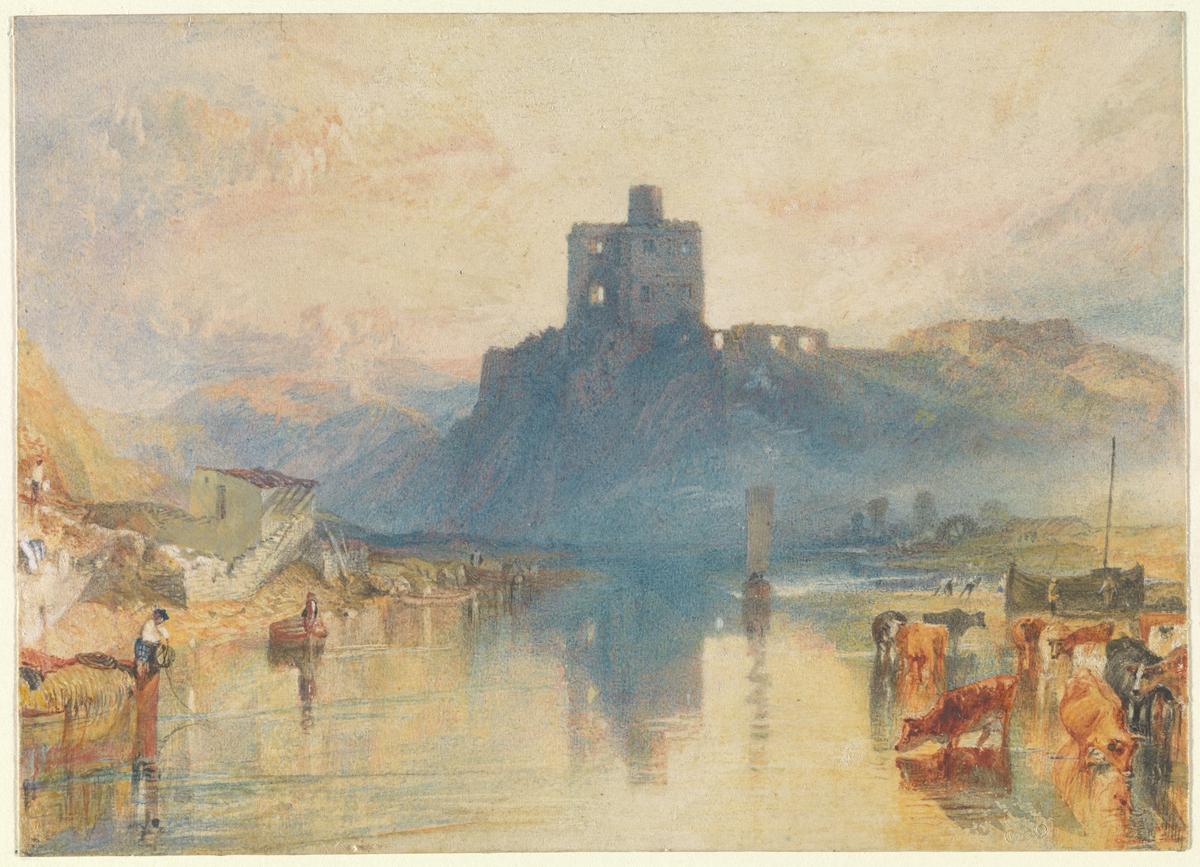
Norham Castle, on the River Tweed
- Artist: Joseph Mallord William Turner
- Date: c.1822–3
- Medium: Watercolour on paper
- Dimensions: support: 156 x 216 mm
- Museum: Tate Britain
- Collection record: Tate Britain website
Listen to the free audio guide
About this artwork
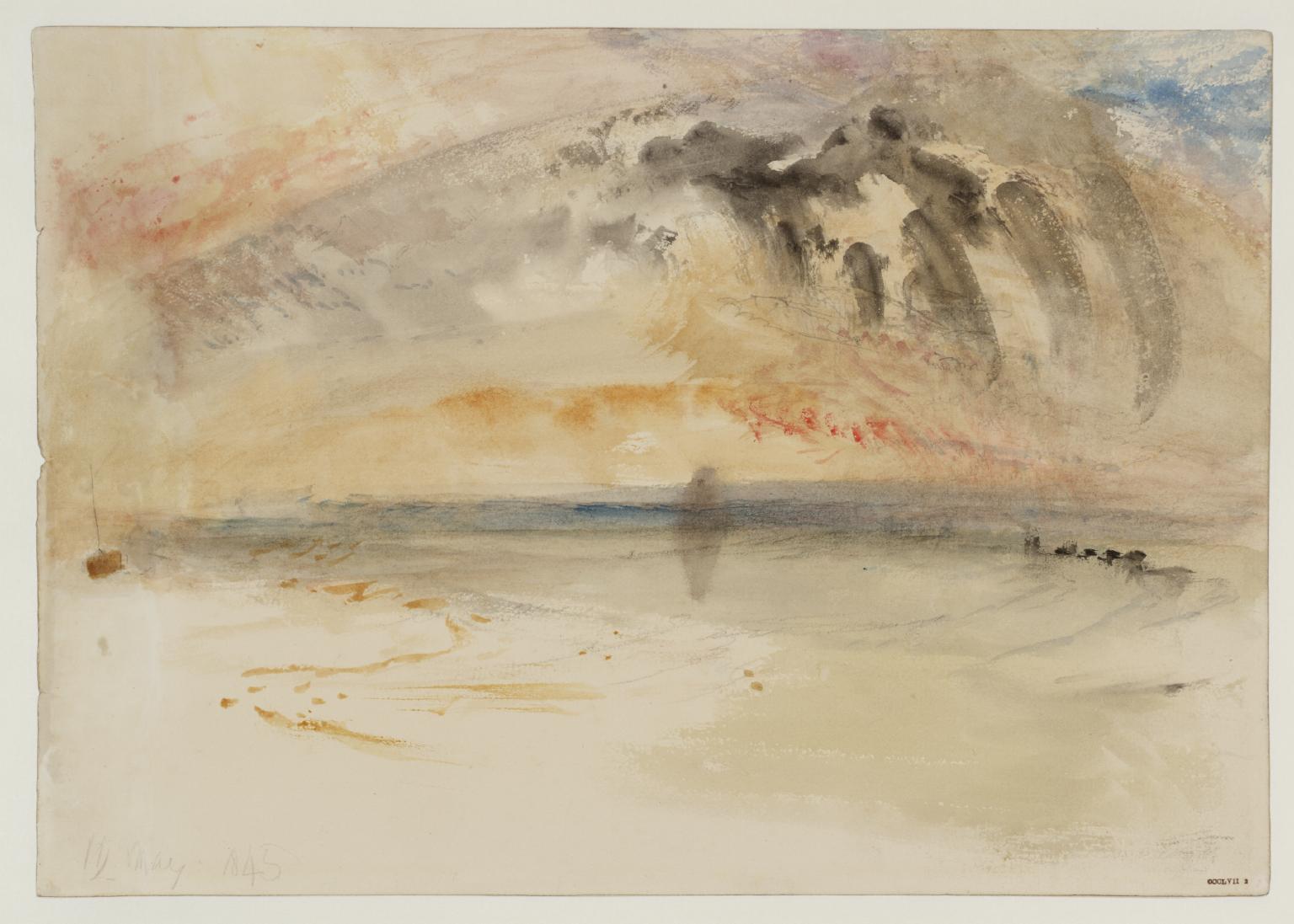
This is the “Norham Castle, on the River Tweed” by Joseph Mallord William Turner. Painted in the early 1820s as part of his group of ‘Rivers of England’ watercolours, it’s a tiny 156 × 216 mm study on paper that captures the dramatic drama of dawn over the north‑eastern English landscape.
Turner revisited the castle in 1831 and famously remarked, “I made a drawing or painting of Norham several years since… I have had as much to do as my hands could execute.” That sense of relentless repetition is clear here: the dark, weathered stone of the fortress is framed by the soft, rising sun, a motif Turner loved to repeat. He even incorporated a similar view into his Liber Studiorum, underscoring the importance of this scene to his oeuvre.
The watercolour’s light washes and subtle gradations give a sense of early morning mist along the River Tweed, while a small barge and a passing figure add quiet human detail. Though modest in scale, the piece invites viewers to linger over the interplay of light and shadow, and to appreciate how Turner’s mastery of atmosphere turns a simple landscape into a poetic moment.
See it in person
Norham Castle, on the River Tweed is in the collection of Tate Britain on Millbank, London — free to enter. Point your phone at any artwork there and audioguide.london plays a free audio guide in six languages — no app download needed.