Mrs Hartley as a Nymph with a Young Bacchus
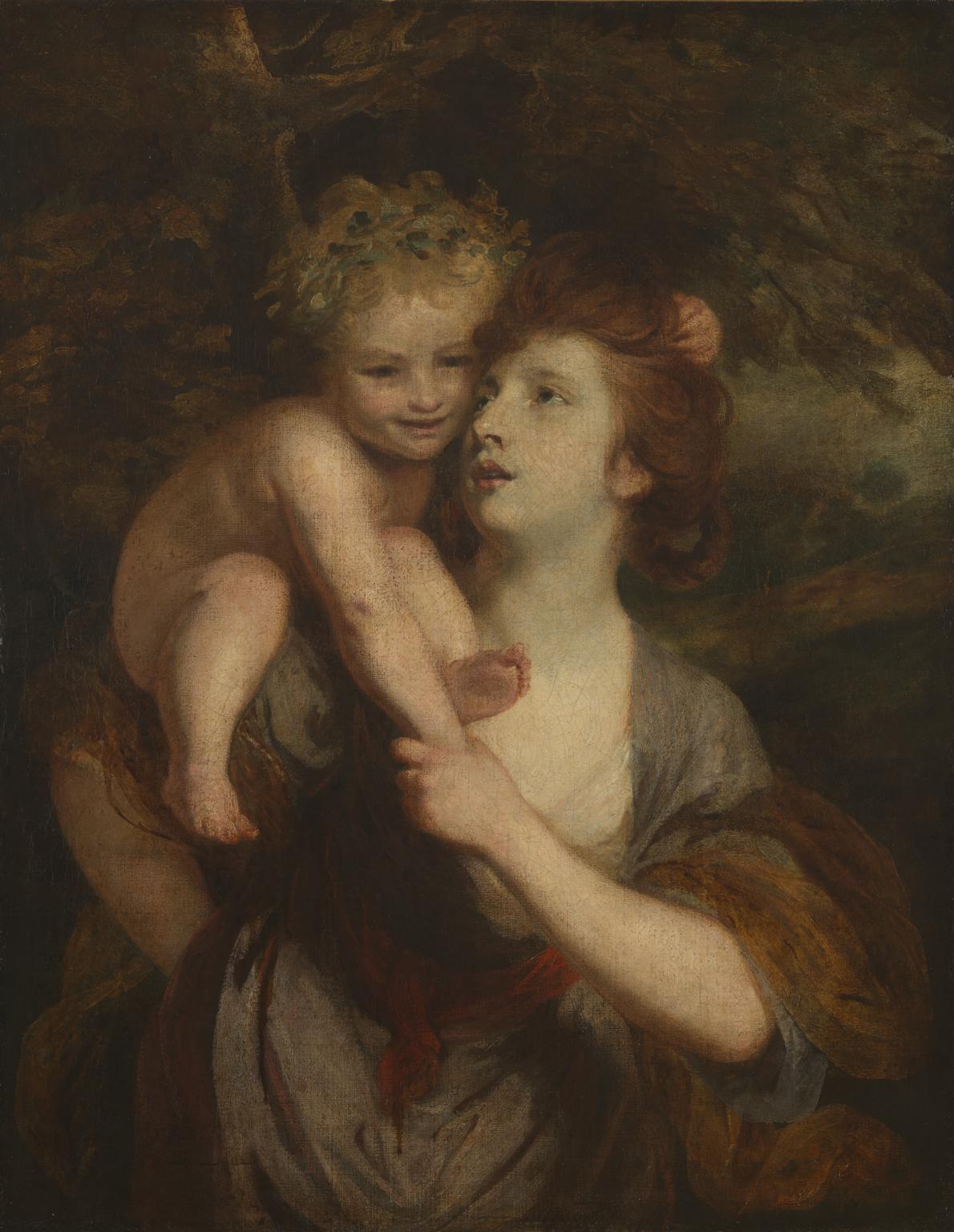
- Artist: Sir Joshua Reynolds
- Date: exhibited 1773
- Medium: Oil paint on canvas
- Dimensions: support: 889 x 686 mm
- Museum: Tate Britain
- Collection record: Tate Britain website
Listen to the free audio guide
About this artwork
This is “Mrs Hartley as a Nymph with a Young Bacchus” by Sir Joshua Reynolds, painted in 1773. The work turns the celebrated London actress Elizabeth Hartley into a mythological figure, a nymph cradling a child‑Bacchus, the ancient god of wine and revelry. Reynolds didn’t present it as a straightforward portrait; instead, he called it “A Nymph with Young Bacchus” and framed it as a fancy picture—a genre that blends the real with the imagined, especially for women and children.
The canvas is oil on canvas, typical of Reynolds’s luminous style. He uses rich, warm tones and a soft, almost ethereal light that lifts the figures out of the painted landscape. Notice how the young Bacchus’s playful, almost mischievous gaze contrasts with the serene grace of the nymph. The background hints at a wooded setting, adding a pastoral calm that complements the scene’s festive subject.
Reynolds showcased this work at the Royal Academy in 1773, a time when the young actress was at the peak of her fame. The painting captures that moment of celebrity, wrapped in a mythic narrative that speaks to the era’s fascination with romanticized stories and theatricality. It’s a fine example of how 18th‑century artists used allegory to celebrate contemporary figures in a grand, almost epic fashion.
See it in person
Mrs Hartley as a Nymph with a Young Bacchus is in the collection of Tate Britain on Millbank, London — free to enter. Point your phone at any artwork there and audioguide.london plays a free audio guide in six languages — no app download needed.