Memorial poles
- Audio guide stop: 192
- Gallery: Great Court
- Audio guide: one commentary for a group of objects shown together
- Museum: The British Museum
- Image © The Trustees of the British Museum, shared under a CC BY-NC-SA 4.0 licence.
Listen to the free audio guide
About these objects
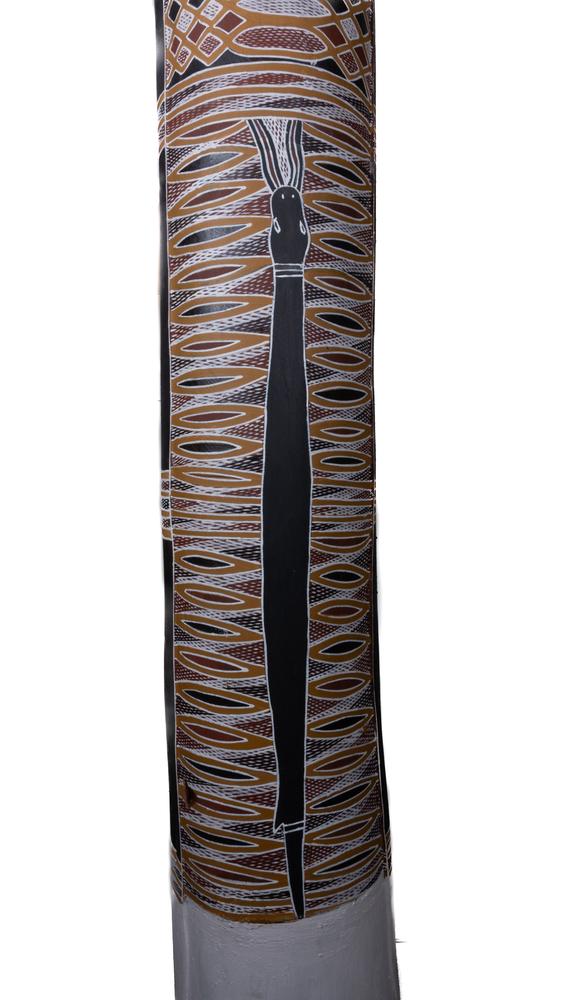
These are memorial poles from the Yirrkala region of northern Australia. Known as larrakitj, these poles traditionally serve as coffins or important ceremonial objects. They are carved from hollowed logs and painted with intricate designs using natural pigments like ochre. Made in 2002 by artists from the Dhalwangu and Yirritja clans, these two poles reflect both traditional practices and contemporary themes of cultural identity.
The first pole, titled “Barama/Captain Cook,” represents an ancestor named Barama who brought sacred objects to the land. The design includes figures, a staff, and flowing patterns. It is compared to Captain Cook's arrival — a moment when foreign law was imposed on the land — and invites reflection on how each figure impacted the region.
Look closely at the second, titled “Djapu Larrakitj.” This one reflects the sacred designs of the Djapu clan, incorporating symbols of water, fish traps, and sharks that hold deep spiritual meaning.
These pieces are striking examples of how art, memory, and cultural sovereignty are intertwined.
See it in person
Memorial poles is on display in Great Court at the British Museum on Great Russell Street, Bloomsbury, London — free to enter. Choose British Museum on audioguide.london and type its audio guide stop number, 192, from the gallery label, or take a photo of it, to hear this free audio guide in six languages — no app download needed.
New, in beta. British Museum support has just launched and is still improving: over 1,000 objects so far, with more added all the time.