Mary Wollstonecraft (Mrs William Godwin)
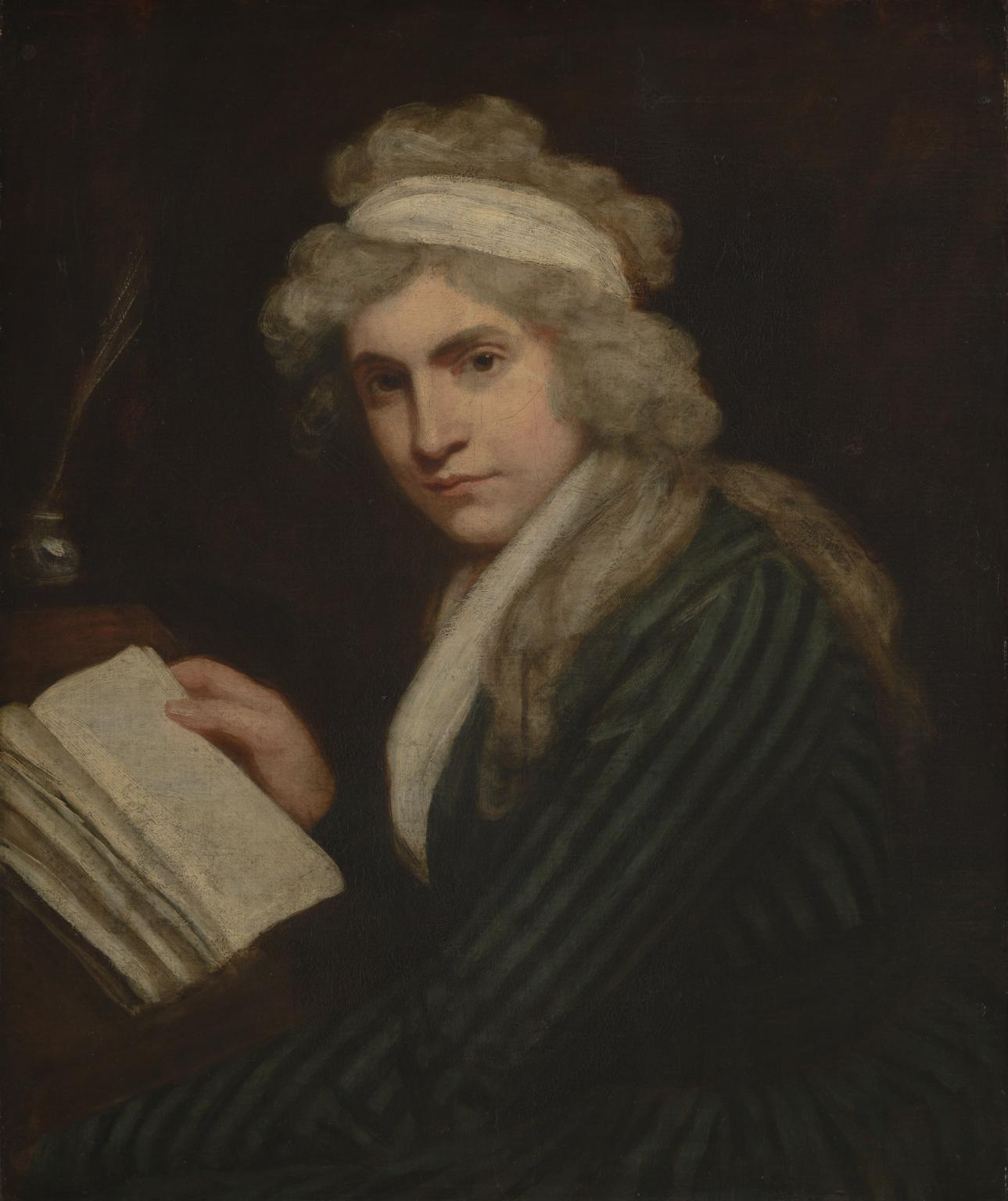
- Artist: John Opie
- Date: c.1790–1
- Medium: Oil paint on canvas
- Dimensions: support: 759 x 638 mm
- Museum: Tate Britain
- Collection record: Tate Britain website
Listen to the free audio guide
About this artwork
This is the “Mary Wollstonecraft (Mrs William Godwin)” by John Opie, painted around 1790‑1791. Opie captures her in a strikingly masculine pose, a style usually reserved for male sitters of the time, which underlines Wollstonecraft’s challenge to gender norms. She looks straight at us, eyes briefly drifting off as if caught in the middle of a study—an everyday moment rendered dramatic by Opie’s skill.
Wollstonecraft was a pioneering feminist, author of *A Vindication of the Rights of Woman* (1792). In this portrait we can see the ink bottle and quill that symbolize her literary labor, as well as the desk that anchors her to the world of ideas. Her gaze is bold, reflecting her conviction that women should receive equal education and rights. The painting was made just as she was gaining prominence, and it foreshadows her later support for the French Revolution, which she saw as a chance for liberty and equality.
The work is an oil on canvas, roughly 760 mm by 640 mm, and it offers a rare glimpse of a woman who defied the expectations of her era while being captured with a subtle dignity that only a portrait can convey.
See it in person
Mary Wollstonecraft (Mrs William Godwin) is in the collection of Tate Britain on Millbank, London — free to enter. Point your phone at any artwork there and audioguide.london plays a free audio guide in six languages — no app download needed.