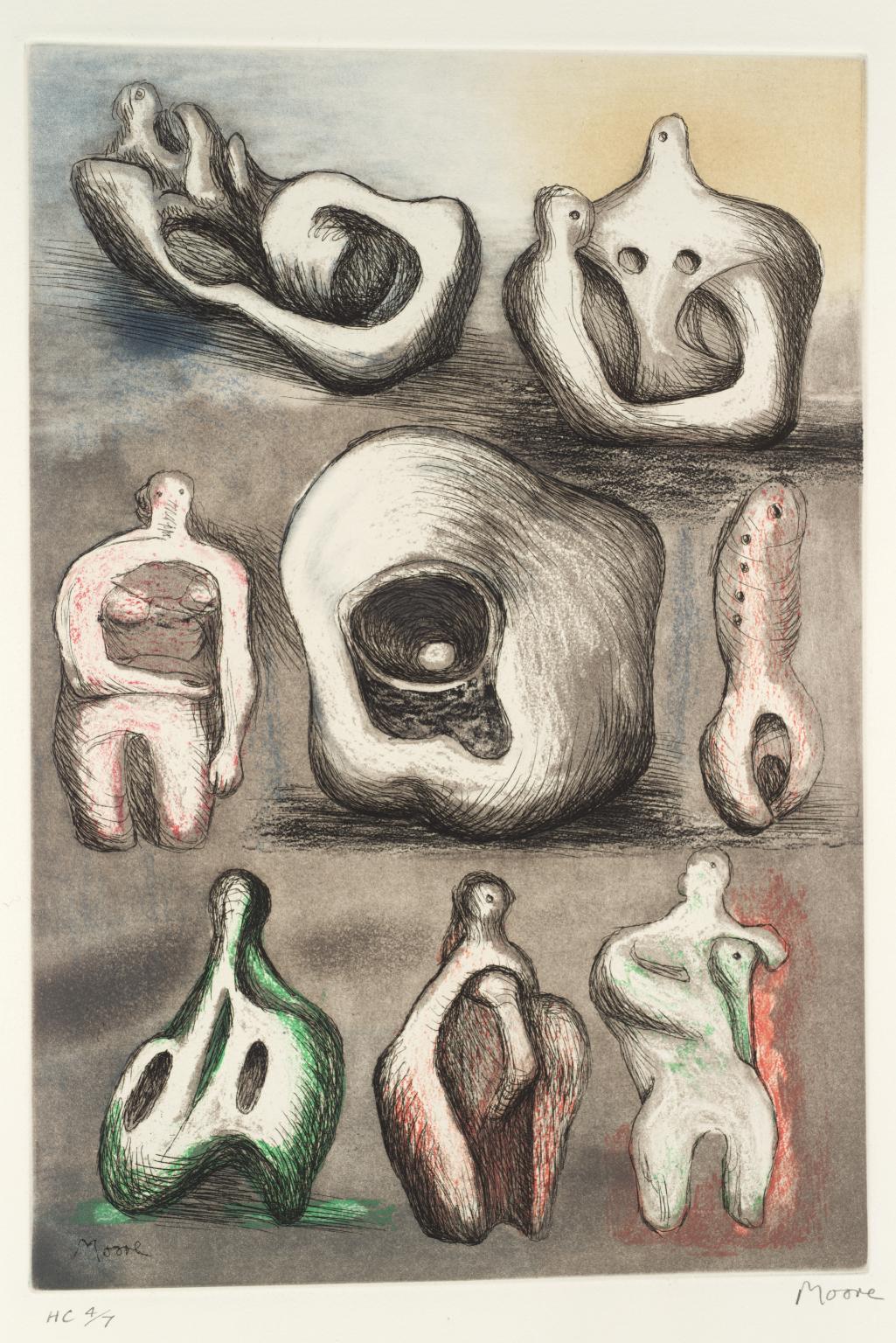
Maquette for Madonna and Child
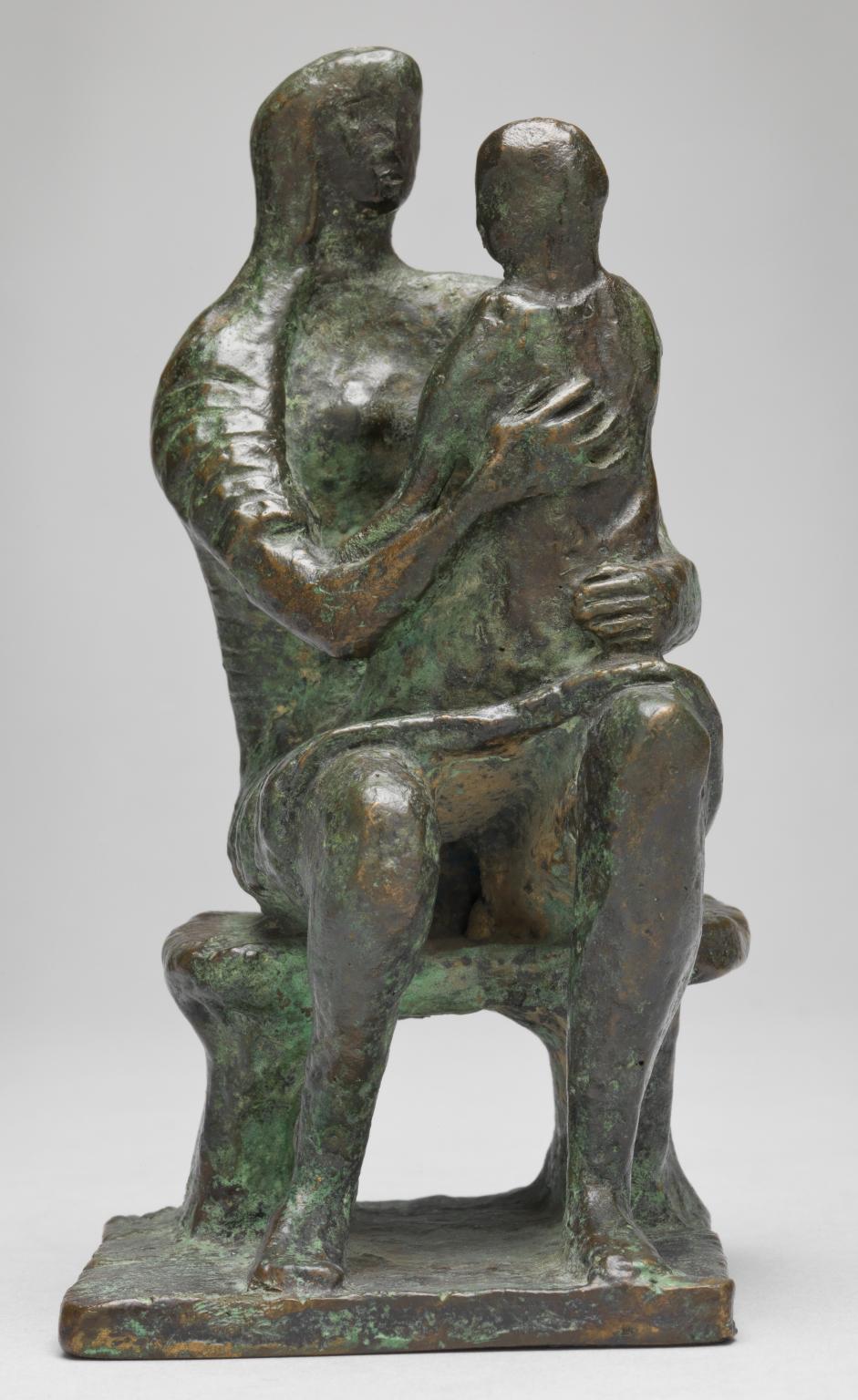
- Artist: Henry Moore OM, CH
- Date: 1943, cast 1944–5
- Medium: Bronze
- Dimensions: object: 140 x 76 x 76 mm
- Museum: Tate Britain
- Collection record: Tate Britain website
Listen to the free audio guide
About this artwork
This is the “Maquette for Madonna and Child” by Henry Moore. It’s a small bronze cast—140 mm long, 76 mm high and deep—made in 1944–45 from terracotta models he built for a commission by St Matthew's vicar in Northampton. Moore had been fascinated by mother‑and‑child themes since the early 1920s, but he was unsure how to translate that into a Christian context, so this work sits between his secular language and Renaissance religious tradition.
The figures sit in a relaxed pose: the Madonna holds the child, who rests against her thigh. The drapery of their robes is rendered with careful detail, while the figures’ silhouettes remain simple yet expressive—typical of Moore’s early style.
Moore produced the piece for a 1943 commission, and it entered the Tate collection in 1945. It is now on display in Room 22 (Henry Moore) at Tate Britain, where visitors can see how his hand‑sized bronze echoes the grandeur of larger works like his later “Madonna” series.
The cast combines naturalism with an abstracted surface texture that hints at both modern sculpture and familiar Renaissance iconography, showing Moore’s attempt to bridge past and present in a single small piece.
See it in person
Maquette for Madonna and Child is in the collection of Tate Britain on Millbank, London — free to enter. Point your phone at any artwork there and audioguide.london plays a free audio guide in six languages — no app download needed.