Late Medieval altar-cross
- Gallery: Room 40
- Culture: Late Medieval
- Made in: France (?); Belgium (?)
- Date: 1160-1170 (circa)
- Object type: altar-cross, reliquary
- Materials: copper alloy; enamel; gold; rock crystal; lapis lazuli; garnet; amethyst
- Museum number: 1856,0718.1
- Museum: The British Museum
- Collection record: British Museum website
- Image © The Trustees of the British Museum, shared under a CC BY-NC-SA 4.0 licence.
Listen to the free audio guide
About this object
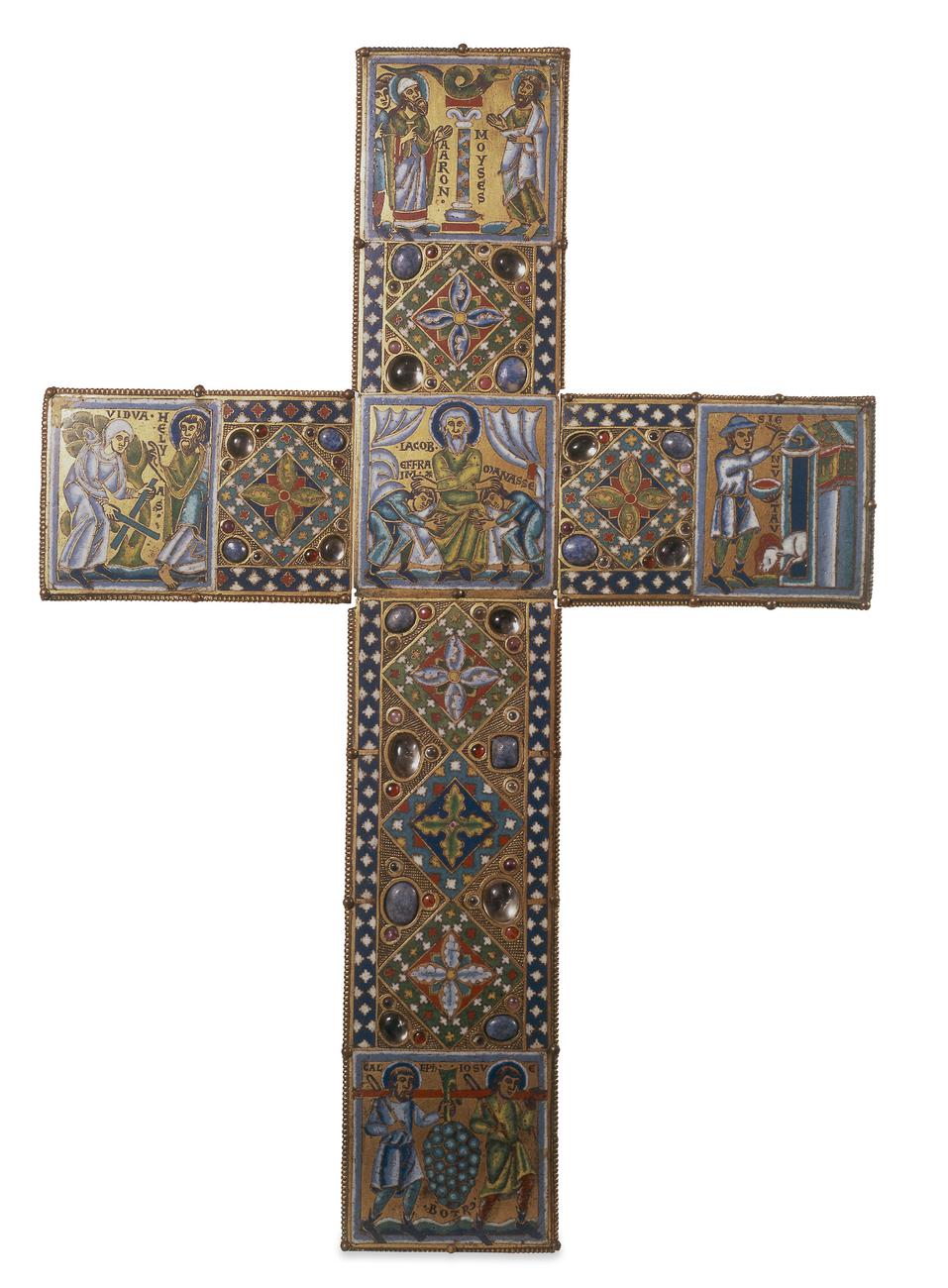
Before you stands a beautifully crafted Late Medieval altar-cross, likely made in France or Belgium around the years 1160 to 1170. Created in the Mosan artistic style, it combines skillful craftsmanship with religious symbolism. The cross is made up of four hammered copper plaques fitted together to form a frame filled with vibrant enamels, gilding, and precious gemstones.
Each plaque features a detailed scene from the Old Testament. At the center, you'll see Jacob blessing the sons of Joseph, while other scenes surround the plaques, including Moses and Aaron with the Brazen Serpent, Elijah and the Widow of Sarepta, the marking of the Tau during the Passover, and the return of the spies with the grapes.
The borders of each scene are framed in striking pale blue enamel, with intricate patterns of cloisonné quatrefoils and octofoils. Tiny gemstones—like amethyst, garnet, and lapis lazuli—are set in the triangular spaces between the patterns, adding a glimmer to the composition.
This altar-cross once formed the front of a double-sided reliquary cross. Its reverse, now in Berlin, continues the same design, showing related biblical scenes and maintaining the same vivid colors and gemstone arrangement. Together, they reflect a refined medieval aesthetic that balances symmetry and subtle variation.
See it in person
Late Medieval altar-cross is on display in Room 40 at the British Museum on Great Russell Street, Bloomsbury, London — free to enter. Choose British Museum on audioguide.london and take a photo of it to hear this free audio guide in six languages — no app download needed.
New, in beta. British Museum support has just launched and is still improving: over 1,000 objects so far, with more added all the time.