Late Anglo-Saxon seax
- Gallery: Room 41
- Culture: Late Anglo-Saxon
- Date: 10thC
- Object type: seax
- Materials: iron; silver; copper alloy; copper
- Museum number: 1857,0623.1
- Museum: The British Museum
- Collection record: British Museum website
- Image © The Trustees of the British Museum, shared under a CC BY-NC-SA 4.0 licence.
Listen to the free audio guide
About this object
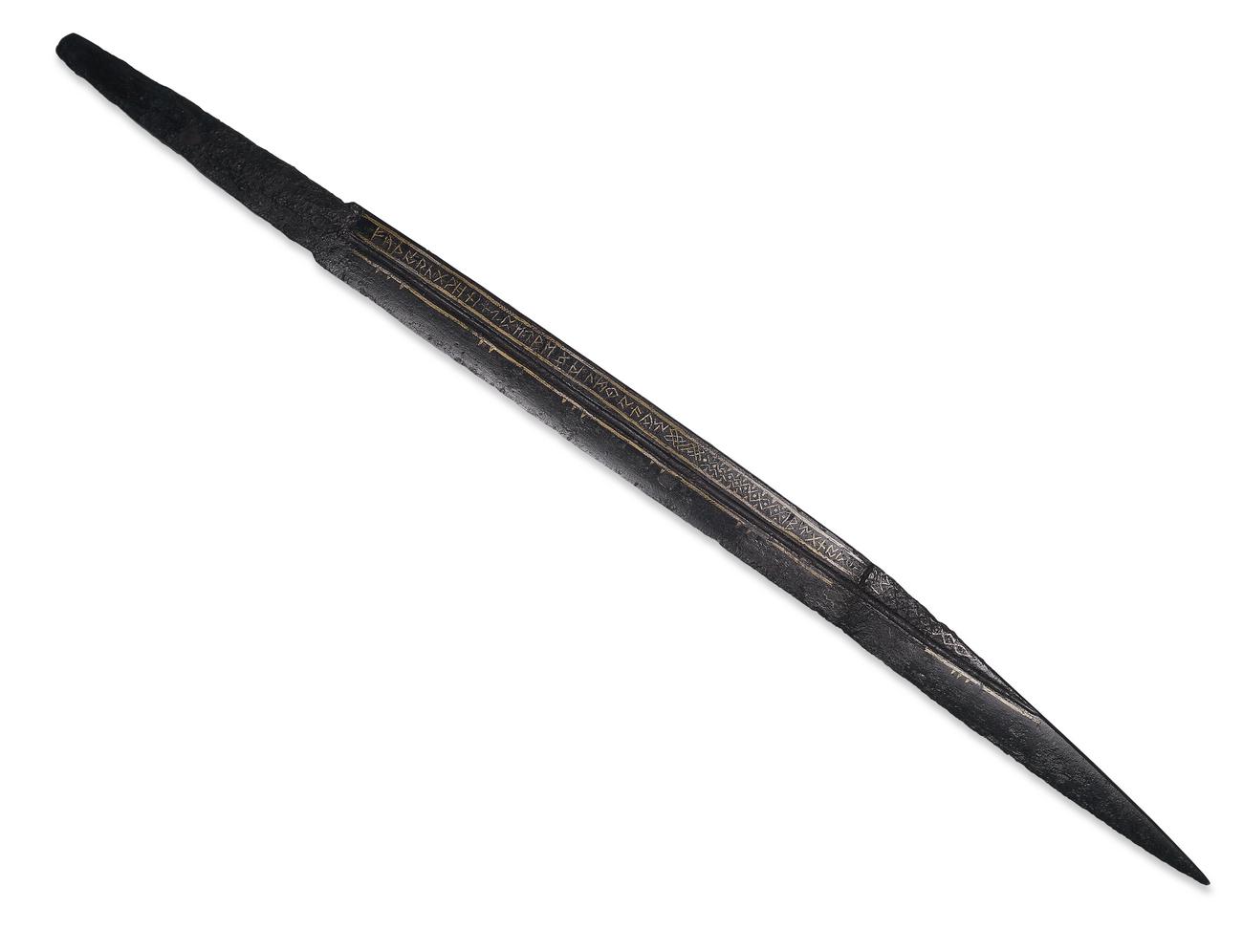
In front of you is a remarkable example of a Late Anglo-Saxon seax, a type of single-edged knife. This seax is crafted from iron, with a straight cutting edge and a back angled toward the tip. The blade is decorated with intricate patterns made by hammering in polychrome wires of silver and copper alloy into the metal.
Look closely at the broad tang—its offset position adds balance to the weapon. Running along both sides of the blade, narrow rectangular panels feature inlaid lines and pendent triangles. One side includes a twenty-eight-letter runic alphabet known as a futhorc and an Old English name, possibly the owner’s or maker’s. These inscriptions are framed by delicate silver and brass designs.
Found in the River Thames at Battersea in the 19th century, this seax was made around the 10th century. Its beauty and craftsmanship highlight the technical skill of Anglo-Saxon blacksmiths, as well as the cultural importance of runes and metalwork in the early medieval period.
See it in person
Late Anglo-Saxon seax is on display in Room 41 at the British Museum on Great Russell Street, Bloomsbury, London — free to enter. Choose British Museum on audioguide.london and take a photo of it to hear this free audio guide in six languages — no app download needed.
New, in beta. British Museum support has just launched and is still improving: over 1,000 objects so far, with more added all the time.