Joseon Dynasty vase
- Gallery: Room 67
- Culture: Joseon Dynasty
- Made in: Korea
- Date: 15thC-16thC
- Object type: vase
- Materials: stoneware
- Museum number: 2000,1130.1
- Museum: The British Museum
- Collection record: British Museum website
- Image © The Trustees of the British Museum, shared under a CC BY-NC-SA 4.0 licence.
Listen to the free audio guide
In the museum now? Point your phone at the next object and hear its guide.
About this object
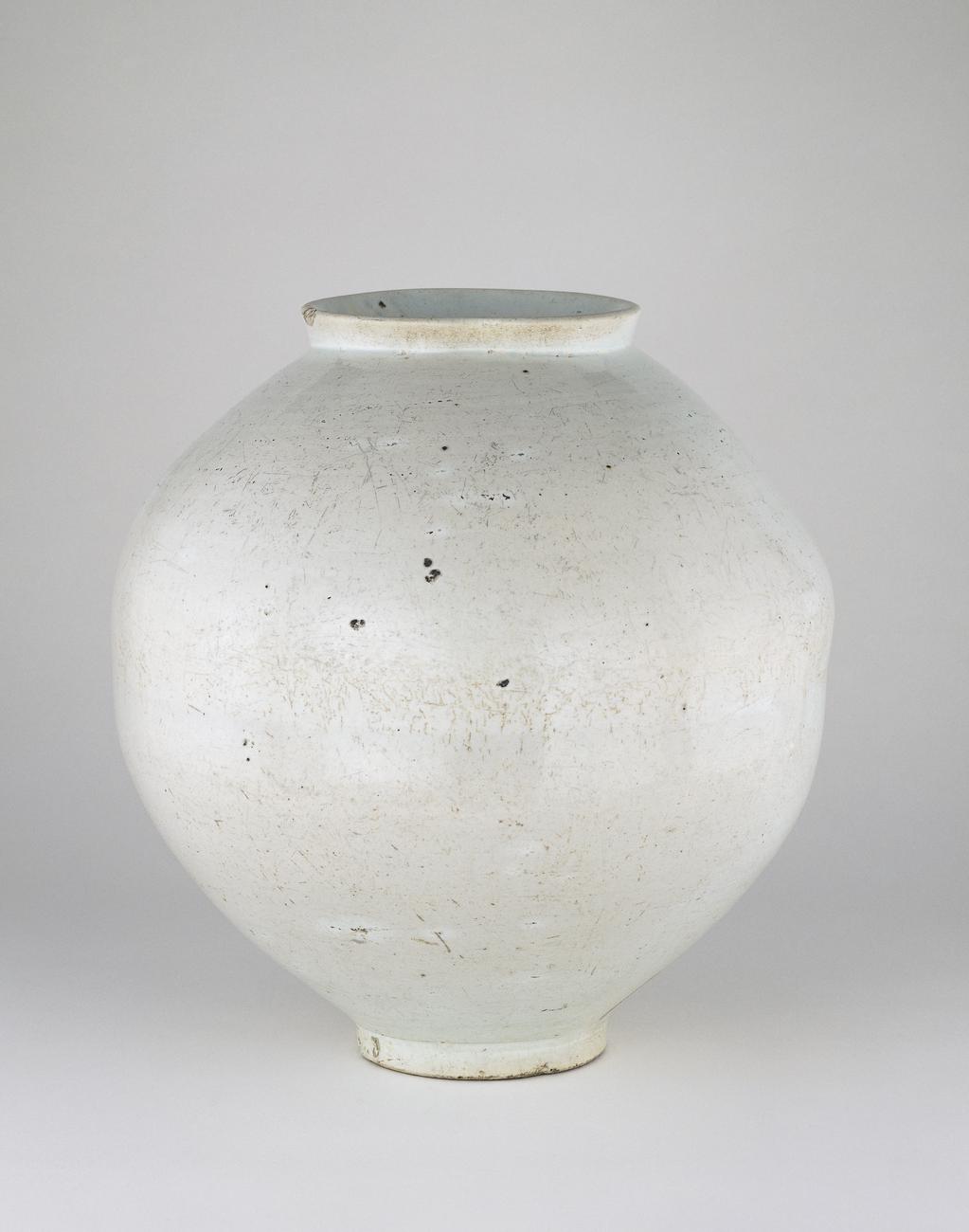
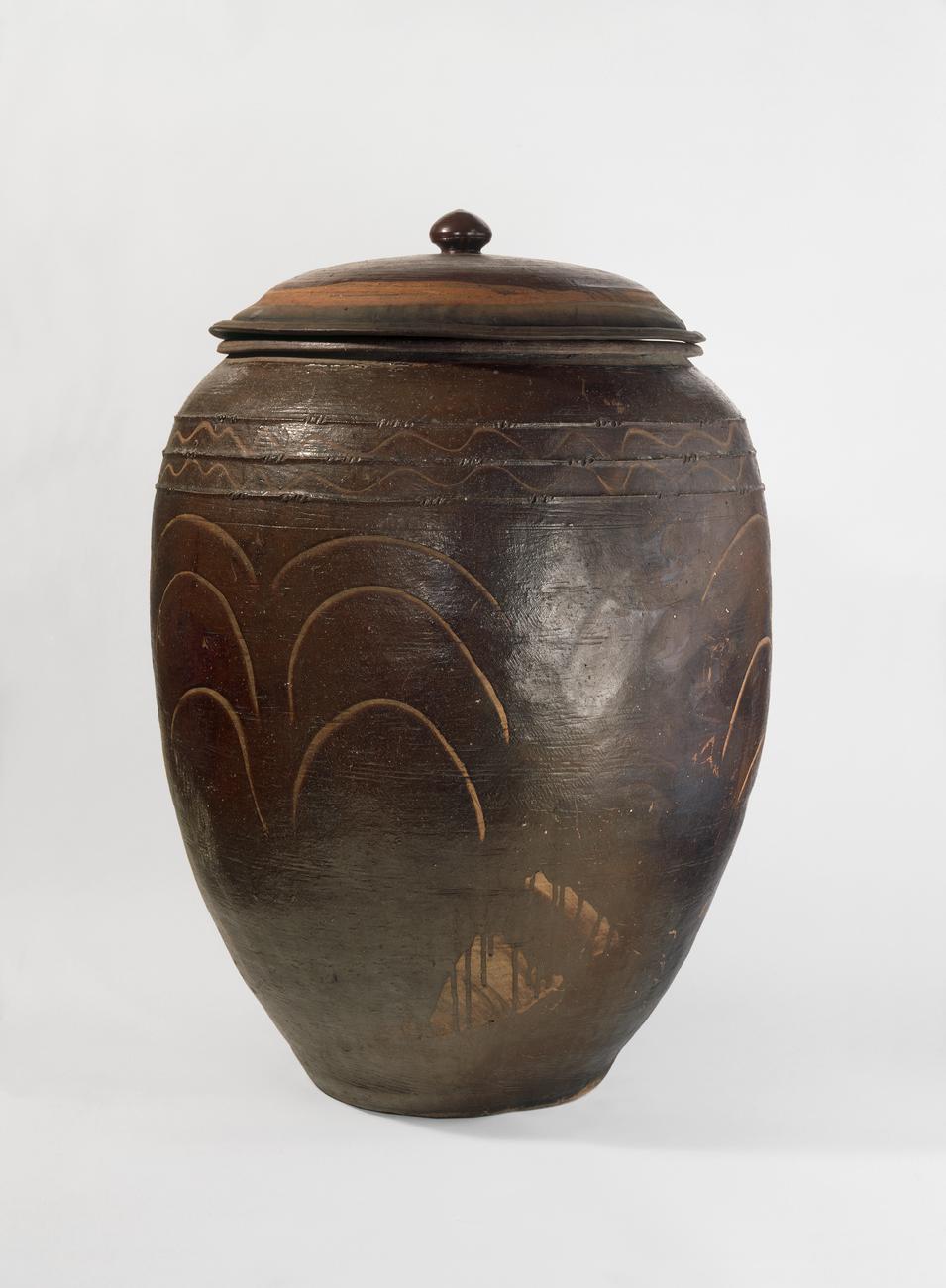
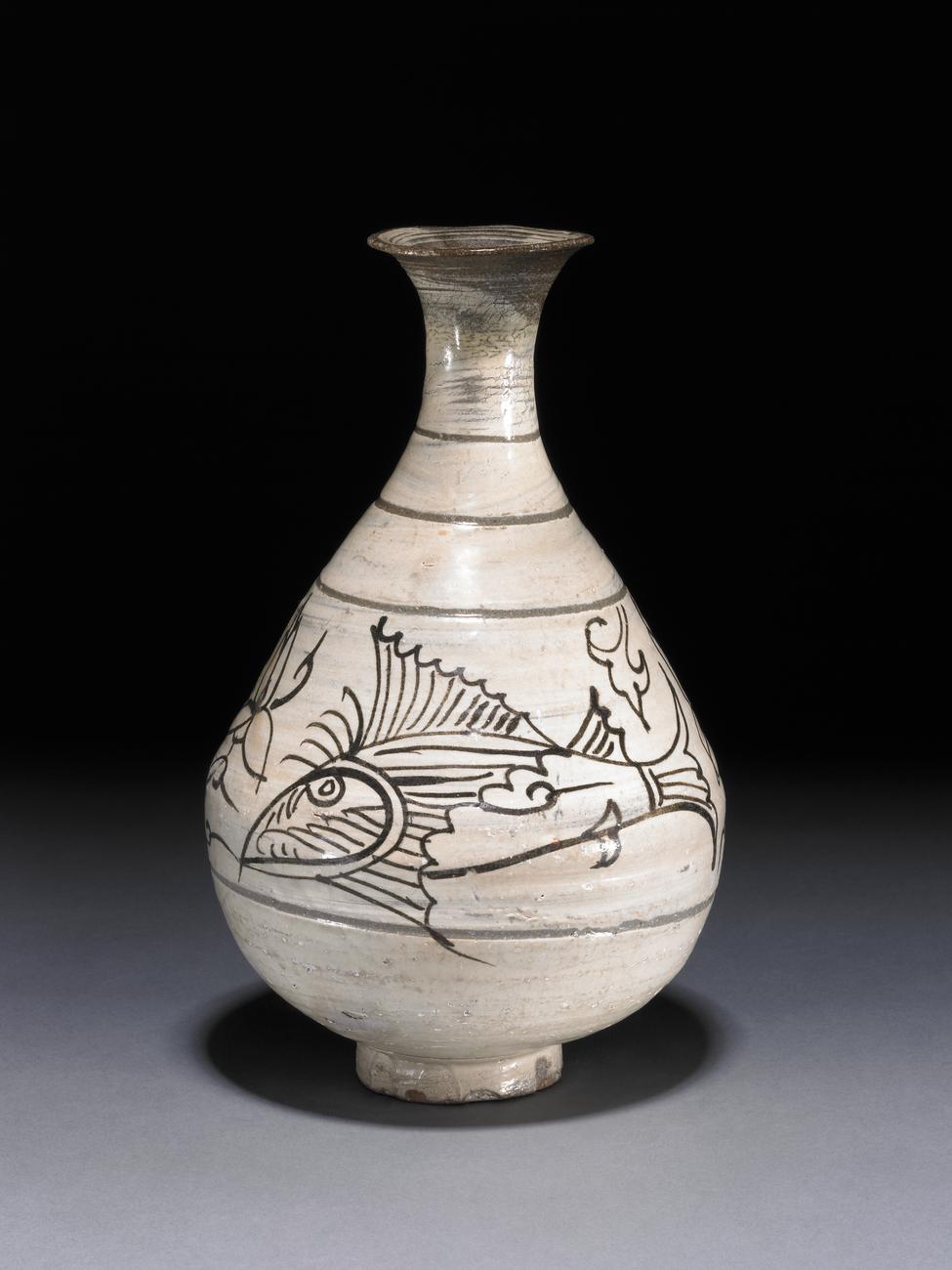
This is a beautiful vase from the Joseon Dynasty in Korea, dating to the 15th to 16th century. Made of stoneware, it features underglaze iron decoration — a technique known as buncheong. This vase has a round body, a slender neck, and a flared mouth. The main decoration includes fish and lotus, painted in dark iron oxide against a white slip base. These painted areas stand out vividly, with free and confident brushstrokes. Five horizontal incised lines divide the neck and body, giving structure to the design. Fish motifs were popular as a symbol of abundance, based on the shared word for "plenty" in the Chinese language. The vase was likely used to hold alcohol. Vessels of this type are sometimes called Gyeryongsan buncheong, referring to the kilns near Gyeongju where they were made.
See it in person
Joseon Dynasty vase is on display in Room 67 at the British Museum on Great Russell Street, Bloomsbury, London — free to enter. Choose British Museum on audioguide.london and take a photo of it to hear this free audio guide in six languages — no app download needed.
New, in beta. British Museum support has just launched and is still improving: over 1,000 objects so far, with more added all the time.