Joseon Dynasty jar
- Gallery: Room 67
- Culture: Joseon Dynasty
- Made in: Korea
- Date: 1875-1925
- Object type: jar
- Materials: onggi
- Museum number: 1990,1114.9.a-b
- Museum: The British Museum
- Collection record: British Museum website
- Image © The Trustees of the British Museum, shared under a CC BY-NC-SA 4.0 licence.
Listen to the free audio guide
In the museum now? Point your phone at the next object and hear its guide.
About this object
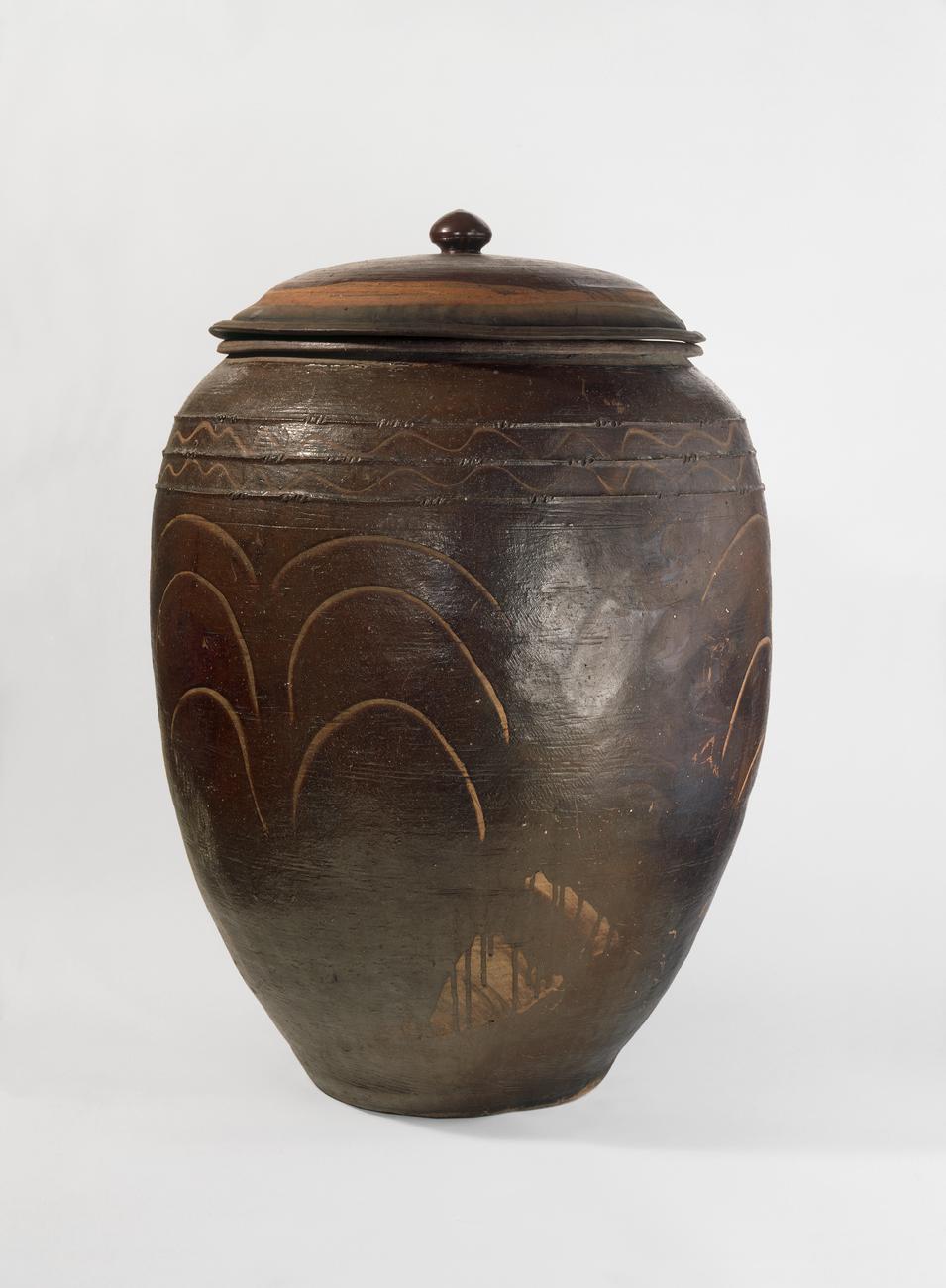
Before you is a large lidded storage jar from the Joseon Dynasty in Korea. Known as an "onggi," this jar was used for a variety of purposes, including storing food or even as chamber pots. The jar features a lotus-shaped knob on its lid, a symbol often found in Korean art.
The outside is decorated with stylized plant forms and is marked by curved, sketch-like lines made by the potter's thumbs in wet glaze. Inside, the surface is paddled, giving a textured look. Made from high-fired earthenware, the jar is both practical and beautifully crafted.
This piece dates to between 1875 and 1925, reflecting traditional ceramic techniques. Such pots were often made for storage, brewing, or even as primitive refrigeration by burial. The artist’s touch is evident in the simple yet elegant thumb markings, adding a personal signature to the work.
See it in person
Joseon Dynasty jar is on display in Room 67 at the British Museum on Great Russell Street, Bloomsbury, London — free to enter. Choose British Museum on audioguide.london and take a photo of it to hear this free audio guide in six languages — no app download needed.
New, in beta. British Museum support has just launched and is still improving: over 1,000 objects so far, with more added all the time.