Ipswich Torcs
- Gallery: Room 50
- Culture: Iron Age; La Tène
- Date: 150 BC - 50 BC (circa)
- Object type: torc
- Materials: gold alloy
- Museum number: 1969,0103.5
- Museum: The British Museum
- Collection record: British Museum website
- Image © The Trustees of the British Museum, shared under a CC BY-NC-SA 4.0 licence.
Listen to the free audio guide
About this object
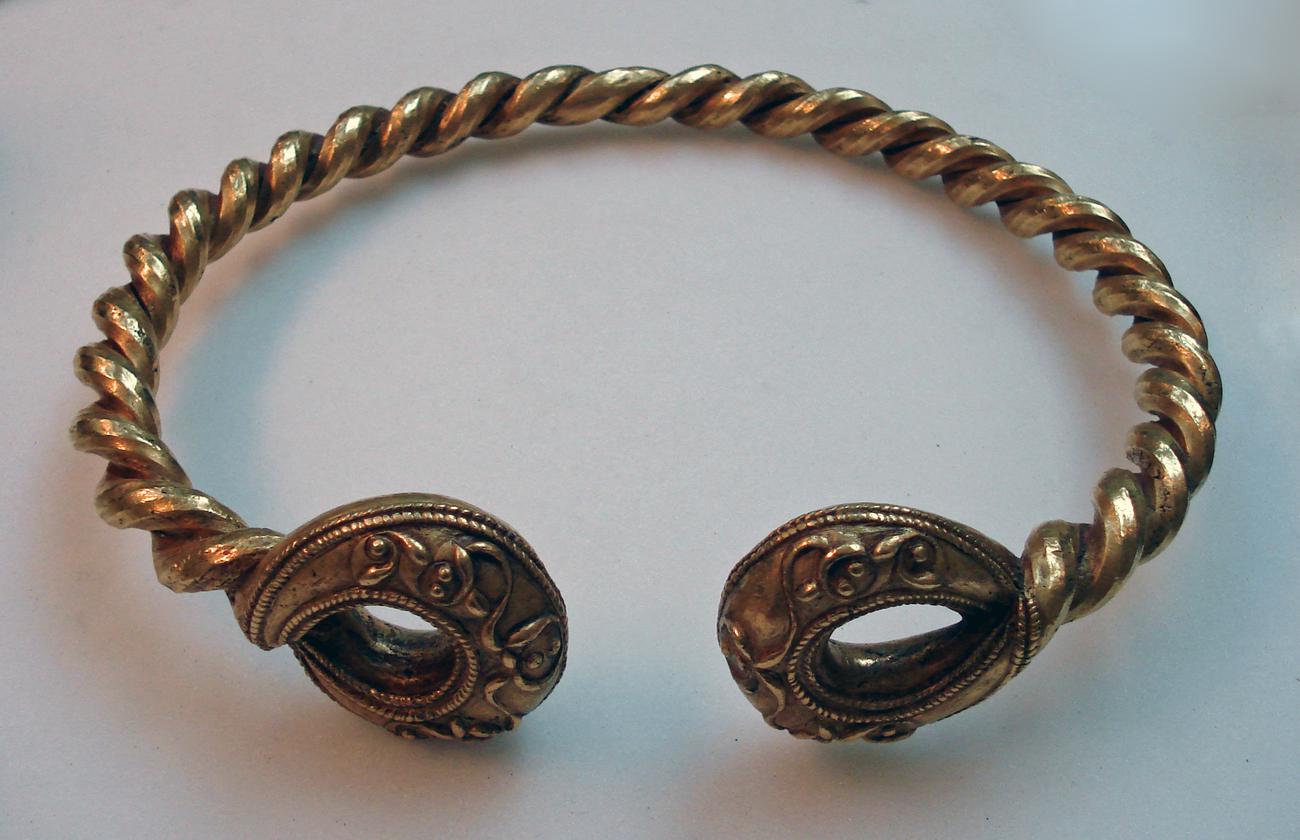
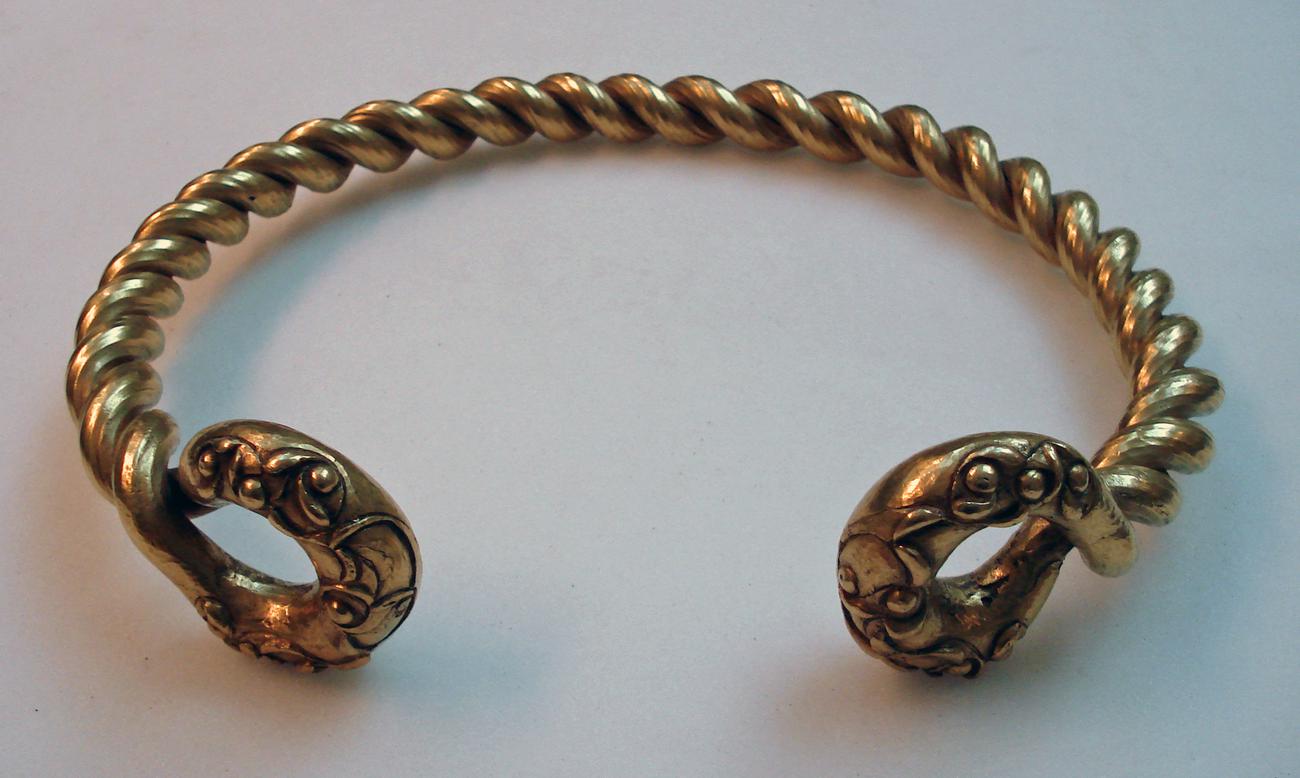
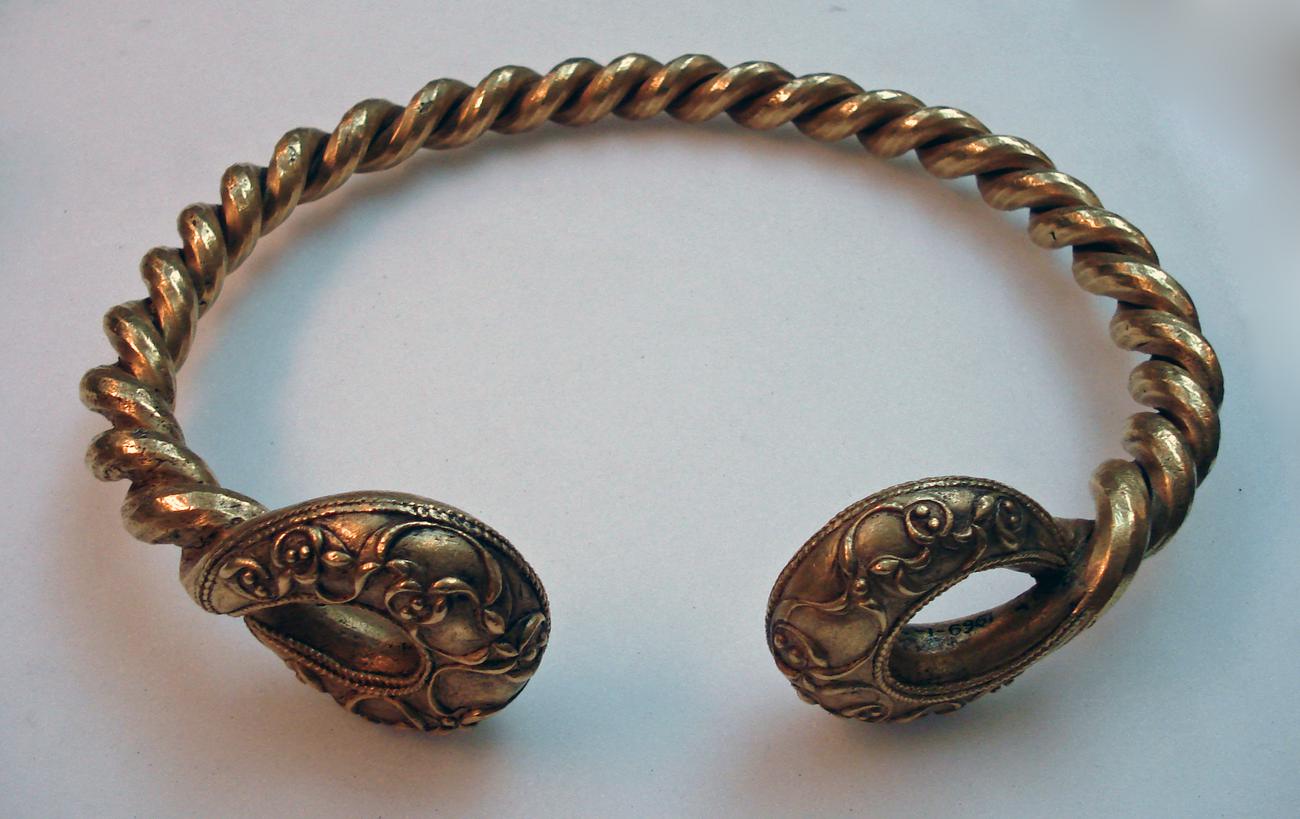
Before you is the Ipswich Torcs, a striking example of Iron Age craftsmanship. These gold torcs feature a neck ring made of two twisted gold bars and loop terminals cast separately. The terminals are richly decorated with curvilinear designs, including bosses and scrolls arranged in a Tène II style.
Made using the lost wax casting method, the delicate motifs were added using high relief to emphasize the intricate patterns. These torcs were discovered in a hoard near Ipswich in 1968.
Gold torcs like these were likely symbols of high status, though their exact purpose remains a mystery. They are among the few treasures that survived in Iron Age Britain before the time of Roman rule.
Such torcs may have been worn by warriors or leaders, as suggested by historical accounts from writers like Cassius Dio and Polybius, who described Celtic warriors adorning themselves in similar neck ornaments. The Ipswich Torcs stand as a rare and beautiful glimpse into this ancient culture.
See it in person
Ipswich Torcs is on display in Room 50 at the British Museum on Great Russell Street, Bloomsbury, London — free to enter. Choose British Museum on audioguide.london and take a photo of it to hear this free audio guide in six languages — no app download needed.
New, in beta. British Museum support has just launched and is still improving: over 1,000 objects so far, with more added all the time.