Basse-Yutz flagons
- Audio guide stop: 441
- Gallery: Room 50
- Audio guide: one commentary for a group of objects shown together
- Museum: The British Museum
- Image © The Trustees of the British Museum, shared under a CC BY-NC-SA 4.0 licence.
Listen to the free audio guide
About these objects
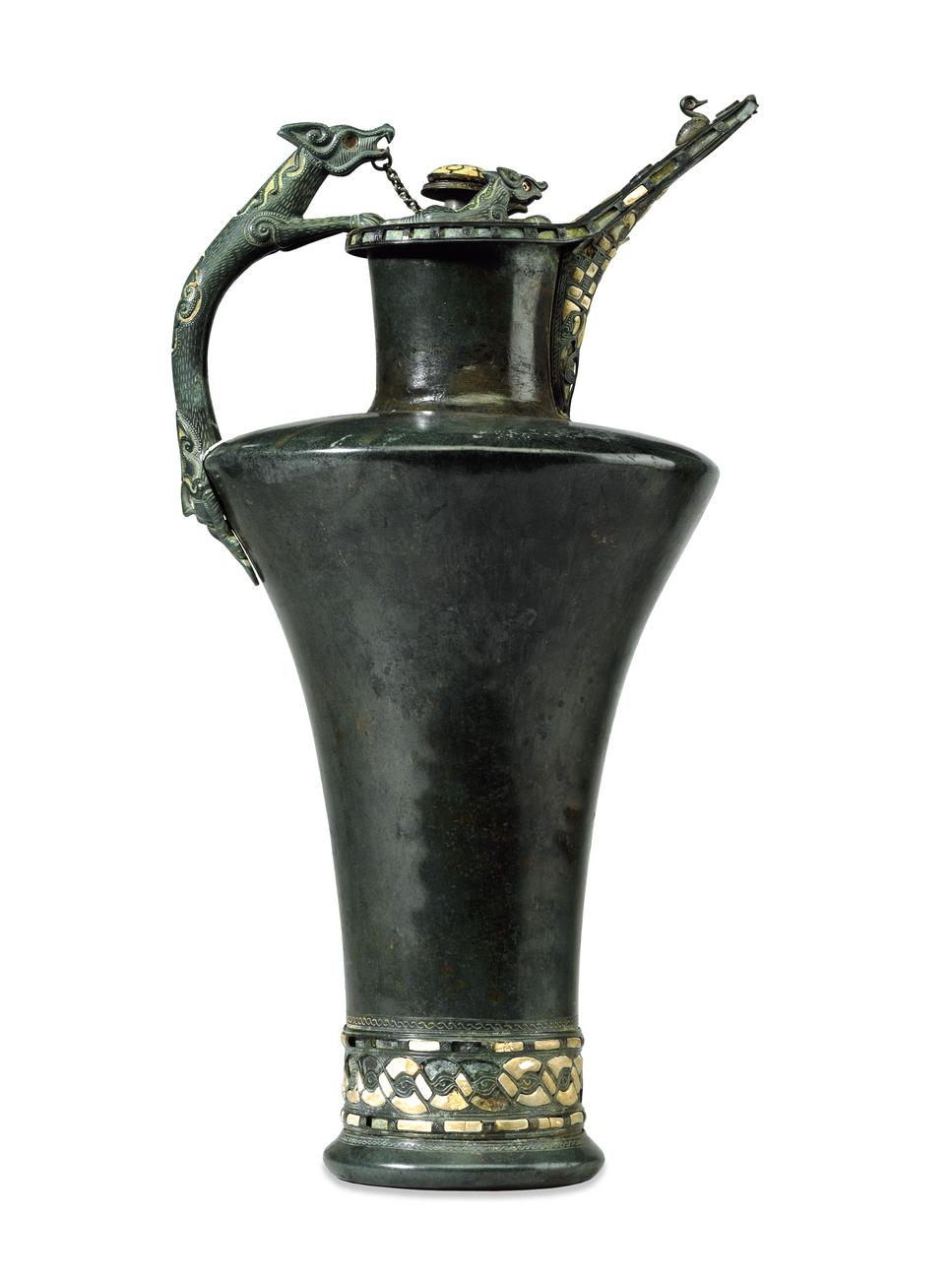
These are the Basse-Yutz flagons, a pair of beautifully decorated bronze vessels from ancient France. Made around 400 BC, they are among the finest surviving examples of early Celtic or La Tène art. While their shape copies Etruscan designs from Italy, the decoration shows a rich blend of artistic influences from across Europe and beyond.
Look closely at the flagons, and you’ll see intricate inlays of coral and red glass, materials that were prized and far from local. The handles are shaped like animals—possibly wolves or dogs—carried over from Greek or Etruscan styles but adapted in a Celtic way. Underneath the spouts, you’ll find stylized palm motifs, which had traveled a long way from their origins in Egypt, passing through Greek hands before appearing here.
These flagons were likely used at feasts to pour wine or mead. They were found with two Etruscan-style wine-mixing vessels, suggesting they once belonged to someone of great importance. Though the grave they came from was disturbed by grave robbers, these flagons remain a powerful testament to the artistry and connections of people in ancient Europe.
See it in person
Basse-Yutz flagons is on display in Room 50 at the British Museum on Great Russell Street, Bloomsbury, London — free to enter. Choose British Museum on audioguide.london and type its audio guide stop number, 441, from the gallery label, or take a photo of it, to hear this free audio guide in six languages — no app download needed.
New, in beta. British Museum support has just launched and is still improving: over 1,000 objects so far, with more added all the time.