Infant with Flower
- Artist: George Fullard
- Date: 1958, cast 1960
- Medium: Bronze
- Dimensions: object: 762 x 419 x 381 mm
- Museum: Tate Britain
- Collection record: Tate Britain website
Listen to the free audio guide
About this artwork
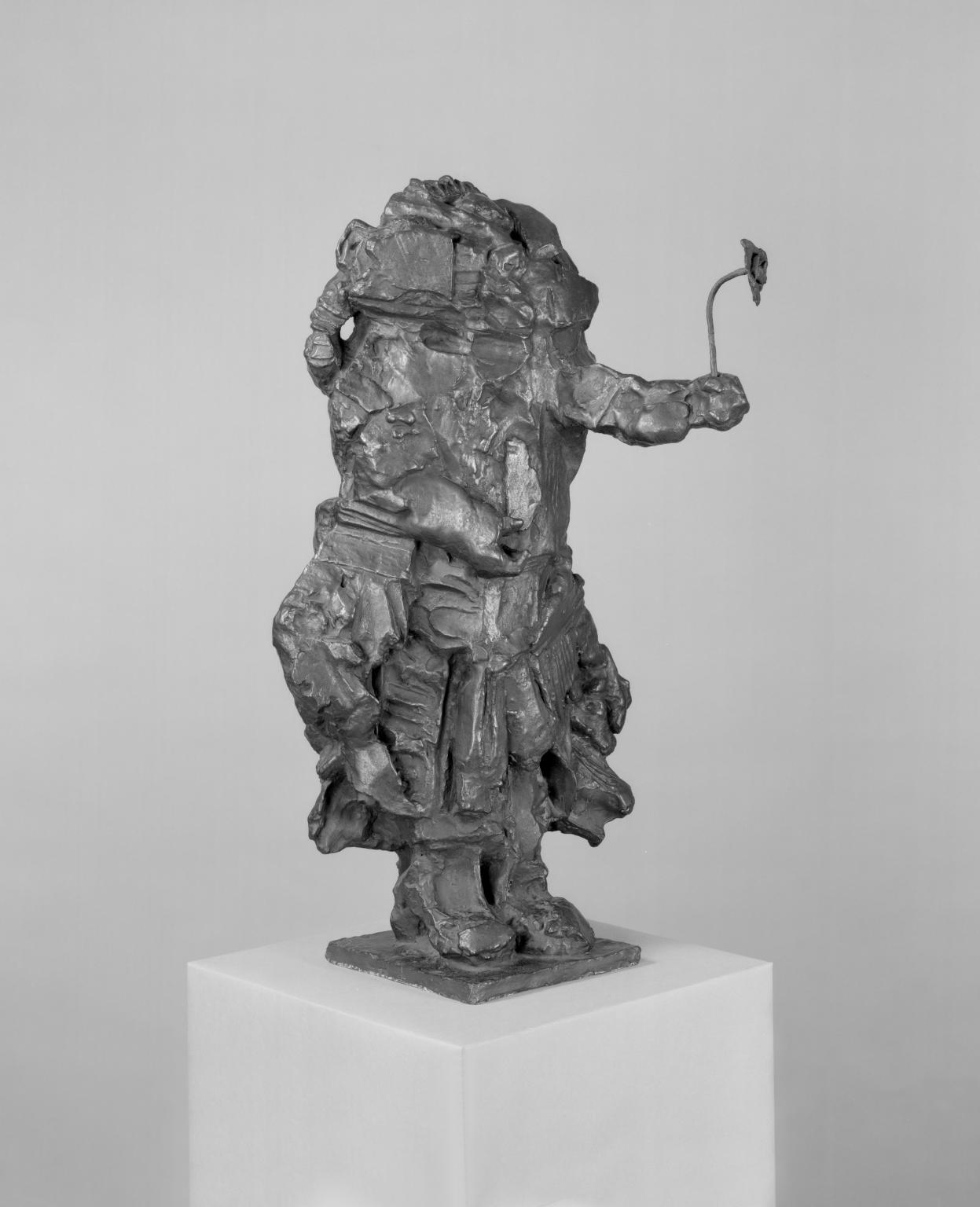
This is the bronze sculpture “Infant with Flower” by George Fullard. Cast in 1958 and completed by John Galizia & Sons in 1960, it measures roughly 30 × 16 7⁄8 × 15 cm. Fullard originally created a plaster model of the figure in his Chelsea studio; he then had the bronze cast from the plaster.
The work shows a small child standing upright with one hand grasping a daffodil that is rendered in scrap pieces of wrought iron. The infant’s clothing appears to be early‑twentieth‑century, as boys and girls wore skirts at that time. Fullard described the figure as “a boy” in his own words, placing the piece firmly in the world of children.
The sculpture has a fluid pose: its head slightly tilted, arms relaxed, as if the child is caught mid‑step. The bronze surface bears the subtle grain typical of the metal, while the flower’s petals are delicate enough to convey lightness against the robust figure. It was first displayed at the Woodstock Gallery in 1958 under the title “Child with Flower,” before being presented by the Trustees of the Chantrey Bequest in 1981.
Overall, the piece combines a naturalistic child with an abstracted flower, giving it both immediate charm and a touch of modern form. Its bronze finish makes it robust yet elegant, fitting well within early‑mid‑twentieth‑century British sculpture. The sculpture invites you to consider how material, pose, and costume all cooperate to capture a fleeting moment in the life of a child.
See it in person
Infant with Flower is in the collection of Tate Britain on Millbank, London — free to enter. Point your phone at any artwork there and audioguide.london plays a free audio guide in six languages — no app download needed.