Imperator
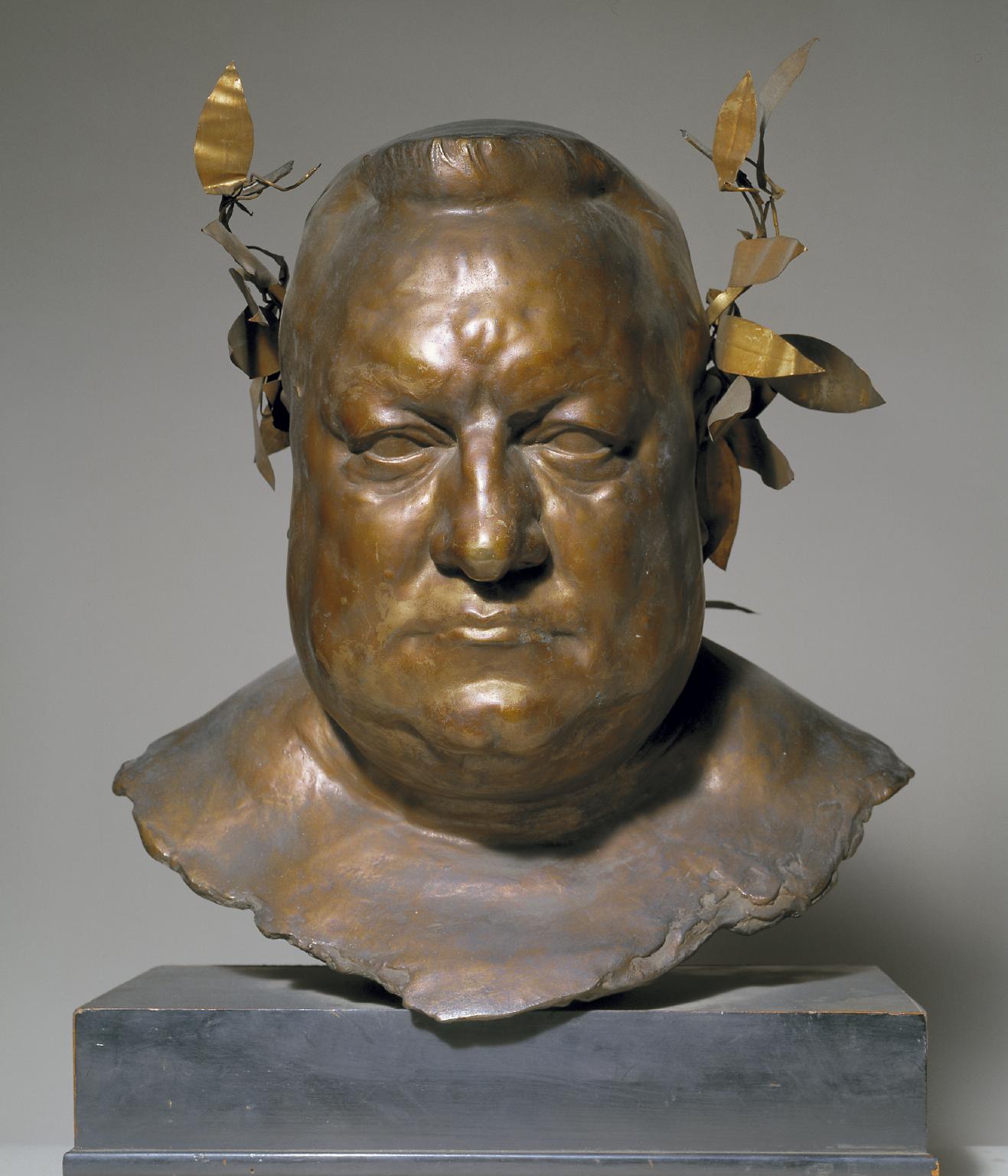
- Artist: James Stevenson
- Date: 1915
- Medium: Bronze
- Dimensions: object: 368 x 368 x 267 mm
- Museum: Tate Britain
- Collection record: Tate Britain website
Listen to the free audio guide
About this artwork
This is “Imperator” by James Stevenson, a bronze bust of a Roman emperor that looks downwards, crowned with a laurel wreath. The figure sits about 14½ inches high and 10½ inches deep—roughly 37 × 37 × 27 cm in total size.
The right shoulder bears the inscription “Myrander” along with “Sc 1915,” indicating the year of creation. Stevenson cast the piece in bronze, a material he used for many of his early 20th‑century works. The laurel wreath is a later addition, added by the sculptor himself in 1923.
Presented to us by W.J. Barwick in 1915, the sculpture was first shown at the Royal Academy that year (and earlier in 1907). It appears on the Tate Archive’s “Tate Britain” Members Room display, a spot where early British sculptures are showcased.
The piece is typical of Stevenson’s classical style: crisp lines, clear profile, and an intimate scale that invites close inspection. The bronze finish gives it a warm patina over time, while the laurel leaves maintain their detail through subtle casting techniques. All in all, “Imperator” showcases Stevenson’s skill in rendering portraiture with both realism and monumentality.
See it in person
Imperator is in the collection of Tate Britain on Millbank, London — free to enter. Point your phone at any artwork there and audioguide.london plays a free audio guide in six languages — no app download needed.