Henry Crispe of the Custom House
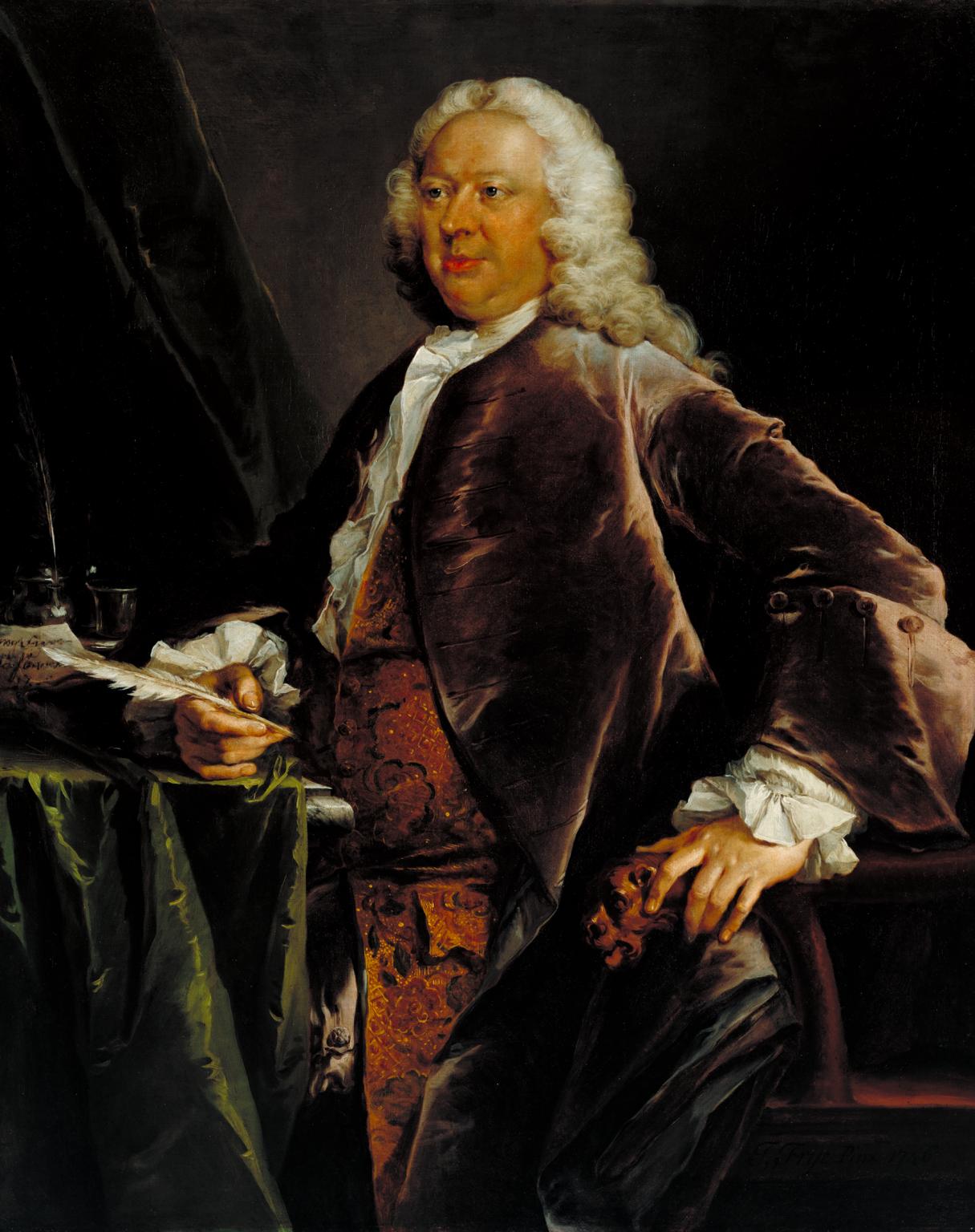
- Artist: Thomas Frye
- Date: 1746
- Medium: Oil paint on canvas
- Dimensions: support: 1243 x 1016 mm
- Museum: Tate Britain
- Collection record: Tate Britain website
Listen to the free audio guide
About this artwork
This is the “Henry Crispe of the Custom House” by Thomas Frye, painted in 1746. The oil on canvas places us in the bustling heart of a London that was becoming the world’s biggest port. Henry Crispe was a customs official at the Custom House, a role that put him amid the tide of goods arriving from the colonies. The portrait shows him seated in a sturdy chair whose carved arm bears a leopard head—a subtle echo of the same motif in his family coat‑of‑arms that crowns the frame.
Frye’s eye for light is evident in the way it falls across Crispe’s brown coat, the crisp white ruffles, and the richly embroidered waistcoat, giving the sitter a dignified yet approachable quality. The sitter’s alert posture, and his left hand gently resting on the chair’s carved head, recall William Hogarth’s lively compositions, especially in the portrait of William Jones. The table before Crispe holds a quill, inkstand and other writing implements, hinting at his poetic ambitions even as he handled the practical duties of collecting duties.
The background hints at the West India Dock’s rise on the Thames, a new artery for ships returning from the Caribbean. Frye’s portrait is more than a likeness; it’s a snapshot of commerce, ambition, and the everyday life of 18th‑century London.
See it in person
Henry Crispe of the Custom House is in the collection of Tate Britain on Millbank, London — free to enter. Point your phone at any artwork there and audioguide.london plays a free audio guide in six languages — no app download needed.