Group of Peasants
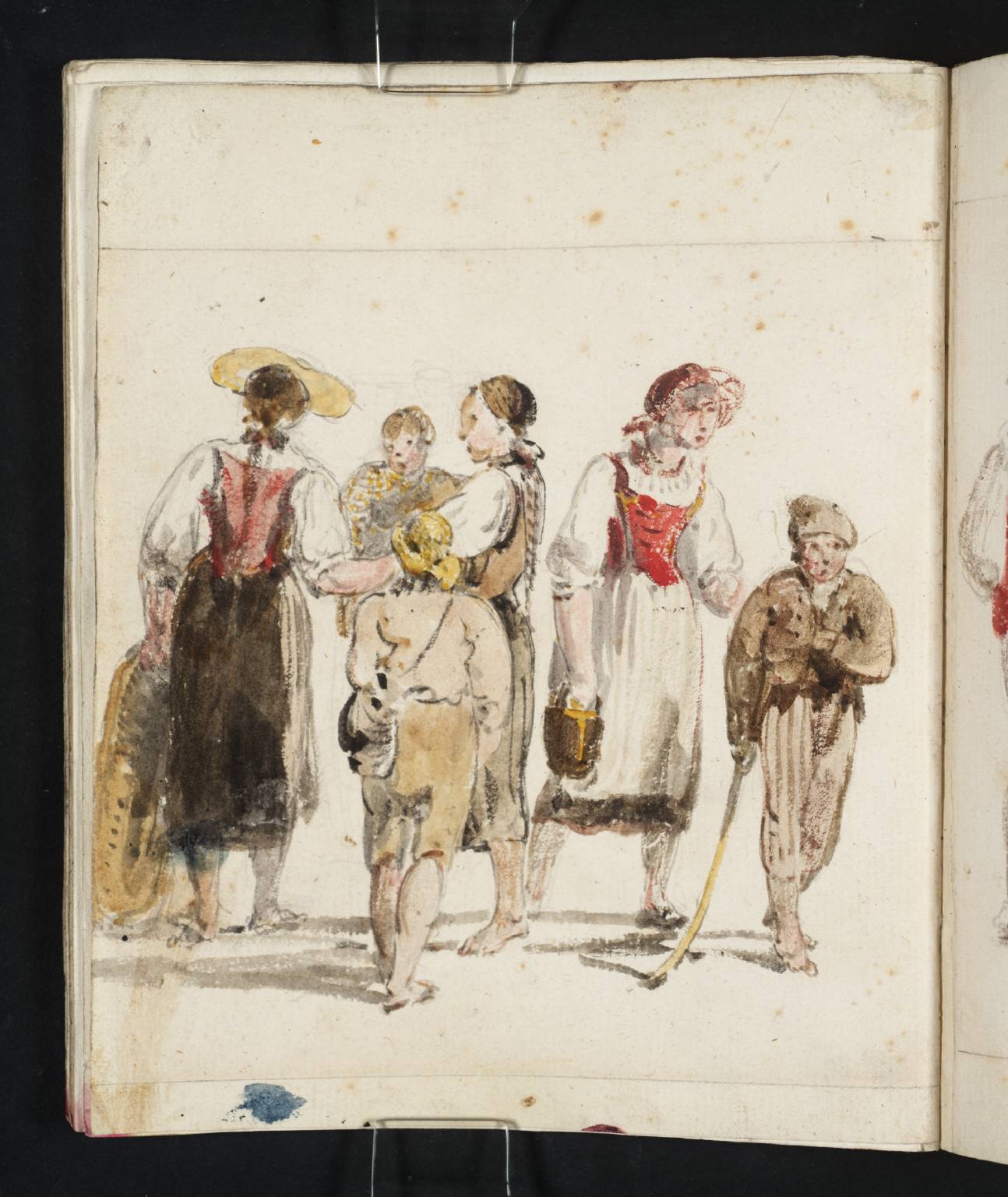
- Artist: Joseph Mallord William Turner
- Date: 1802
- Medium: Graphite and watercolour on paper
- Dimensions: support: 198 x 163 mm
- Museum: Tate Britain
- Collection record: Tate Britain website
Listen to the free audio guide
About this artwork
This is “Group of Peasants” by Joseph Mallord William Turner. Created in 1802, the piece is a graphite and watercolour sketch on paper, taken from his Swiss Figures Sketchbook. You can almost feel the chill of the Alpine air as Turner renders a cluster of villagers in muted earth tones. Their postures—standing, crouching, a boy leaning against a wall—suggest a moment of quiet respite between chores. The farmer with the scythe, the woman in a simple dress, the boy in a hat; all are detailed with careful cross‑hatching that gives the paper a subtle texture.
Turner was travelling through Switzerland at the time, and this work reflects his fascination with the everyday lives of people he met there. The sketch shows how even a small group of peasants can convey a sense of community and work ethic. The use of light is restrained, with a gentle wash of watercolour that hints at the sky above them. It’s a small but powerful snapshot of rural life, one that would later influence his larger, atmospheric scenes.
The drawing was part of the Turner Bequest in 1856, a collection of his early sketches that the nation accepted into public hands. This piece gives us a window into Turner's early artistic concerns—people, place, and the quiet dignity of ordinary folks.
See it in person
Group of Peasants is in the collection of Tate Britain on Millbank, London — free to enter. Point your phone at any artwork there and audioguide.london plays a free audio guide in six languages — no app download needed.