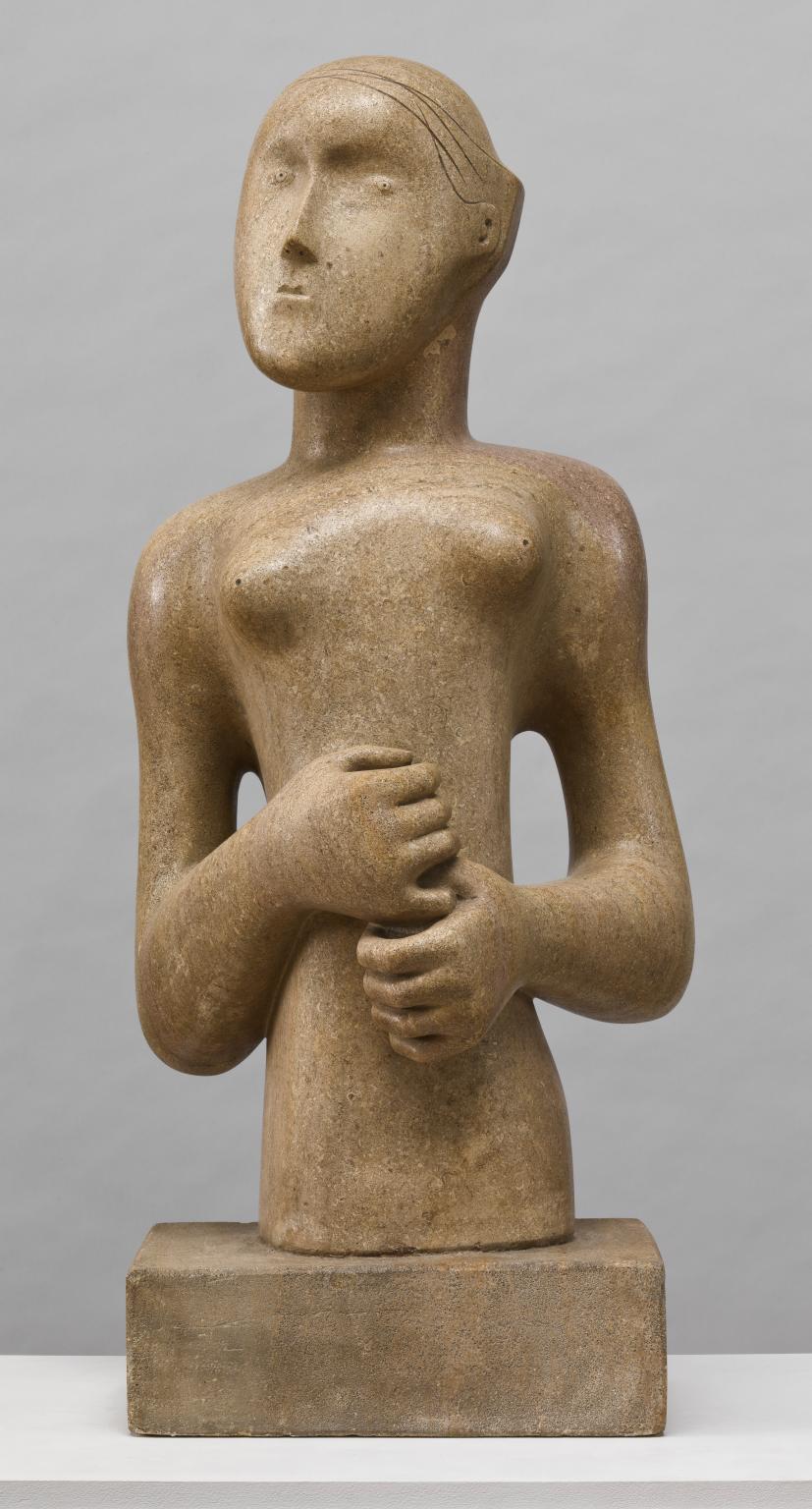
Girl
- Artist: Henry Moore OM, CH
- Date: 1931
- Medium: Ancaster stone
- Dimensions: Overall dims: 865 x 600 x 433mm (including base and wooden board)
- Museum: Tate Britain
- Collection record: Tate Britain website
Listen to the free audio guide
About this artwork
This is “Girl” by Henry Moore, made in 1931 from Ancaster stone. The piece measures about 865 × 600 × 433 mm including its wooden base. Moore’s early‑1930s work shows his break with the Greek ideal; he sought vitality in non‑European sources. The figure here recalls Mesopotamian standing statues from the British Museum, especially their clasped hands. The torso is simplified, rhythmically balanced, echoing Moore’s later stone series that combine natural forms—shells, bones, pebbles—with a rhythmic, almost lyrical human shape. “Girl” sits in the historic room on Reality and Dreams (Room 14) of the British collection, and it was first shown publicly in 1931–1933 before entering the museum’s permanent holdings in 1952. The sculpture embodies a moment of quiet gesture, inviting viewers to contemplate the blend of natural inspiration and formal abstraction that characterizes Moore’s early career.
See it in person
Girl is in the collection of Tate Britain on Millbank, London — free to enter. Point your phone at any artwork there and audioguide.london plays a free audio guide in six languages — no app download needed.