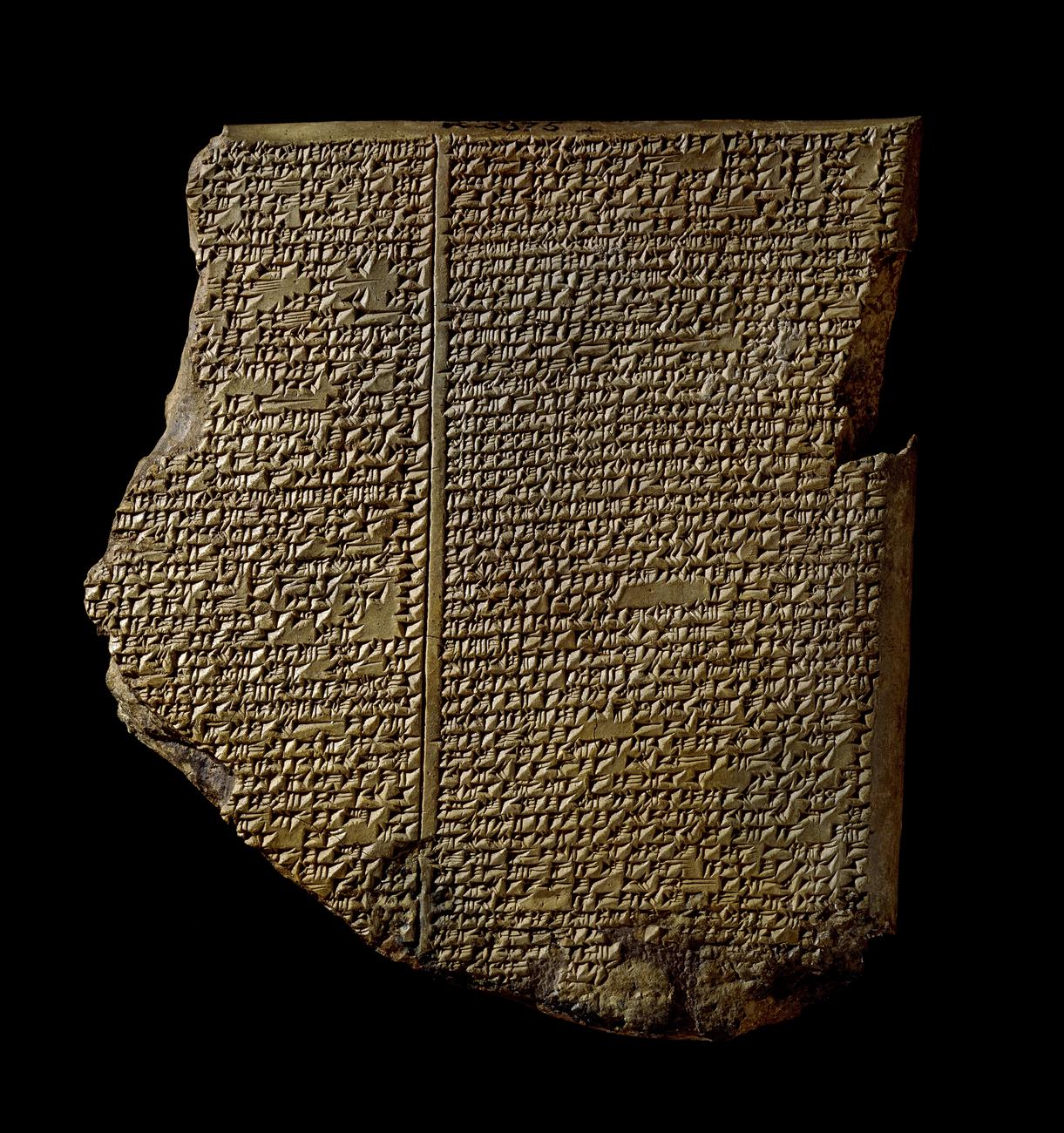
Gilgamesh flood tablet
- Audio guide stop: 403
- Gallery: Room 55
- Culture: Neo-Assyrian
- Date: 7thC BC
- Object type: tablet
- Materials: clay
- Museum number: K.3375
- Museum: The British Museum
- Collection record: British Museum website
- Image © The Trustees of the British Museum, shared under a CC BY-NC-SA 4.0 licence.
Listen to the free audio guide
About this object
Before you is a fragment of clay inscribed with one of the oldest and most significant stories ever told: a Babylonian account of a great flood. This is part of the 11th tablet from the Epic of Gilgamesh, a Mesopotamian myth that captures a tale very similar to the biblical story of Noah.
The Neo-Assyrian cuneiform script tells how the god Ea warns a man named Utu-napishtim of a devastating flood. He builds a boat to save his family and animals. The text describes the terrifying rains and the eventual subsiding of waters, marked by birds sent out to find dry land.
Carved from baked clay and dating to the 7th century BCE, this tablet was discovered at Kouyunjik—part of ancient Nineveh. It once belonged to the legendary library of King Ashurbanipal and has long fascinated scholars for its connection with early flood narratives.
See it in person
Gilgamesh flood tablet is on display in Room 55 at the British Museum on Great Russell Street, Bloomsbury, London — free to enter. Choose British Museum on audioguide.london and type its audio guide stop number, 403, from the gallery label, or take a photo of it, to hear this free audio guide in six languages — no app download needed.
New, in beta. British Museum support has just launched and is still improving: over 1,000 objects so far, with more added all the time.