Frosty Morning
- Artist: Joseph Mallord William Turner
- Date: exhibited 1813
- Medium: Oil paint on canvas
- Dimensions: support: 1137 x 1746 mm
- Museum: Tate Britain
- Collection record: Tate Britain website
Listen to the free audio guide
About this artwork
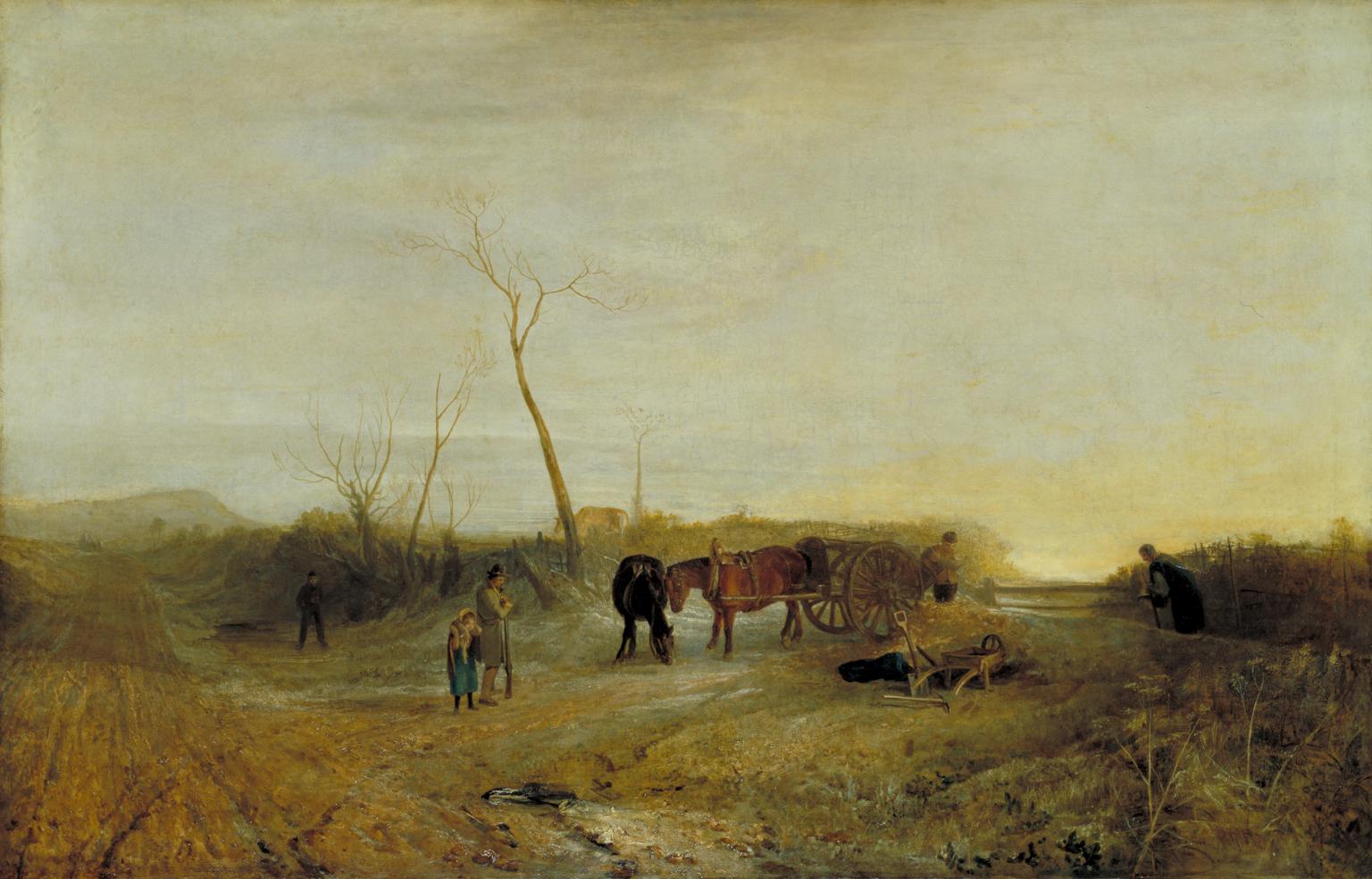
This is the “Frosty Morning” by Joseph Mallord William Turner, painted in 1813. The canvas captures a wintry Yorkshire ditch being cleared, a scene Turner witnessed while travelling north. Right at the front, a young girl with a hare draped over her shoulders – thought to be Turner’s eldest daughter Evelina – looks up as if catching the cold air. In the distance a stage‑coach glides past, hinting at the journey that inspired the piece.
Monet later called it “peint les yeux ouverts,” describing it as painted with ‘open eyes’. Critics of the day echoed that sentiment, saying the work “imitated the feeling of a cold wintry morning to perfection.” It was first exhibited in 1813 and later accepted into the nation’s Turner Bequest in 1856. The painting has appeared in several major exhibitions, from the Royal Academy to international shows in New York, Toronto and Ghent.
Turner’s brushwork in this scene shows his masterful use of light and colour to render the frosty ground, the bare trees, and the pale, yellow‑tinged sky. The subtle glow of the early sun barely lifts the chill, creating a stark, almost desolate atmosphere that still feels alive today. The composition, with its crisp lines and muted palette, invites viewers to step into that crisp morning and feel the chill on their own skin.
See it in person
Frosty Morning is in the collection of Tate Britain on Millbank, London — free to enter. Point your phone at any artwork there and audioguide.london plays a free audio guide in six languages — no app download needed.