Frontispiece, engraved by J.C. Easling
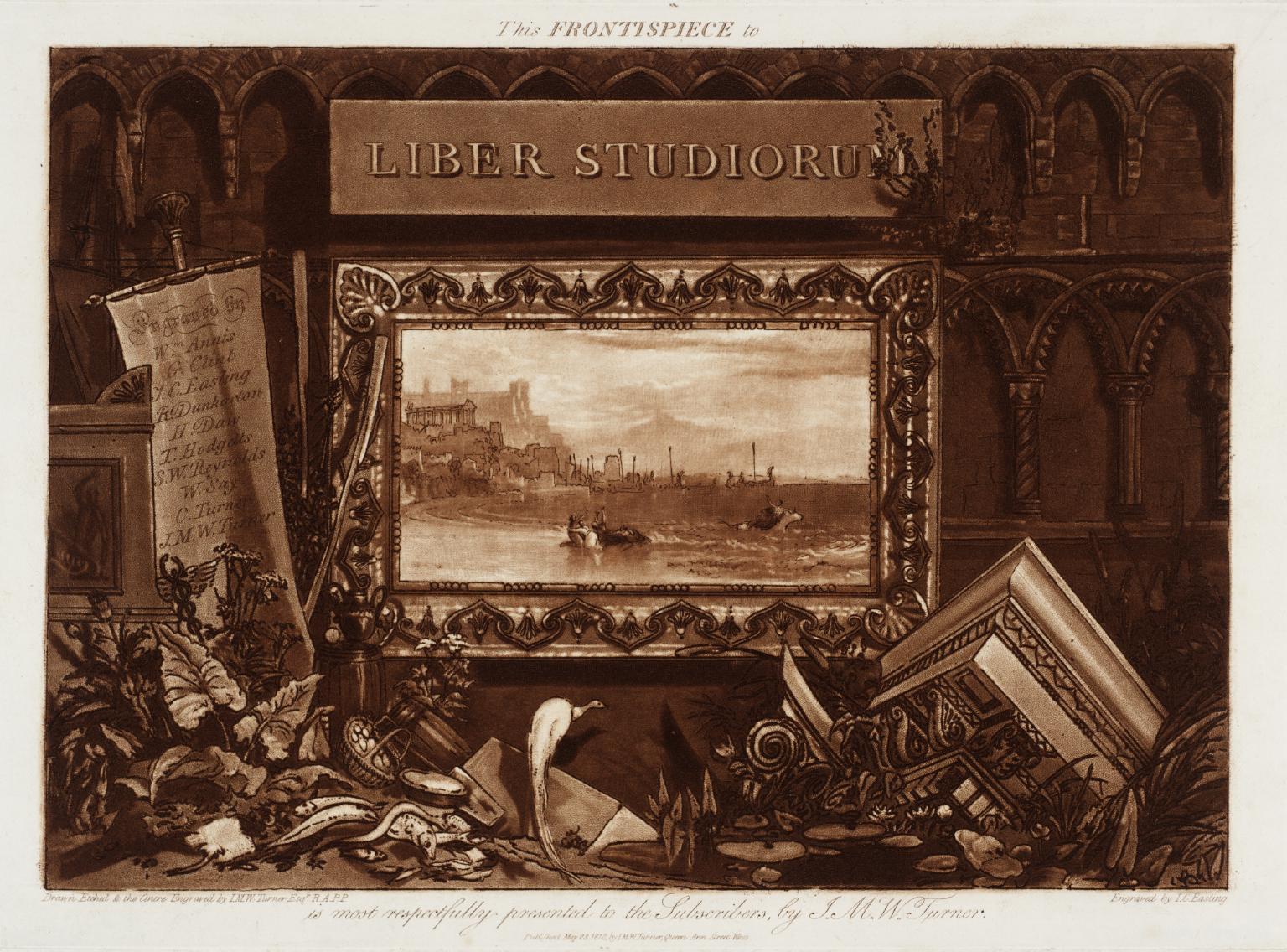
- Artist: Joseph Mallord William Turner
- Date: 1812
- Medium: Etching and mezzotint on paper
- Dimensions: image: 188 x 265 mm
- Museum: Tate Britain
- Collection record: Tate Britain website
Listen to the free audio guide
About this artwork
This is the “Frontispiece, engraved by J.C. Easling” by Joseph Mallord William Turner, an early 19th‑century etching from 1812. The work is a small, 188 × 265 mm print that was created in collaboration with the engraver J.C. Easling for Turner’s influential book, *Liber Studiorum*. Turner was still a young artist at the time, already experimenting with the expressive possibilities of light and atmosphere that would later define his famous landscapes.
In this frontispiece Turner combines a detailed landscape scene with classical architectural motifs, a signature of his fascination with ruins and the sea. The etching and mezzotint techniques give the image a dramatic contrast—dark, almost brooding tones against lighter, misty backgrounds. The subtle shading captures the transient quality of weather that Turner would become known for, while the careful line work demonstrates his mastery of printmaking before he shifted to oils.
Seeing this piece today offers a glimpse into Turner’s early development and the broader Romantic movement’s preoccupation with nature’s sublime. It also highlights the role of skilled engravers like Easling in translating Turner’s ideas into reproducible prints that reached a wider audience. The frontispiece serves both as an artistic statement and as a gateway into the larger collection of Turner’s etchings that explore landscape, sea, and architecture in equal parts.
See it in person
Frontispiece, engraved by J.C. Easling is in the collection of Tate Britain on Millbank, London — free to enter. Point your phone at any artwork there and audioguide.london plays a free audio guide in six languages — no app download needed.