Folkestone from the Sea
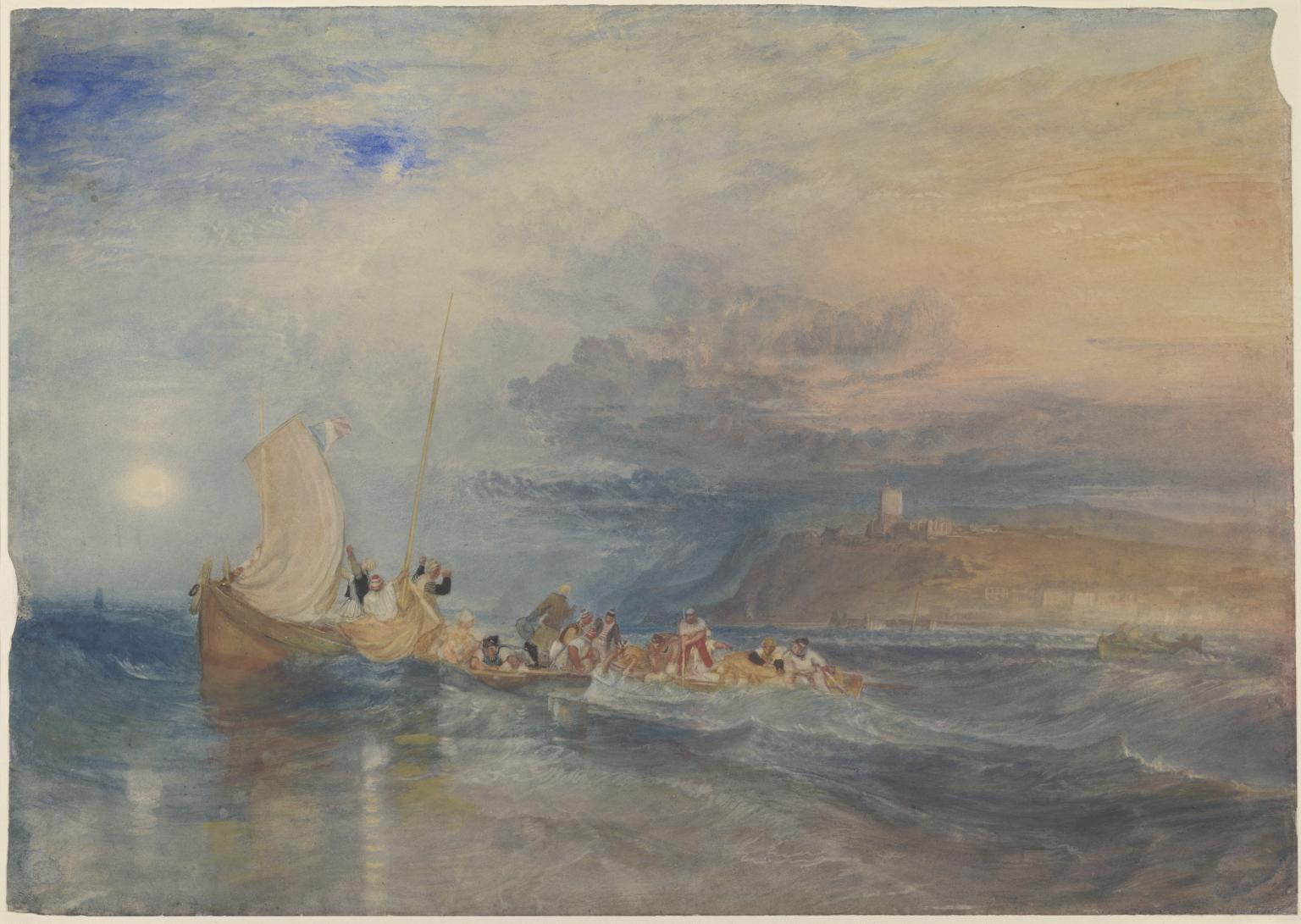
- Artist: Joseph Mallord William Turner
- Date: c.1822–4
- Medium: Watercolour and gouache on paper
- Dimensions: support: 488 x 684 mm
- Museum: Tate Britain
- Collection record: Tate Britain website
Listen to the free audio guide
About this artwork
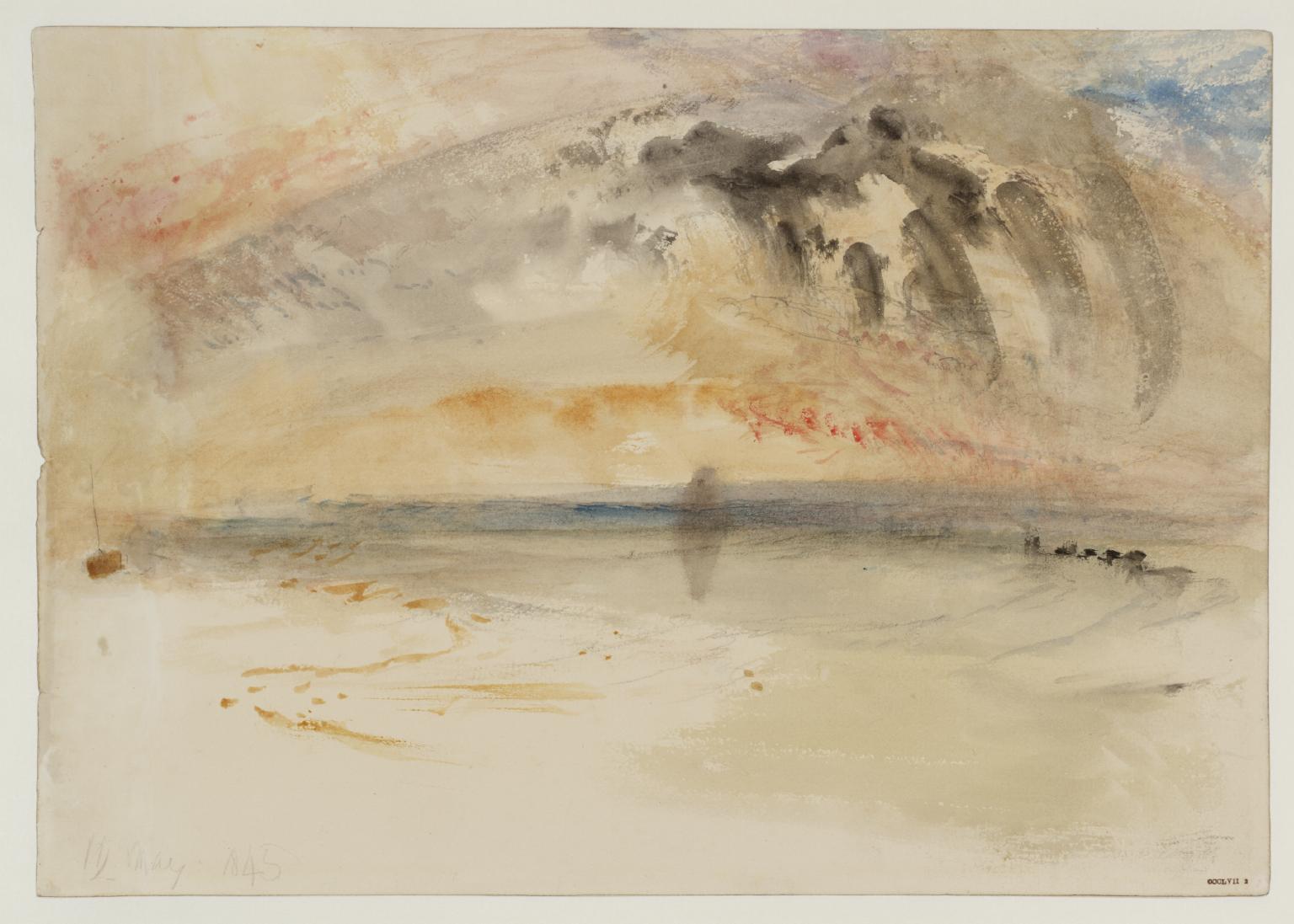
This is the "Folkestone from the Sea" by Joseph Mallord William Turner. Created around 1822–1824, it’s a delicate watercolour and gouache on paper that captures a twilight encounter on the Kent coast. Turner places the moon in the foreground, a luminous witness to an illicit exchange: a group of English smugglers receives barrels of illegal gin from French sailors under its silver glow. Just as the moonlit scene unfolds, the first light of dawn arrives—too early for the operation. From the right, a Coast Blockade cutter, established in 1816 to curb smuggling, spots the men. In a frantic bid to conceal the cargo, the smugglers attempt to “sink” the barrels with ropes, hoping to retrieve them later. Turner intertwines these narrative beats with his masterful handling of light, letting the moon and sunrise merge into an ethereal sky that blurs the boundary between day and night. The painting not only tells a story of crime and duty but also showcases Turner’s fascination with atmosphere, making it a quintessential example of his marine scenes from the 1820s.
See it in person
Folkestone from the Sea is in the collection of Tate Britain on Millbank, London — free to enter. Point your phone at any artwork there and audioguide.london plays a free audio guide in six languages — no app download needed.