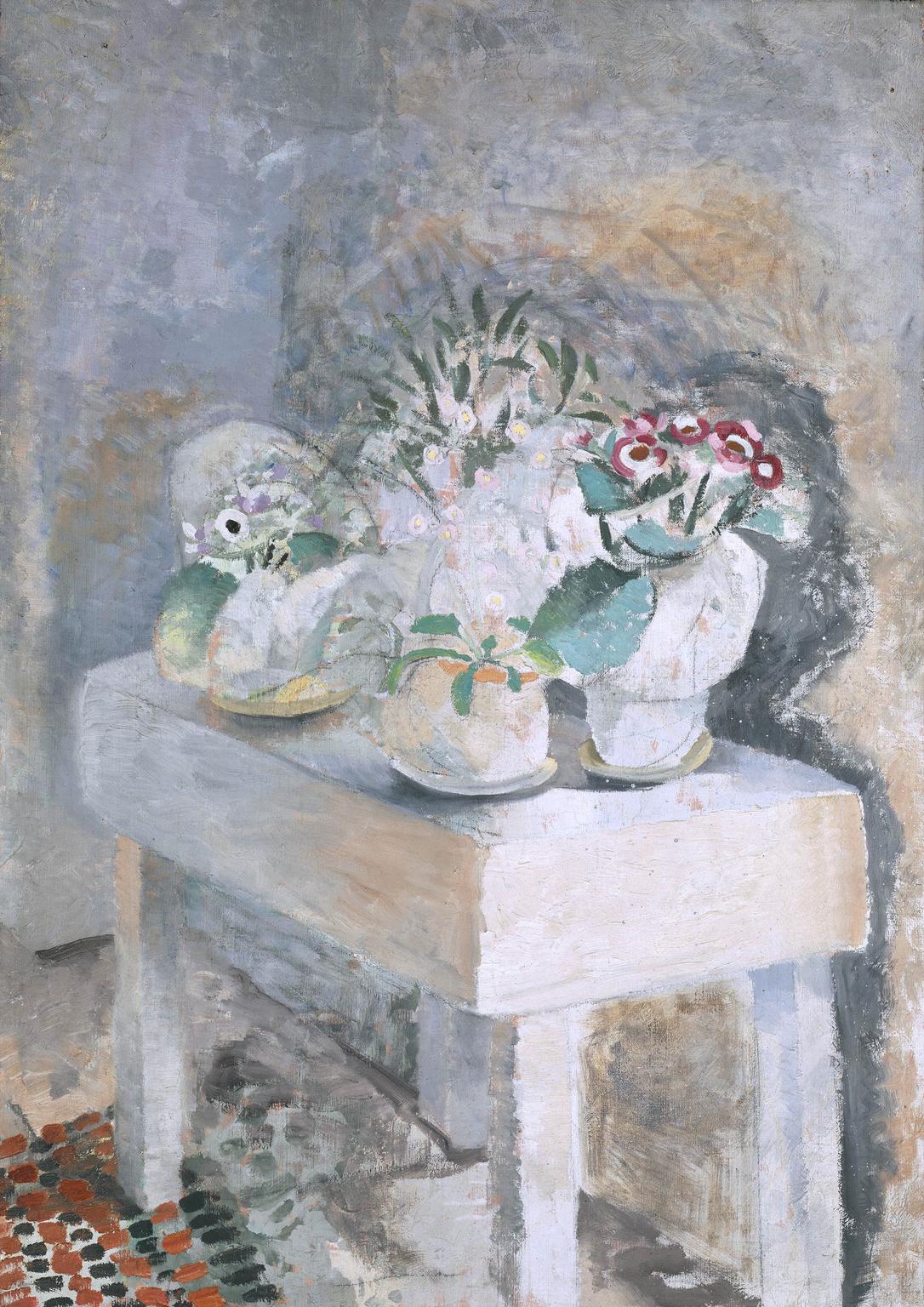
Flowers in a Jug
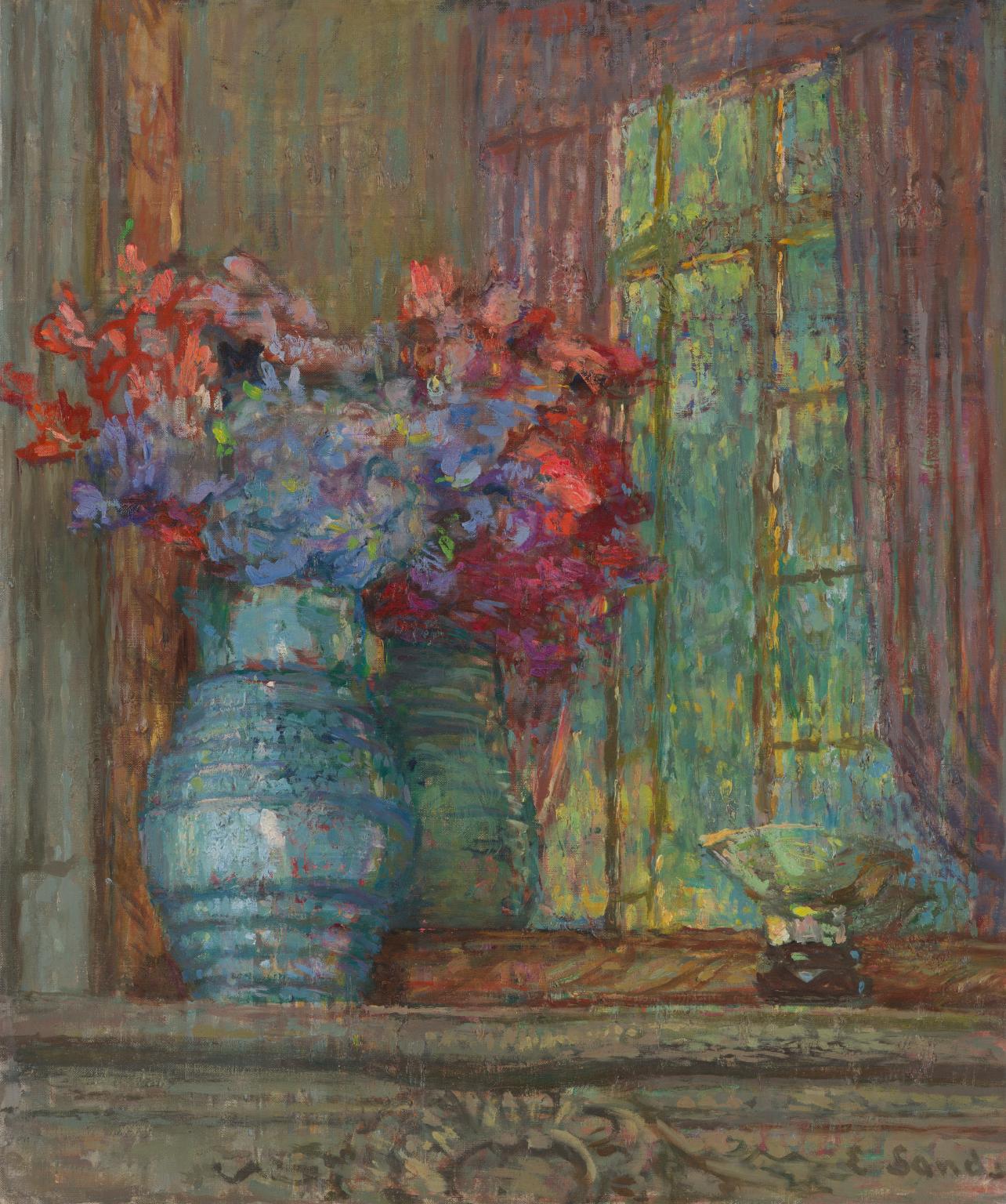
- Artist: Ethel Sands
- Date: ?1920s
- Medium: Oil paint on canvas
- Dimensions: support: 550 x 460 x 18 mm
- Museum: Tate Britain
- Collection record: Tate Britain website
Listen to the free audio guide
About this artwork
This is “Flowers in a Jug” by Ethel Sands, painted around 1920‑1923 on canvas with oil. The scene is a still life set on a mantelpiece; a jug filled with bright flowers sits beside a mirror that reflects the surrounding room. The reflected light gives the work a double view—what you see and what you catch in the glass.
Sands was an American by birth but spent her life in Britain, owning homes in Chelsea, Newington near Oxford and at Auppegard in Normandy. It is thought she painted this piece while staying at that house in Dieppe, where the light from the window matches the mirror’s reflection.
She moved into the modern‑art world through Walter Sickert. In 1906 they met after she sent him a picture to Paris, and the following year he invited her to join the Fitzroy Street Group—a collective of Impressionist naturalists in London. Her own style is mild Anglo‑French, comparable to Jacques‑Émile Blanche; the late colour control here echoes Vuillard’s work.
The composition also recalls Sickert’s still lifes and Camden Town painters like Spencer Gore, who used reflected imagery. The painting’s simple arrangement hides a sophisticated dialogue between interior objects, light and reflection, making it a quietly compelling snapshot of early 20th‑century British life.
See it in person
Flowers in a Jug is in the collection of Tate Britain on Millbank, London — free to enter. Point your phone at any artwork there and audioguide.london plays a free audio guide in six languages — no app download needed.