Flora’s Cloak
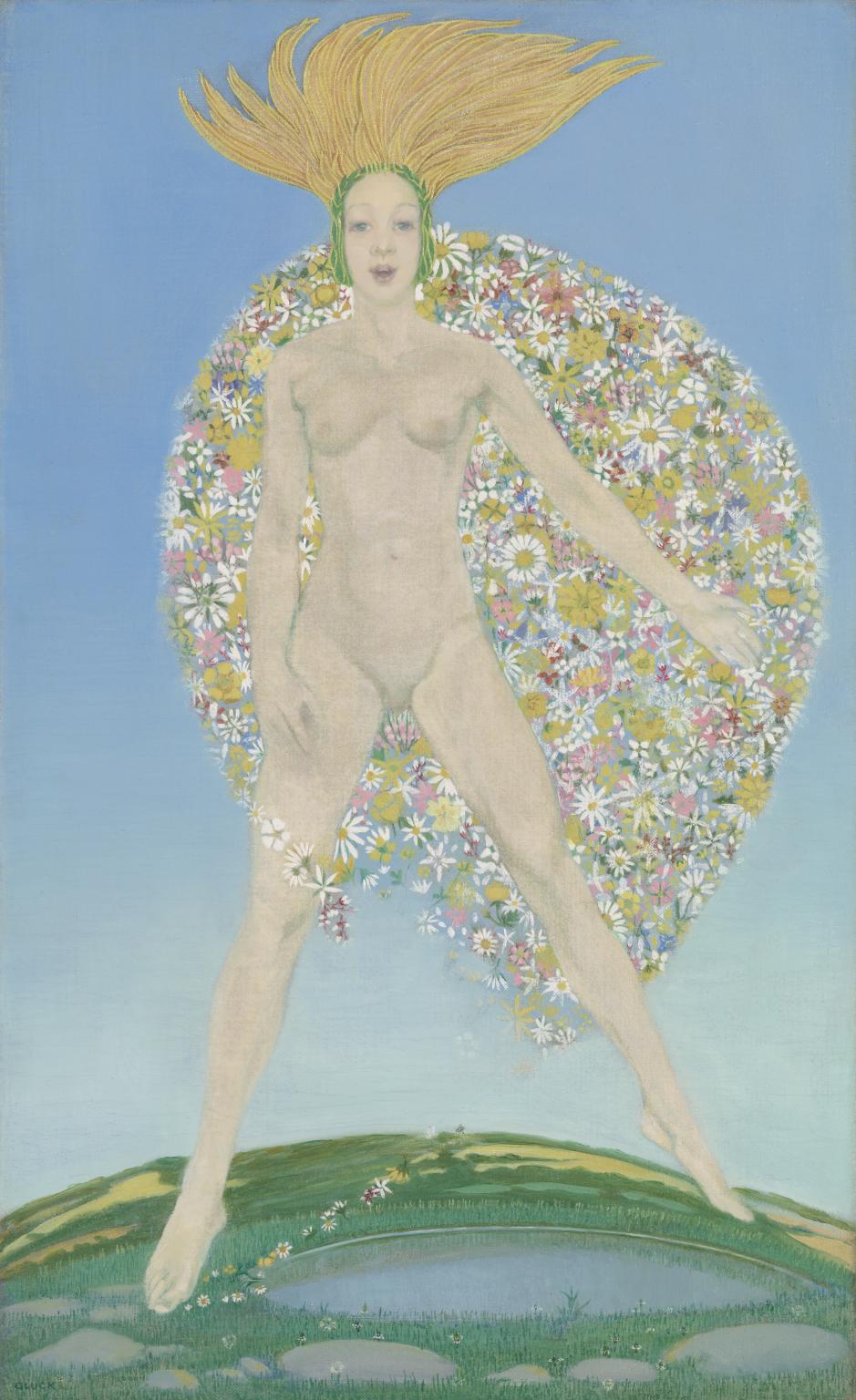
- Artist: Gluck
- Date: c.1923
- Medium: Oil paint on canvas
- Dimensions: support: 664 x 410 mm
- Museum: Tate Britain
- Collection record: Tate Britain website
Listen to the free audio guide
In the museum now? Point your phone at the next artwork and hear its guide.
About this artwork
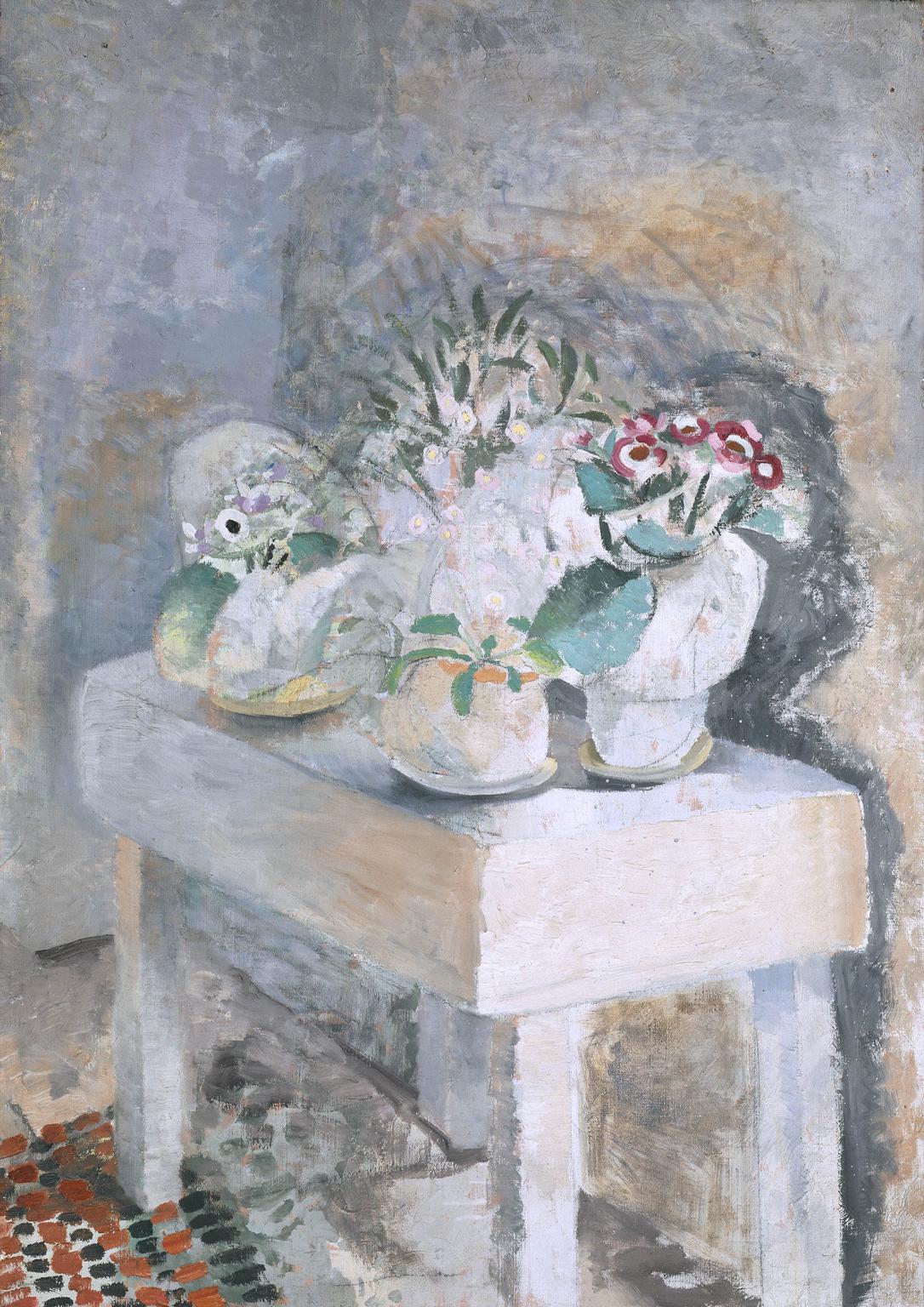
This is the “Flora’s Cloak” by Gluck, painted around 1923. In the centre sits a full‑length nude woman, pale pink skin and a headdress that looks like yellow‑flamed straw. Her limbs are arranged in a quiet geometry, echoing Leonardo’s Vitruvian Man, while her left arm extends out at 45 degrees with her palm open to the viewer. A billowing cloak of spring flowers—daisies, green stems, light pink petals, and touches of red, blue and purple—hovers behind her, creating a soft, floral halo that seems to drift in the air.
The background is a pale blue that gives the impression of a clear, cloudless sky. Below her, a small section of earth, rounded pebbles, a reflective pool, and distant green fields ground the composition. Her toes almost touch the grass, suggesting that she brings the flowers down to earth with her presence.
Gluck, a London‑born artist who spent summers in Cornwall and was part of the Newlyn School, painted this only nude in his late twenties. The work echoes Botticelli’s *Primavera*, where the goddess of flowers scatters blossoms, but Gluck’s Flora appears more immediate, a goddess in mid‑flight. The title recalls the Roman myth of Flora, the spring goddess, and the painting celebrates the female form free from the male gaze. This piece is a quiet, lyrical moment captured by a queer artist whose love for light and color made every flower and shade count.
See it in person
Flora’s Cloak is in the collection of Tate Britain on Millbank, London — free to enter. Point your phone at any artwork there and audioguide.london plays a free audio guide in six languages — no app download needed.