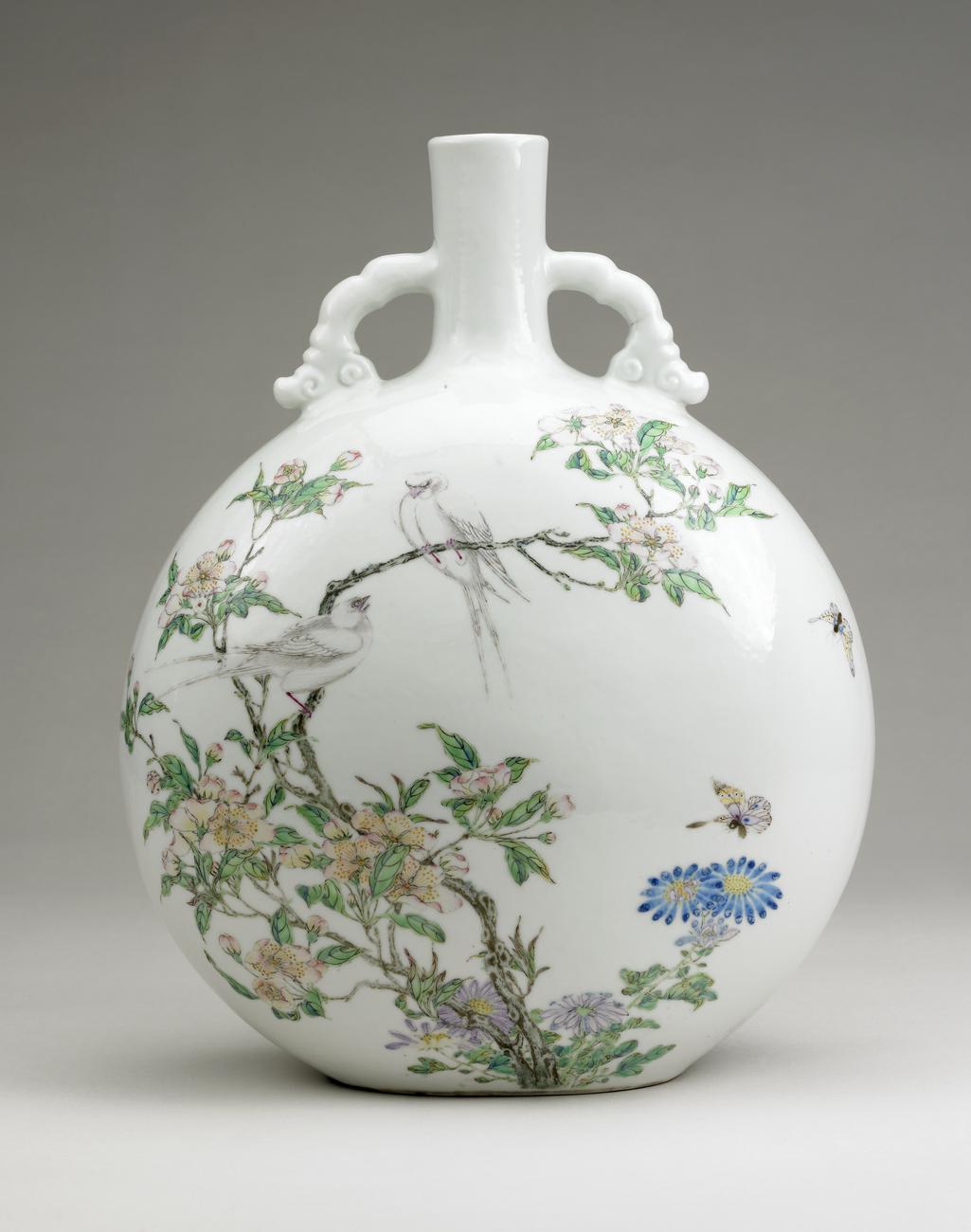
Flask with birds and flowering tree
- Audio guide stop: 334
- Gallery: Room 95
- Culture: Qing dynasty; Yongzheng
- Made in: Jingdezhen
- Date: 1723-1735
- Object type: flask
- Materials: porcelain
- Museum number: PDF.824
- Museum: The British Museum
- Collection record: British Museum website
- Image © The Trustees of the British Museum, shared under a CC BY-NC-SA 4.0 licence.
Listen to the free audio guide
About this object
Before you is a beautifully shaped flask from the Qing dynasty, dating to between 1723 and 1735. Known as a "moon flask," it has a flattened, round body with a narrow neck and cloud-scroll handles that connect the neck and shoulder. The pale white porcelain features a fine, slightly rough "chicken skin" glaze that gives it a soft, textured look.
The exterior of the flask is adorned with delicate and intricate enamel painting in a "famille rose" palette. On one side, two white-headed birds rest among flowering branches in shades of pink and white. On the other side, a pair of white birds are shown in a different type of blooming tree, flanked by elegant butterflies above colorful asters.
This piece reflects the high artistic standards of the Yongzheng period and was likely made in the imperial kilns of Jingdezhen. The base is marked with a six-character Yongzheng reign seal in underglaze blue, confirming its official status as Qing court porcelain.
See it in person
Flask with birds and flowering tree is on display in Room 95 at the British Museum on Great Russell Street, Bloomsbury, London — free to enter. Choose British Museum on audioguide.london and type its audio guide stop number, 334, from the gallery label, or take a photo of it, to hear this free audio guide in six languages — no app download needed.
New, in beta. British Museum support has just launched and is still improving: over 1,000 objects so far, with more added all the time.