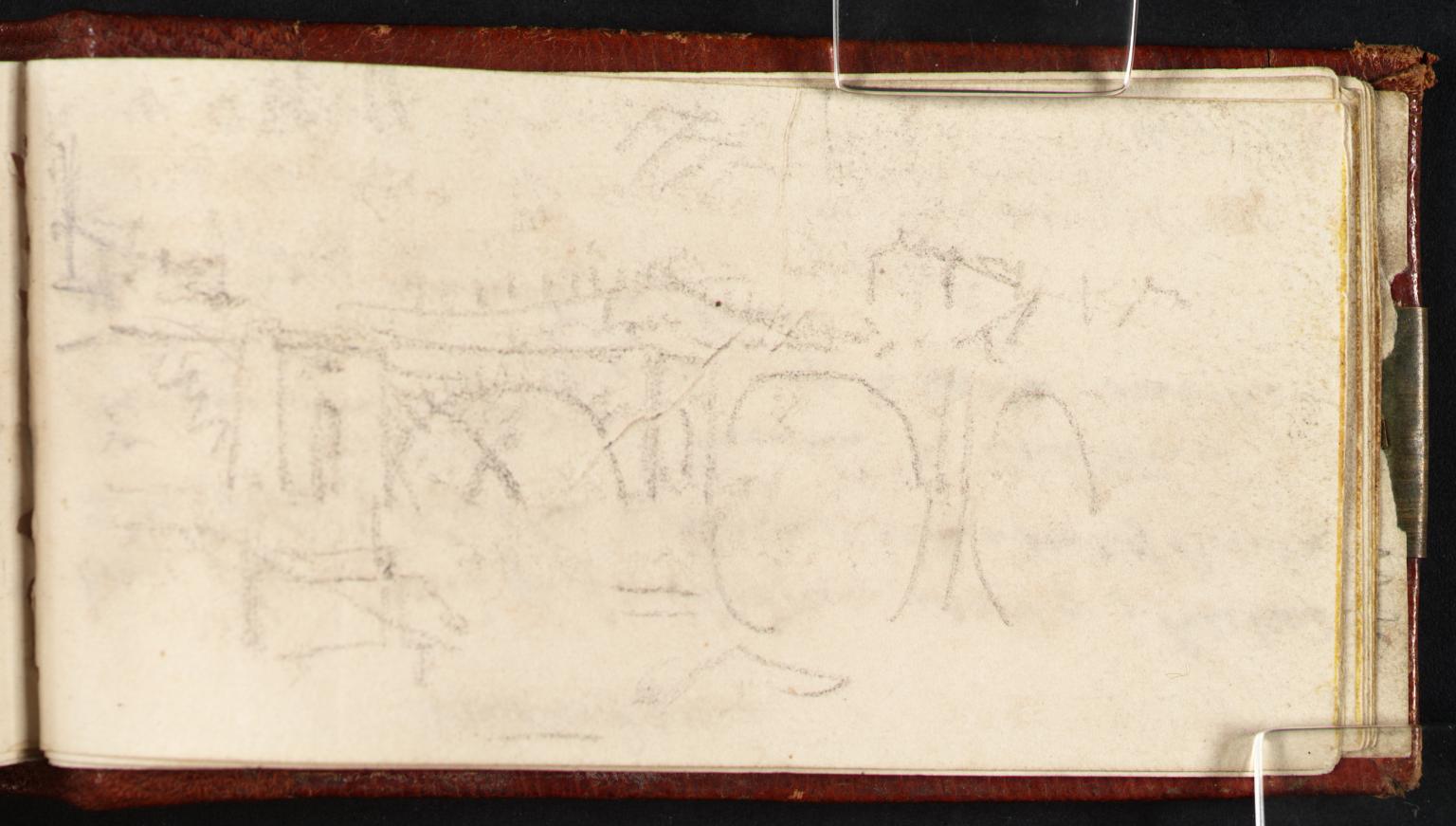
Figures and ?Coastal Terrain
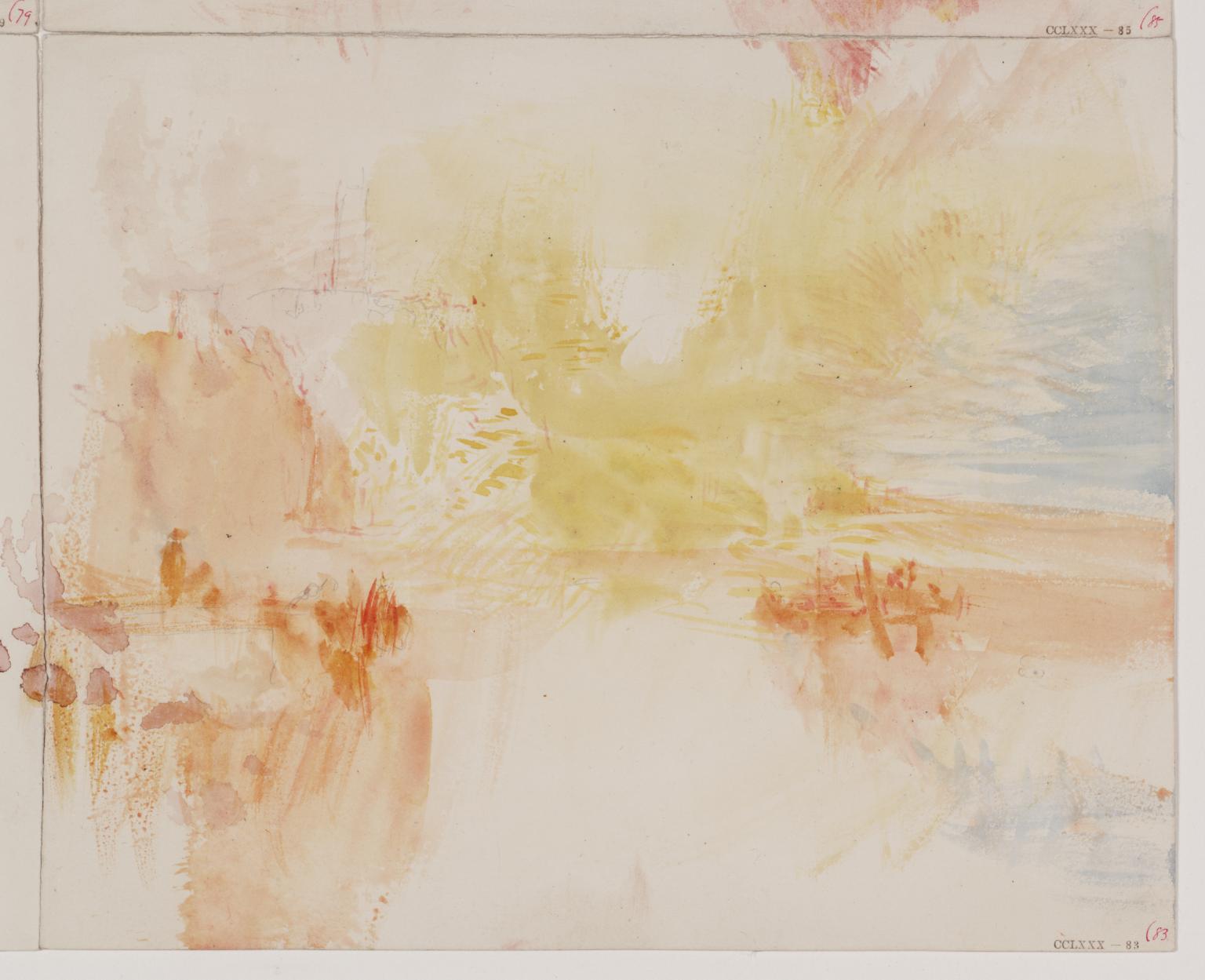
- Artist: Joseph Mallord William Turner
- Date: c.1841–5
- Medium: Graphite and watercolour on paper
- Dimensions: support: 185 x 230 mm
- Museum: Tate Britain
- Collection record: Tate Britain website
Listen to the free audio guide
About this artwork
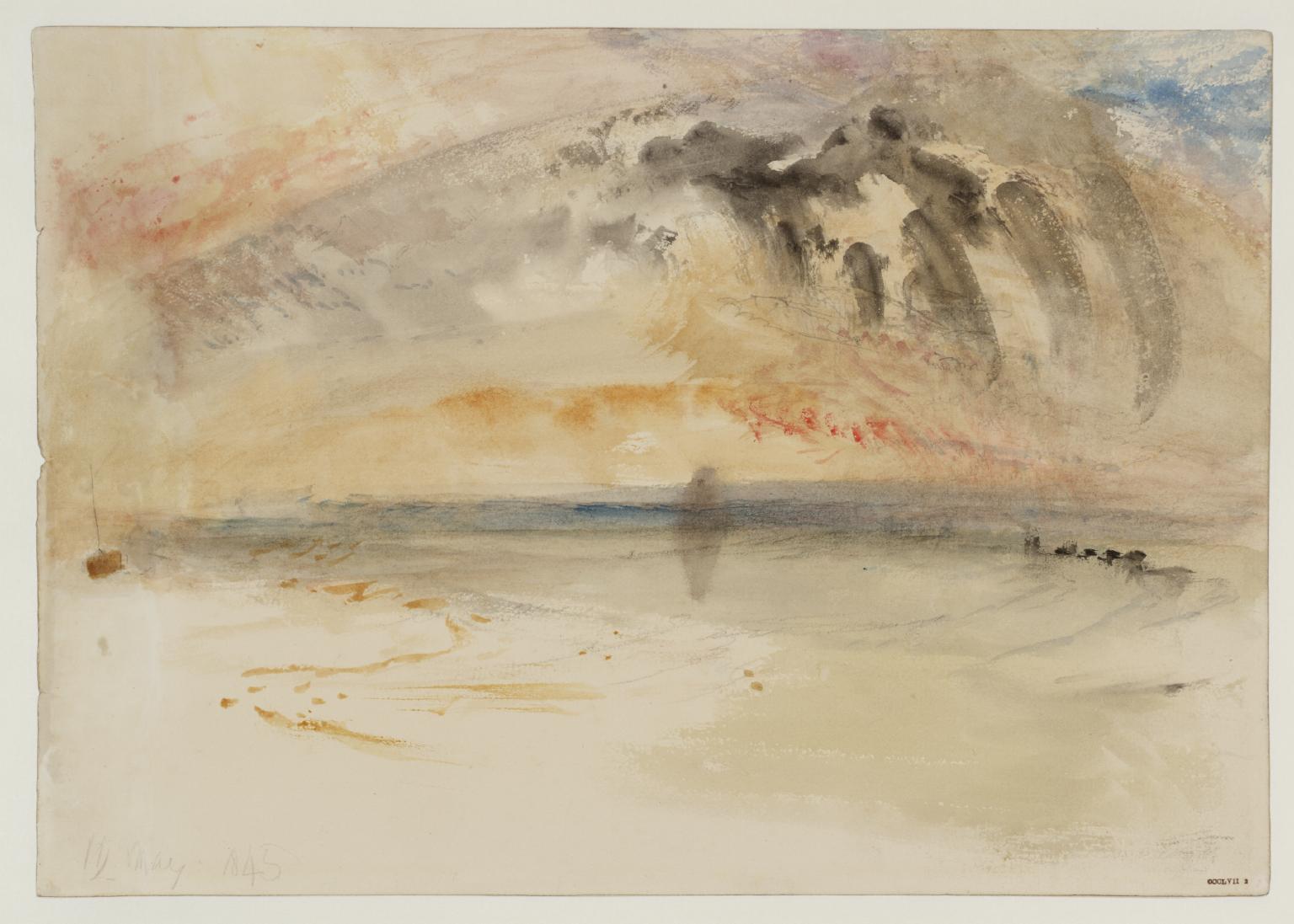
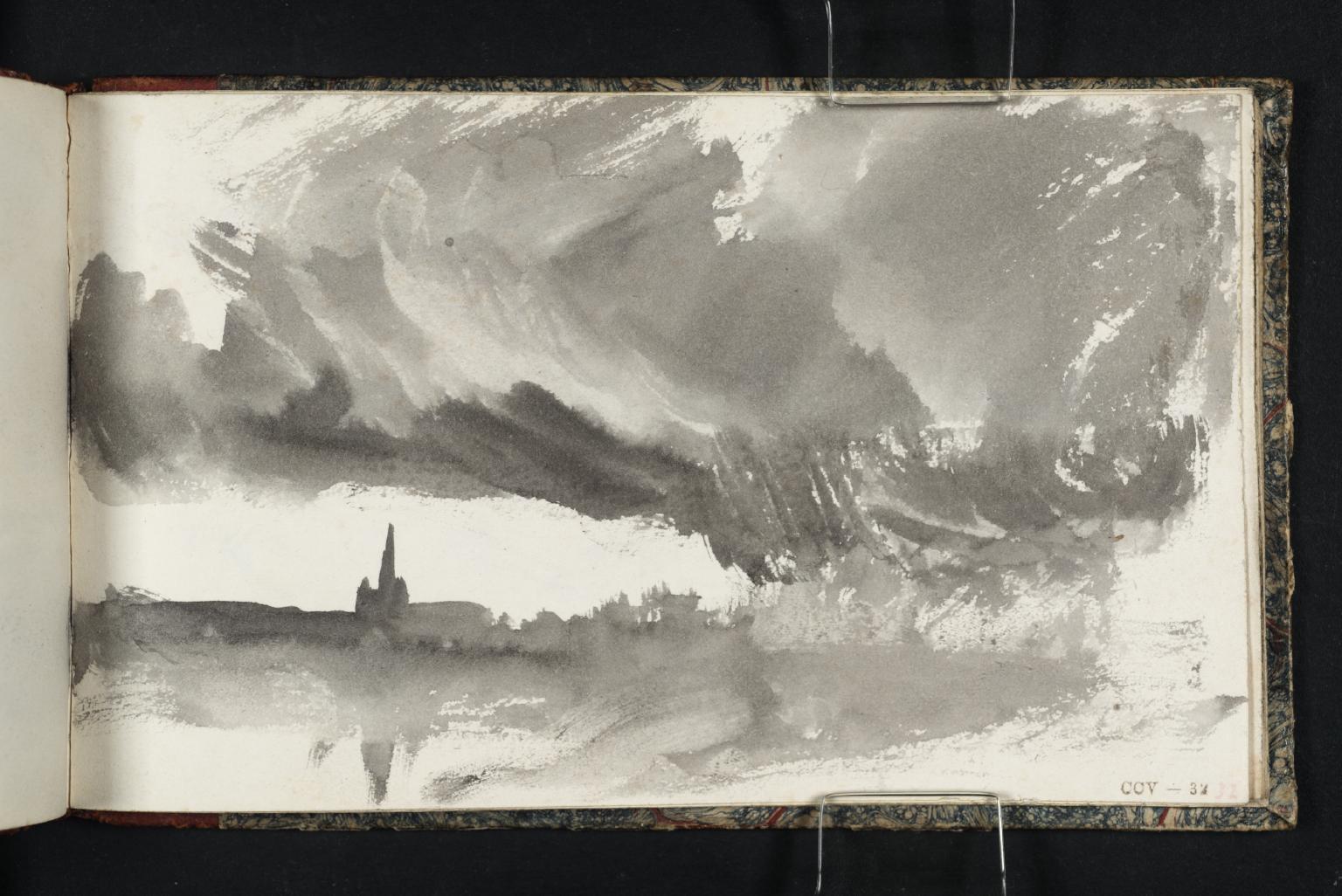
This is the “Figures and Coastal Terrain” by Joseph Mallord William Turner. The sketch is a quick study in graphite and watercolour on paper, a medium Turner favored for its immediacy and transparency. It dates from around 1841–45, a period when he was experimenting with light and atmosphere on the brink of his mature style. The composition shows a shoreline with a small village or harbor building, a river winding into the sea, and a few figures moving along the dunes. Turner’s treatment of the light on the water is striking – a pale glow that almost seems to glow, hinting at the fleeting nature of weather he captured so often in his larger canvases. The piece is part of the Turner Bequest, the generous collection of his works that the nation accepted in 1856. It was included in the “Late Turner: Painting Set Free” touring exhibition, which highlighted his later experimentation and freer brushwork. This study demonstrates how Turner used modest sketches to refine composition, colour and the drama of coastal scenes that would become his hallmark. It offers a window into his creative process, showing how even a small sheet of paper can hold the same power as his great seascapes.
See it in person
Figures and ?Coastal Terrain is in the collection of Tate Britain on Millbank, London — free to enter. Point your phone at any artwork there and audioguide.london plays a free audio guide in six languages — no app download needed.