Figure
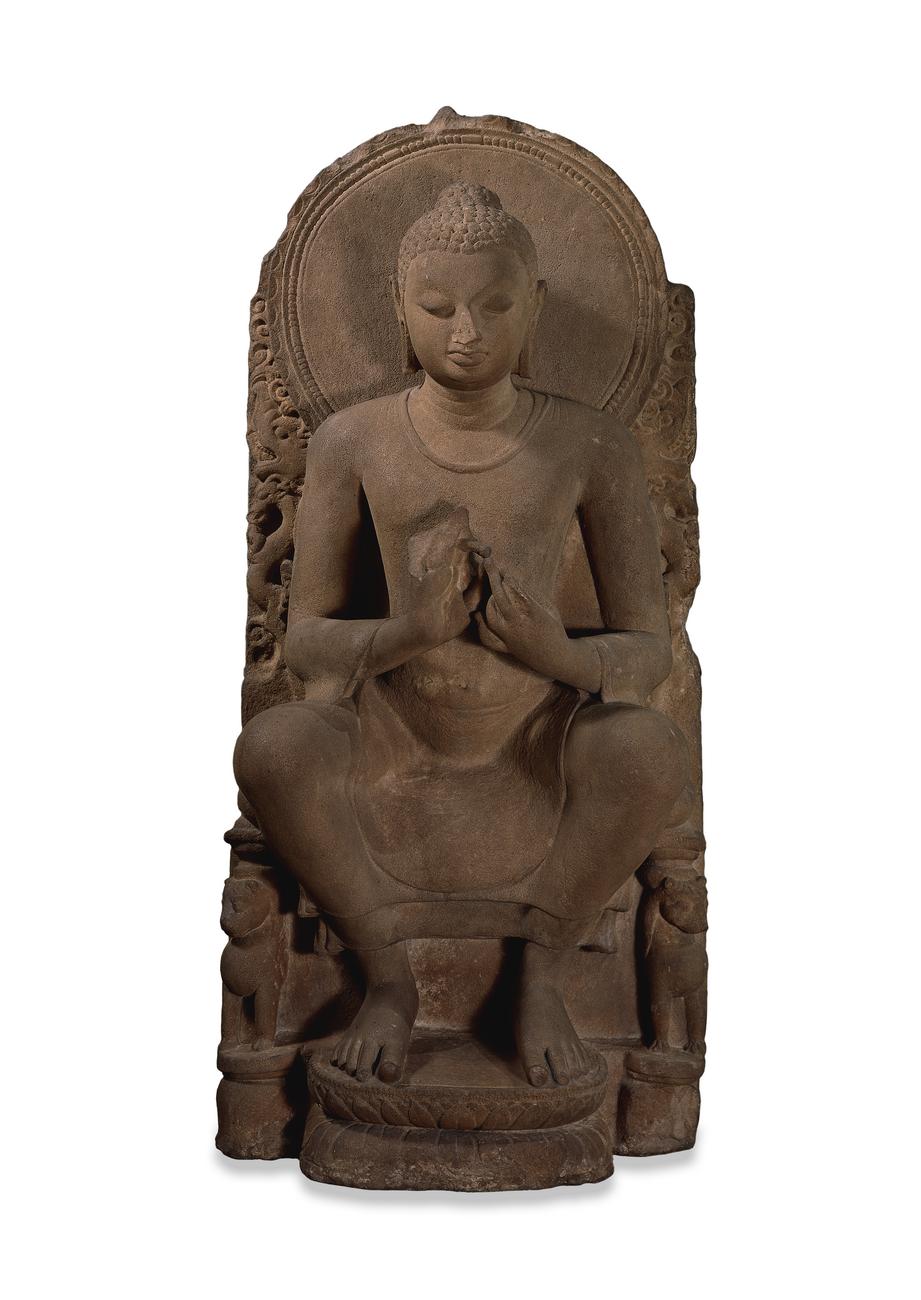
- Gallery: Room 33
- Made in: Sarnath
- Date: 5thC-6thC
- Object type: figure
- Materials: sandstone
- Museum number: 1880.7
- Museum: The British Museum
- Collection record: British Museum website
- Image © The Trustees of the British Museum, shared under a CC BY-NC-SA 4.0 licence.
Listen to the free audio guide
About this object
This is a sandstone figure of the Buddha seated on a richly decorated throne. The statue, from Sarnath in India, dates to the 5th or 6th century. The Buddha’s hands show a gesture of teaching, and his throne is flanked by carved lions, vyālas, and makaras, indicating his power and importance. His halo is especially striking, and while the nose is missing, the serene expression remains clear. The figure's robes are carved simply, draping the form in a style typical of the Sarnath school. The throne’s ornate details reflect a growing tradition of depicting the Buddha not just as a human teacher, but as a divine figure in celestial settings. This piece captures a key moment in the evolution of Buddha imagery in Indian art.
See it in person
Figure is on display in Room 33 at the British Museum on Great Russell Street, Bloomsbury, London — free to enter. Choose British Museum on audioguide.london and take a photo of it to hear this free audio guide in six languages — no app download needed.
New, in beta. British Museum support has just launched and is still improving: over 1,000 objects so far, with more added all the time.