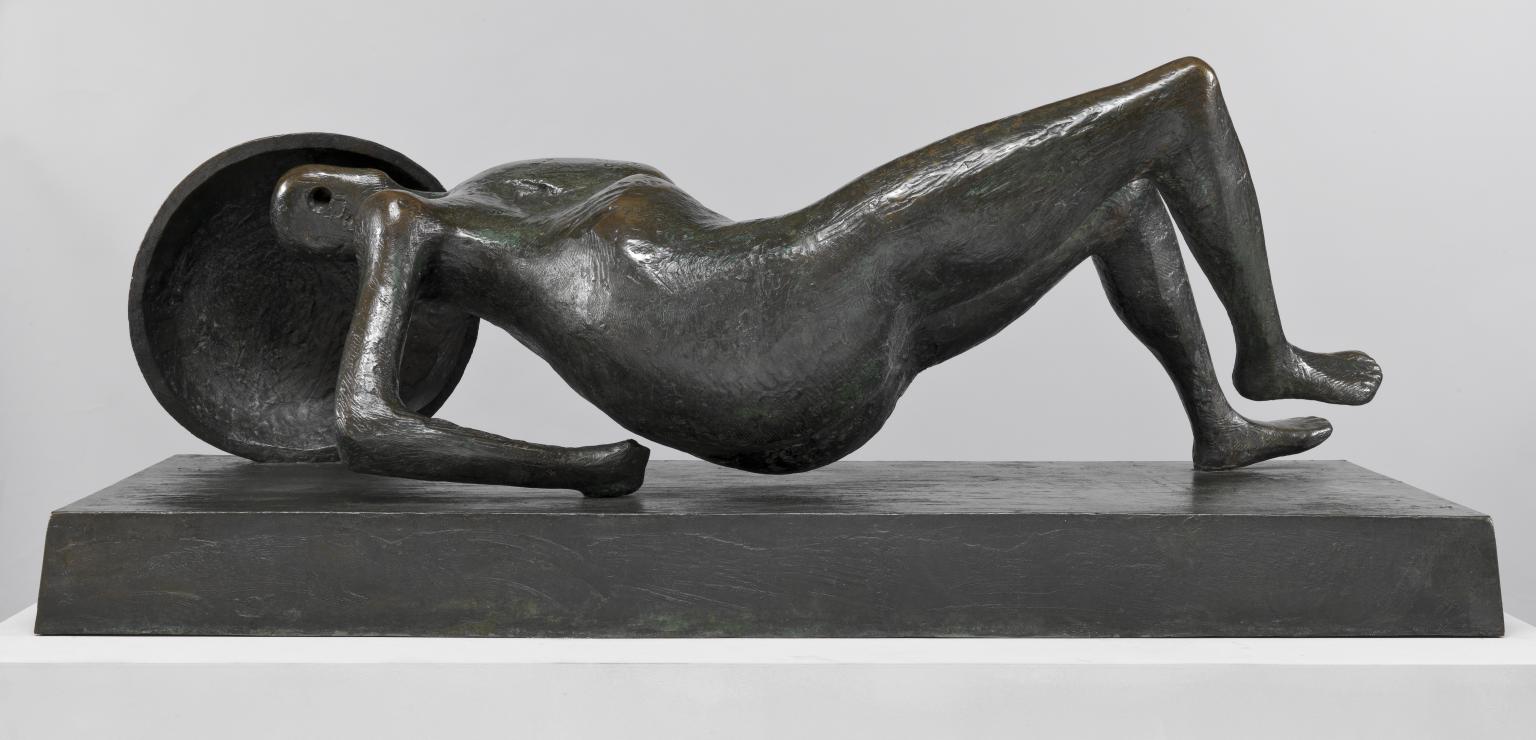
Falling Warrior
- Artist: Henry Moore OM, CH
- Date: 1956–7, cast c.1957–60
- Medium: Bronze
- Dimensions: object: 670 x 1540 x 850 mm
- Museum: Tate Britain
- Collection record: Tate Britain website
Listen to the free audio guide
About this artwork
This is “Falling Warrior” by Henry Moore. The bronze figure rises about 1.7 m tall, with a base that allows the torso and arms to project forward into the air. The sense of movement in this pose was very important for Moore – he said, “I wanted a figure that was still alive… [I made] the action that of a figure in the act of falling, and the shield became a support for the warrior, emphasising the dramatic moment that precedes death.” The weight is implied by the thickness of the body; the shoulders spread, the legs thrust out as if catching a breeze. He cast six large male figures during his career; “Falling Warrior” is one of those and one of only three to show a male figure alone. In the 1950s, just after the war, Moore was pushing against rigid figurative norms, looking for a gesture that felt alive. The shield is not a prop but a functional counterweight, letting the head lean forward as if caught by an invisible hand. The bronze finish captures subtle play of light on carved folds and creates a quiet yet urgent drama in the open space before the figure collapses onto its own feet.
See it in person
Falling Warrior is in the collection of Tate Britain on Millbank, London — free to enter. Point your phone at any artwork there and audioguide.london plays a free audio guide in six languages — no app download needed.