East Greek lekane
- Gallery: Room 13
- Maker: Attributed to Painter of the Aphrodite Bowl
- Culture: East Greek; Archaic Greek
- Made in: Chios
- Date: 625BC-610BC (circa)
- Object type: lekane
- Materials: pottery
- Museum number: 1888,0601.456.d
- Museum: The British Museum
- Collection record: British Museum website
- Image © The Trustees of the British Museum, shared under a CC BY-NC-SA 4.0 licence.
Listen to the free audio guide
In the museum now? Point your phone at the next object and hear its guide.
About this object
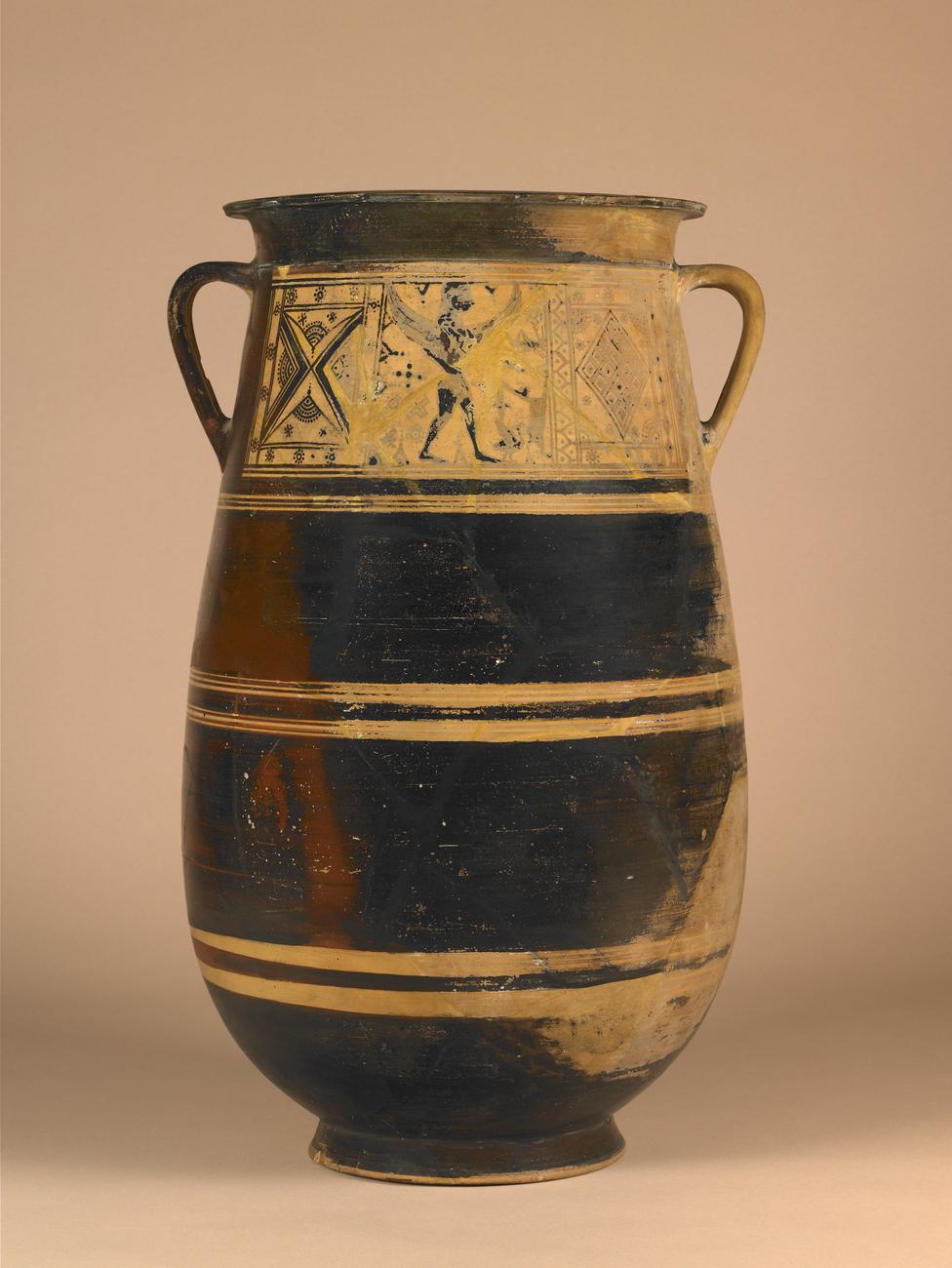
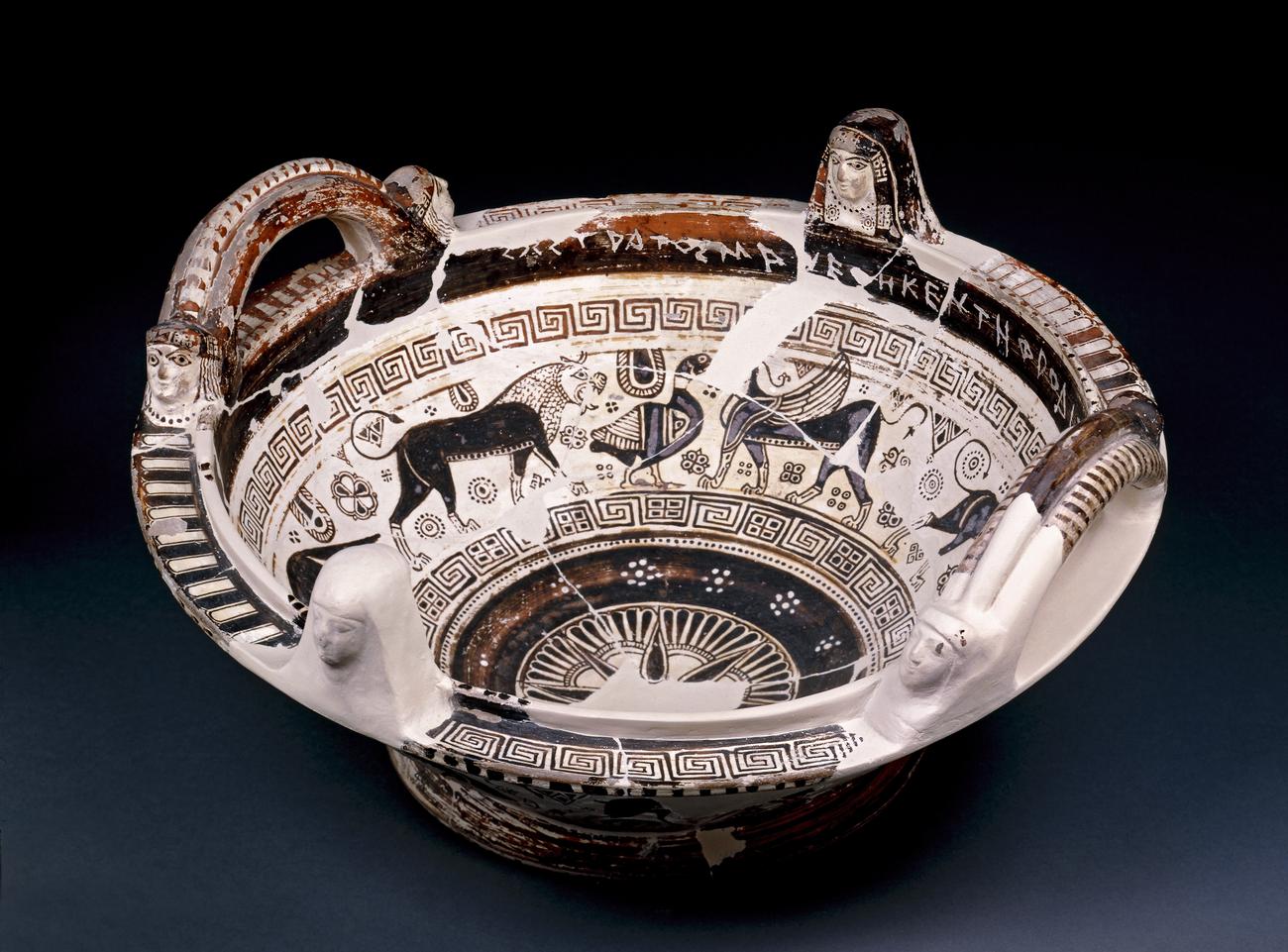
Before you stands an East Greek lekane, a beautifully reconstructed dish from around 620 BCE, crafted on the island of Chios. Attributed to the Painter of the Aphrodite Bowl, this piece is a standout example of Wild Goat Style pottery.
The lekane features elaborate female head protomes—small sculpted heads framing the handles and rim. The surface is vibrant with a white slip and black glaze. You’ll see intricate patterns like a Greek key motif and rosettes, with animals such as a sphinx, goat, and lion in the main frieze.
Inside, a Greek inscription reads, “Sostratos dedicated me to Aphrodite.” This personal dedication adds a unique story to the artwork. It was likely used in a religious setting, possibly within the Sanctuary of Aphrodite at Naukratis.
This lekane is not only a masterpiece of Archaic Greek artistry but also a rare survivor of its time, offering a window into the rituals and craftsmanship of ancient East Greece.
See it in person
East Greek lekane is on display in Room 13 at the British Museum on Great Russell Street, Bloomsbury, London — free to enter. Choose British Museum on audioguide.london and take a photo of it to hear this free audio guide in six languages — no app download needed.
New, in beta. British Museum support has just launched and is still improving: over 1,000 objects so far, with more added all the time.