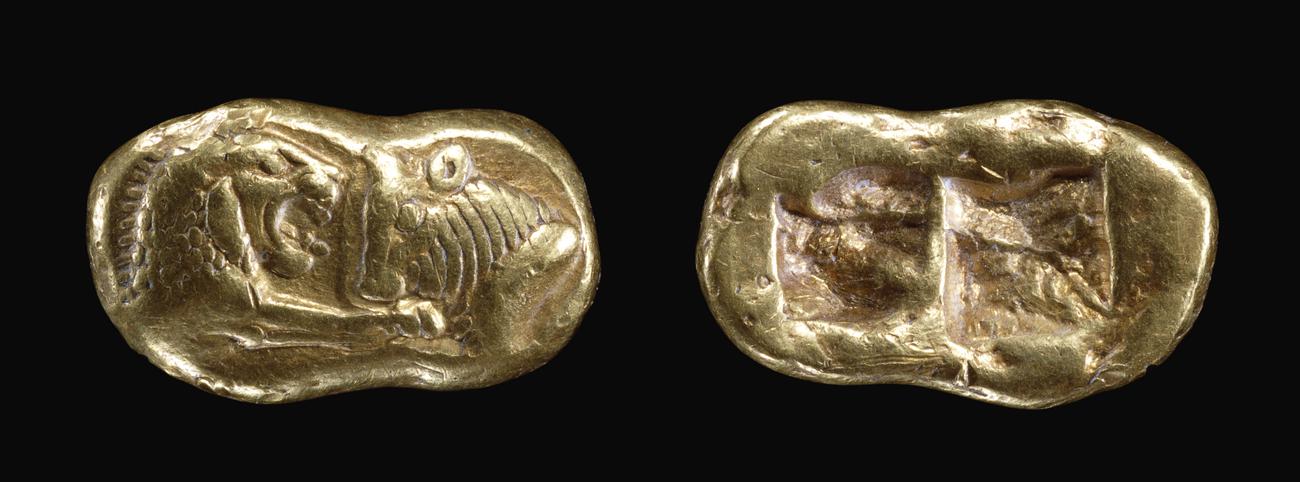
Coin of Croesus
- Audio guide stop: 232
- Gallery: Room 13
- Culture: Greek
- Made in: Lydia (historic)
- Object type: coin
- Materials: gold
- Museum number: RPK,p146B.1.Sam
- Museum: The British Museum
- Collection record: British Museum website
- Image © The Trustees of the British Museum, shared under a CC BY-NC-SA 4.0 licence.
Listen to the free audio guide
About this object
This is the Coin of Croesus, a gold coin made in ancient Lydia—an area in what is now Turkey. As you look at it closely, take note of its lustrous gold surface and the carefully crafted details.
This coin is one of the earliest known examples of a gold coin used as currency, marking a significant step in economic history. It was made long before the use of modern mints and banks became common.
The coin comes from the Greek culture and dates back to a time when Lydia was a powerful kingdom. This remarkable artifact has been in our collection since 1824, bequeathed to us by Richard Payne Knight. Its size is about 17 millimetres in diameter and it weighs approximately 8 grams, making it both small and precious.
See it in person
Coin of Croesus is on display in Room 13 at the British Museum on Great Russell Street, Bloomsbury, London — free to enter. Choose British Museum on audioguide.london and type its audio guide stop number, 232, from the gallery label, or take a photo of it, to hear this free audio guide in six languages — no app download needed.
New, in beta. British Museum support has just launched and is still improving: over 1,000 objects so far, with more added all the time.