Designs for Sandycombe Lodge, Twickenham
- Artist: Joseph Mallord William Turner
- Date: c.1809–11
- Medium: Pen and ink and graphite on paper
- Dimensions: support: 126 x 201 mm
- Museum: Tate Britain
- Collection record: Tate Britain website
Listen to the free audio guide
About this artwork
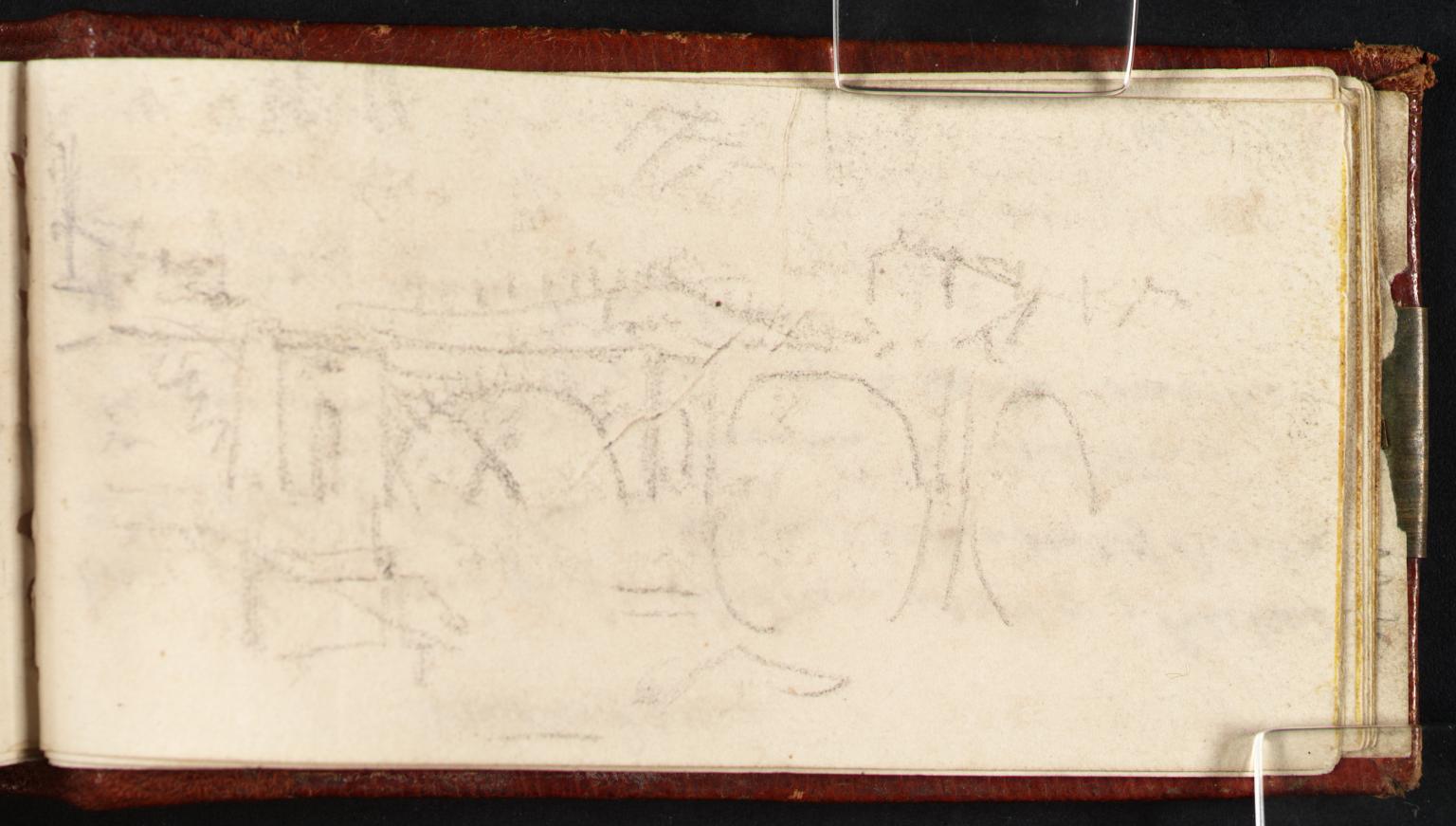
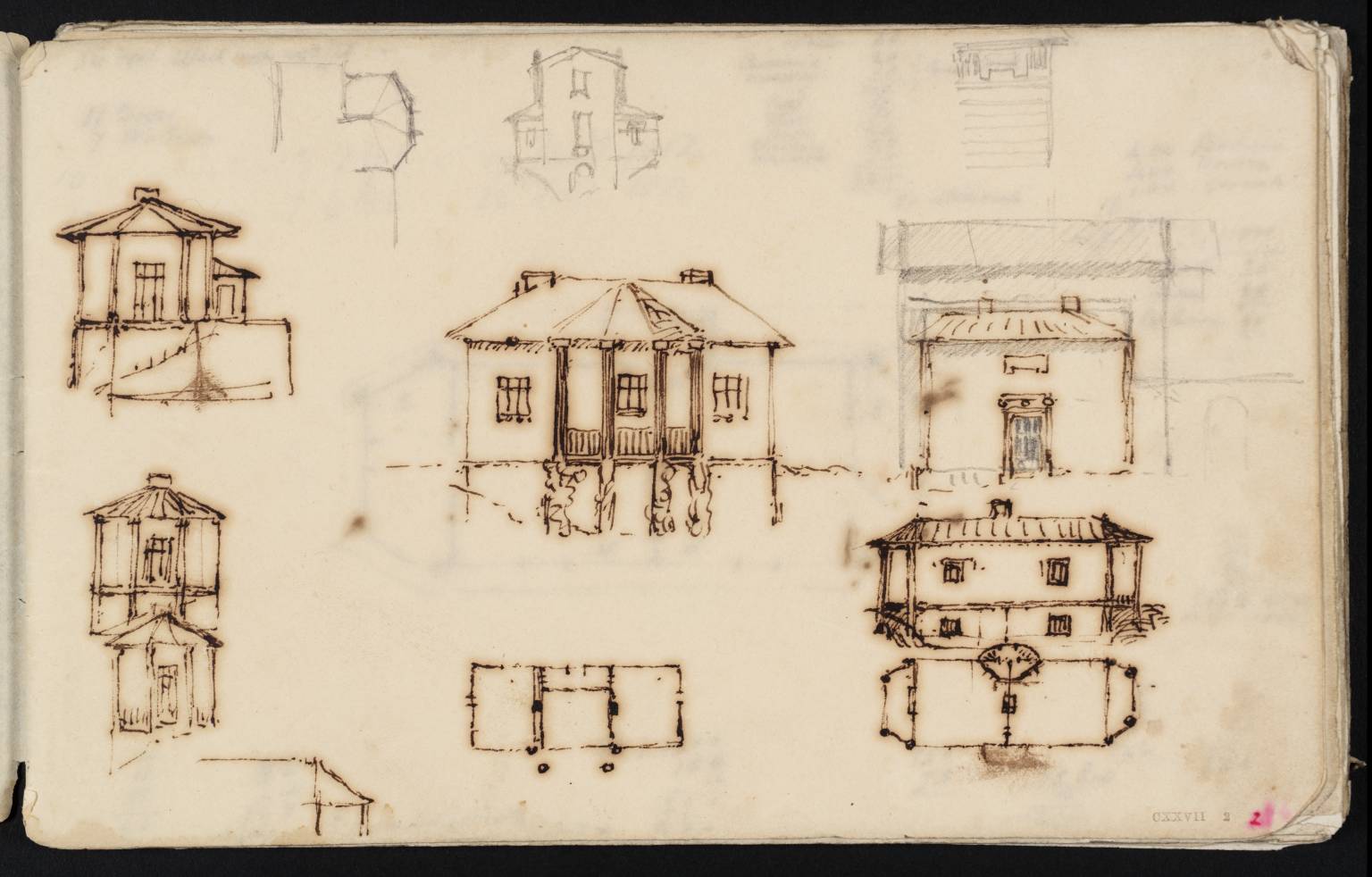
This is the “Designs for Sandycombe Lodge, Twickenham” by Joseph Mallord William Turner. Turner sketches this small, 126 × 201 mm drawing around 1809‑11, a time when he was still exploring architectural subjects before he became the master of light and sea. The work is a pen‑and‑ink, graphite study of the lodge’s façade, rendered with crisp lines that show the building’s classical proportions and detailed windows.
It belongs to his “Sandycombe and Yorkshire Sketchbook,” a collection of studies that reveal his fascination with the formal qualities of domestic architecture. The drawing is diagrammatic, almost like a blueprint, yet Turner’s hand brings a subtle sense of mood to the otherwise precise composition. Notice the careful balance of shadow and light across the façade—an early hint of the atmospheric mastery he would later develop.
Because this piece was accepted by the nation as part of the Turner Bequest in 1856, it has been preserved as an essential record of the artist’s formative years. It offers a rare glimpse into how Turner’s artistic vision was initially shaped by classical forms, setting the stage for the dramatic landscapes that would make him a national icon.
See it in person
Designs for Sandycombe Lodge, Twickenham is in the collection of Tate Britain on Millbank, London — free to enter. Point your phone at any artwork there and audioguide.london plays a free audio guide in six languages — no app download needed.