Dancing Peasants, Brittany
- Artist: Joseph Mallord William Turner
- Date: c.1826–8
- Medium: Watercolour, gouache and pen and watercolour on paper
- Dimensions: support: 132 x 190 mm
- Museum: Tate Britain
- Collection record: Tate Britain website
Listen to the free audio guide
About this artwork
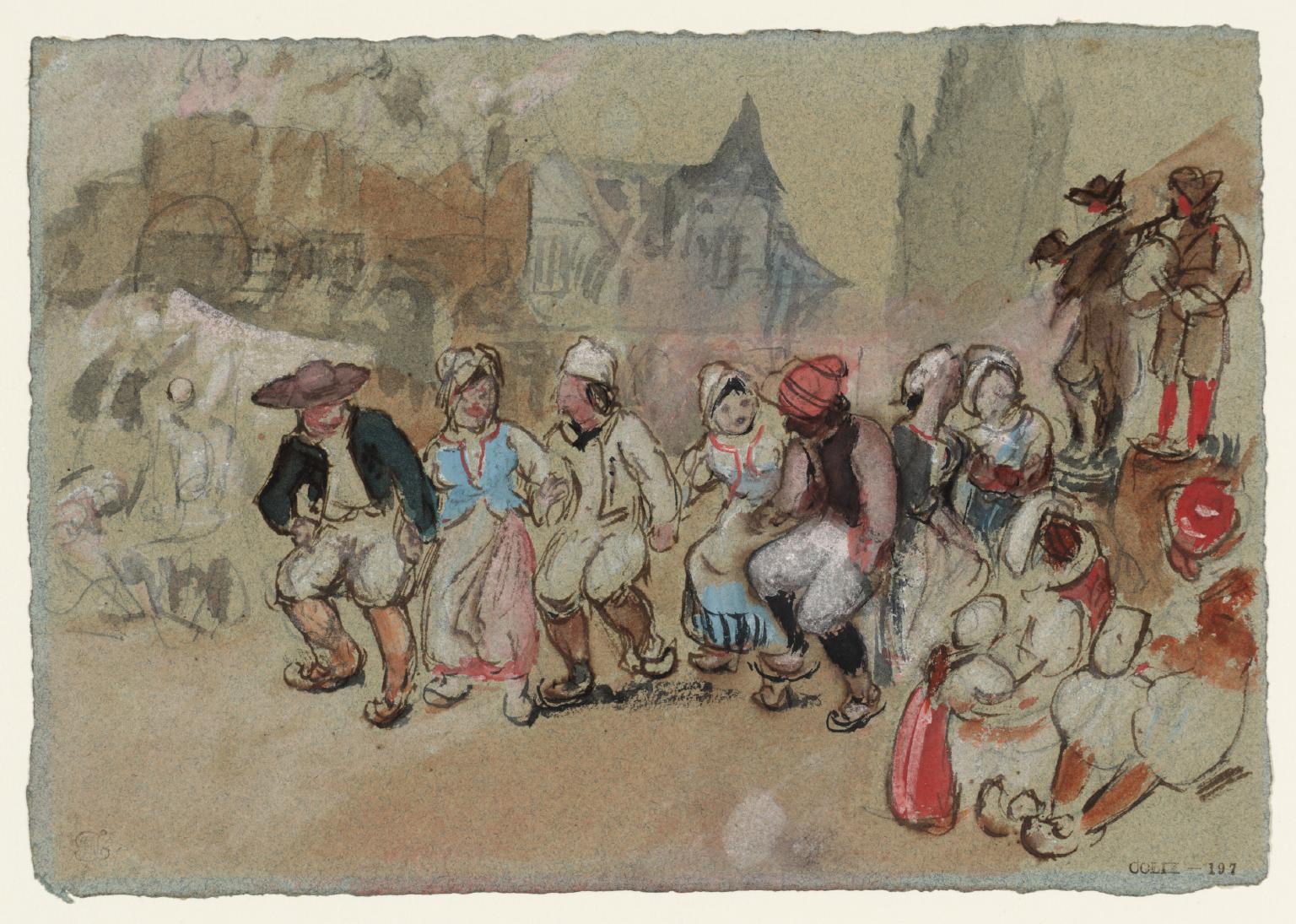
This is the “Dancing Peasants, Brittany” by Joseph Mallord William Turner. Created around 1826‑28, it’s a small watercolour, gouache and pen on paper, measuring just over 13 by 19 cm, but its energy feels much larger.
During his travels across France, Turner was fascinated by the way people wore their clothes, and he kept detailed sketches of Breton women’s headwear. Here, those details come alive: a lively, almost comic group caught mid‑dance, arms raised, skirts swirling, a drum thudding in the background and a violinist keeping time. The scene feels like a snapshot of everyday Breton life—joyful, spontaneous, and a touch theatrical, much the sort of image that still delights tourists today.
In the late 1820s Turner was turning his attention to figure subjects, a move that critics sometimes derided, but here it’s a triumph. The painting shows not only his skill in rendering light and color but also his keen eye for costume and movement. It was accepted into the national collection as part of the Turner Bequest in 1856, a testament to its lasting appeal.
See it in person
Dancing Peasants, Brittany is in the collection of Tate Britain on Millbank, London — free to enter. Point your phone at any artwork there and audioguide.london plays a free audio guide in six languages — no app download needed.