Ceremonial keris and sheath
- Audio guide stop: 635
- Gallery: Room 34
- Culture: Bali
- Made in: Bali (probably)
- Date: 1800s-1920 (circa)
- Object type: kris, kris-sheath
- Materials: iron; gold; wood; steel
- Museum number: As1926,0607.1.a-b
- Museum: The British Museum
- Collection record: British Museum website
- Image © The Trustees of the British Museum, shared under a CC BY-NC-SA 4.0 licence.
Listen to the free audio guide
About this object
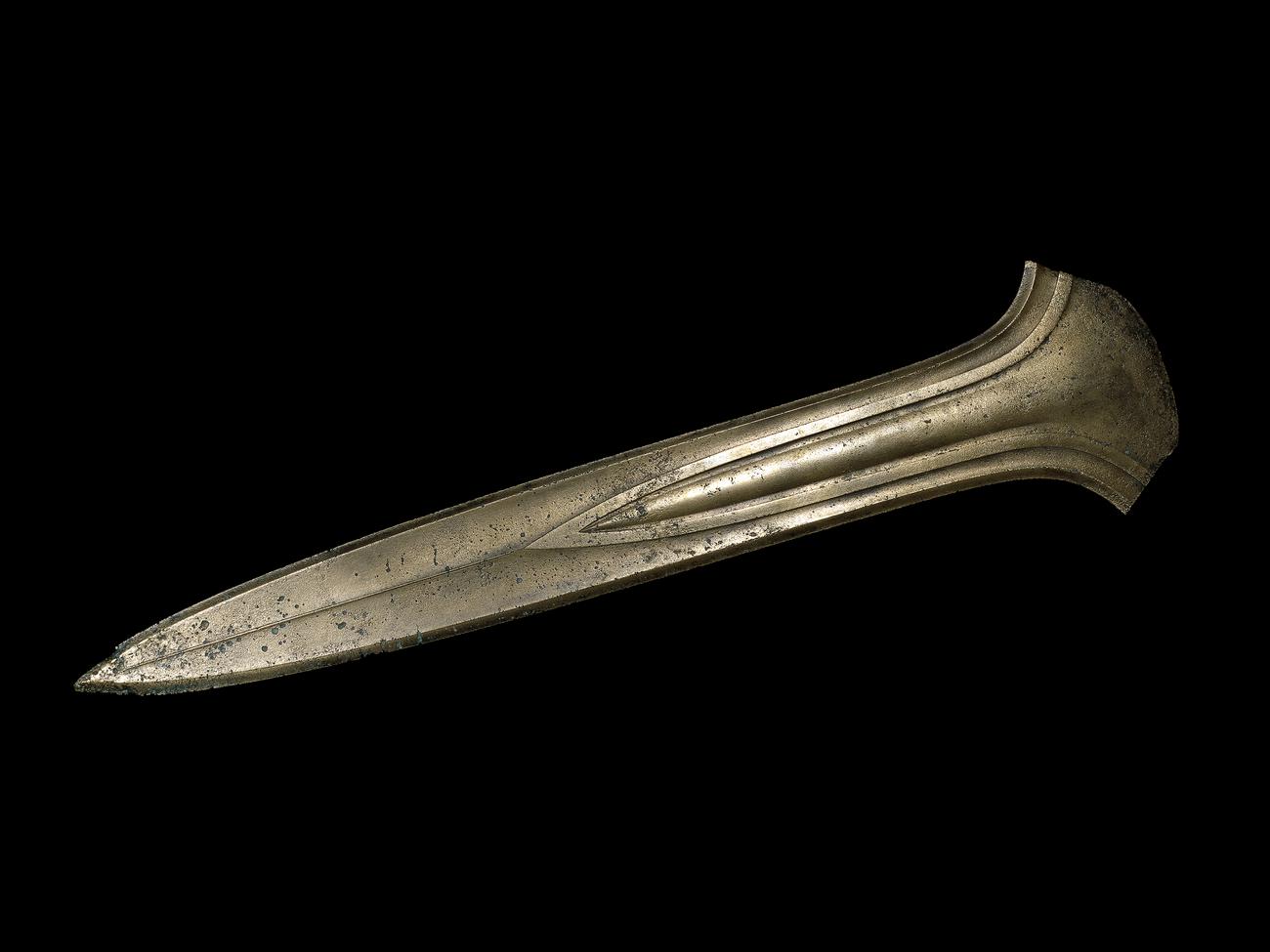
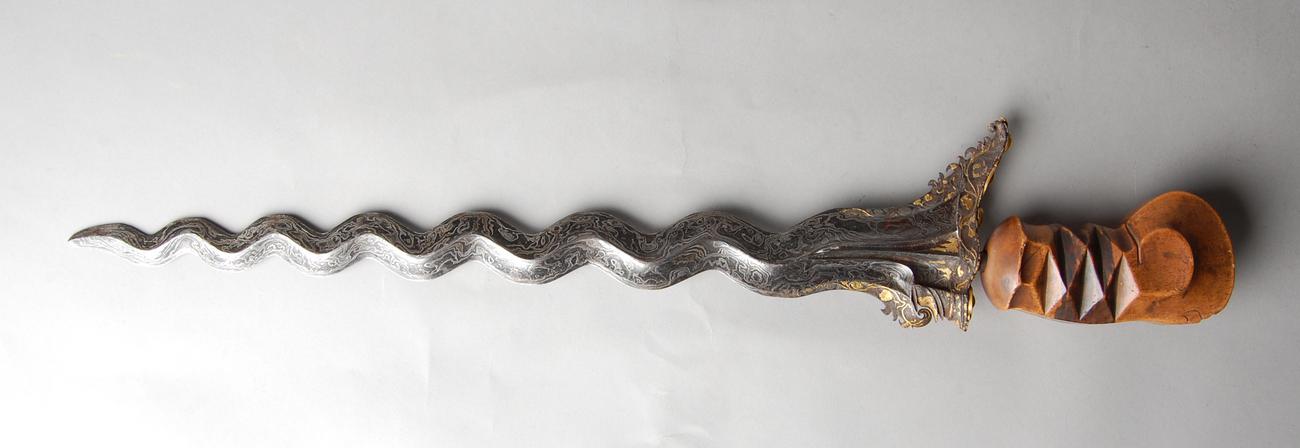
In front of you is a ceremonial kris and its sheath, a striking example of Balinese craftsmanship from the 1800s to 1920. The kris, or ceremonial dagger, is forged from iron and steel, with a pattern known as the pamor—here described as a bright beras wutah, resembling scattered rice. Gold detailing adds elegant contrast, especially on the blade’s base, where chased gold depicts plants and flowers.
The wooden hilt is carved in a traditional cekah style, made from timoho wood, which matches the sheath. This sheath is also carved and painted red on the back, completing the piece with a strong visual presence.
Kris such as this are highly symbolic in Balinese culture, often used in ceremonies and rituals. Every detail reflects the artisan's skill and the cultural importance of the object. While the blade’s collar appears to be missing, the rest remains in notable condition, showing both strength and artistry.
See it in person
Ceremonial keris and sheath is on display in Room 34 at the British Museum on Great Russell Street, Bloomsbury, London — free to enter. Choose British Museum on audioguide.london and type its audio guide stop number, 635, from the gallery label, or take a photo of it, to hear this free audio guide in six languages — no app download needed.
New, in beta. British Museum support has just launched and is still improving: over 1,000 objects so far, with more added all the time.