Celtic standing stone
- Gallery: Room 41
- Culture: Celtic
- Date: 5thC-6thC
- Object type: standing stone
- Materials: sandstone (red)
- Museum number: 1861,0209.1
- Museum: The British Museum
- Collection record: British Museum website
- Image © The Trustees of the British Museum, shared under a CC BY-NC-SA 4.0 licence.
Listen to the free audio guide
In the museum now? Point your phone at the next object and hear its guide.
About this object
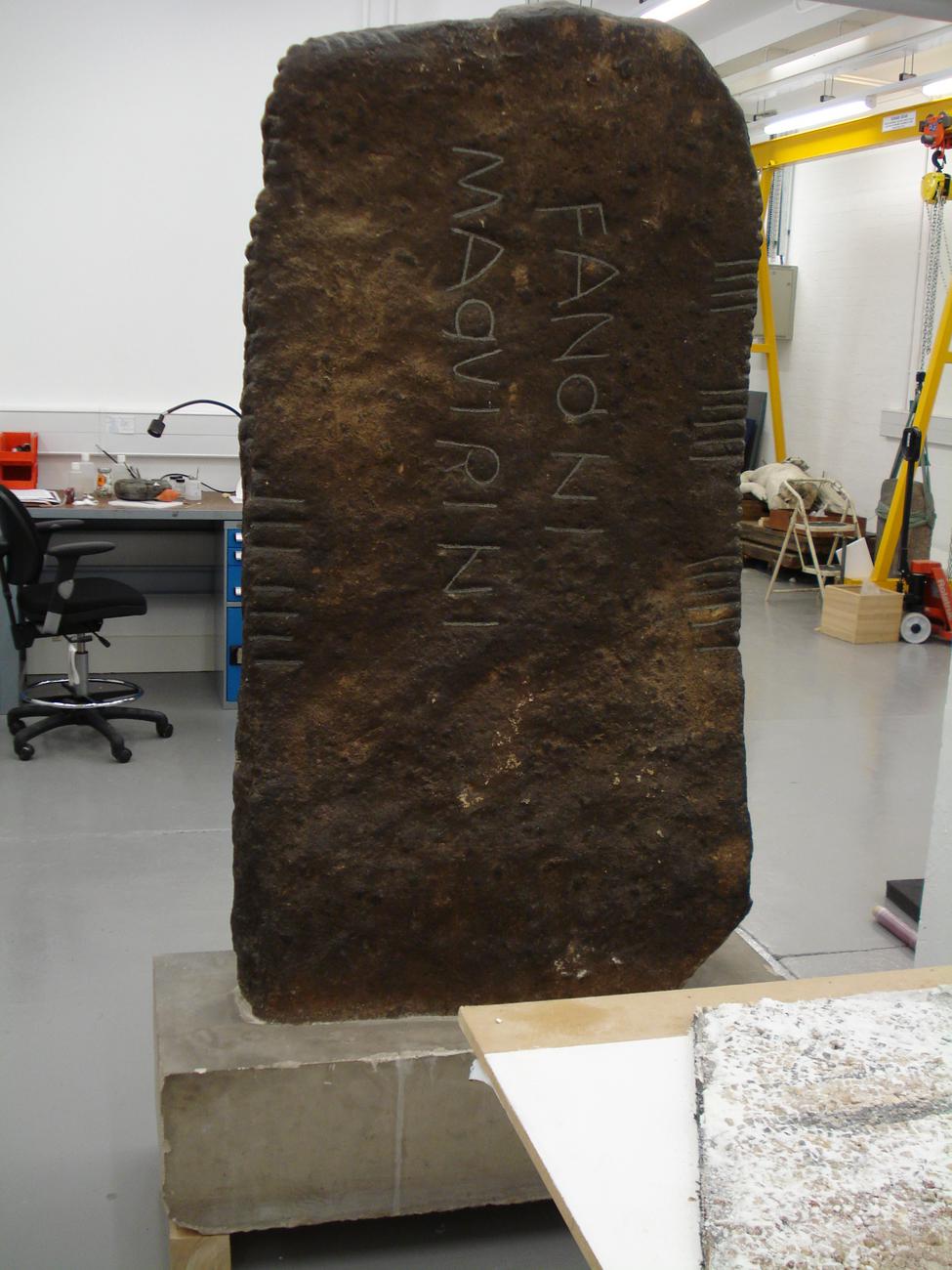
Before you is a Celtic standing stone, a tall red sandstone slab marked with ancient inscriptions. The stone stands nearly two meters high and weighs an estimated 750 kilograms. On one side, Roman letters spell out "FANONI MAQVTRINI," and on the other, "SAGRANVI." These names may belong to local individuals, possibly of importance in their community. Around the edges and top, you'll see Ogam markings—an early Celtic script. The mix of Roman letters and Ogam script tells us this stone was made during a time of cultural change, around the fifth to sixth centuries. The stone originally came from Fardel, a village near Ivybridge and Cornwood in Devon. It was donated to the museum by Captain Pode. Though weathered by centuries, the stone still carries the names and heritage of those who came before us.
See it in person
Celtic standing stone is on display in Room 41 at the British Museum on Great Russell Street, Bloomsbury, London — free to enter. Choose British Museum on audioguide.london and take a photo of it to hear this free audio guide in six languages — no app download needed.
New, in beta. British Museum support has just launched and is still improving: over 1,000 objects so far, with more added all the time.