Caligula’s Palace and Bridge
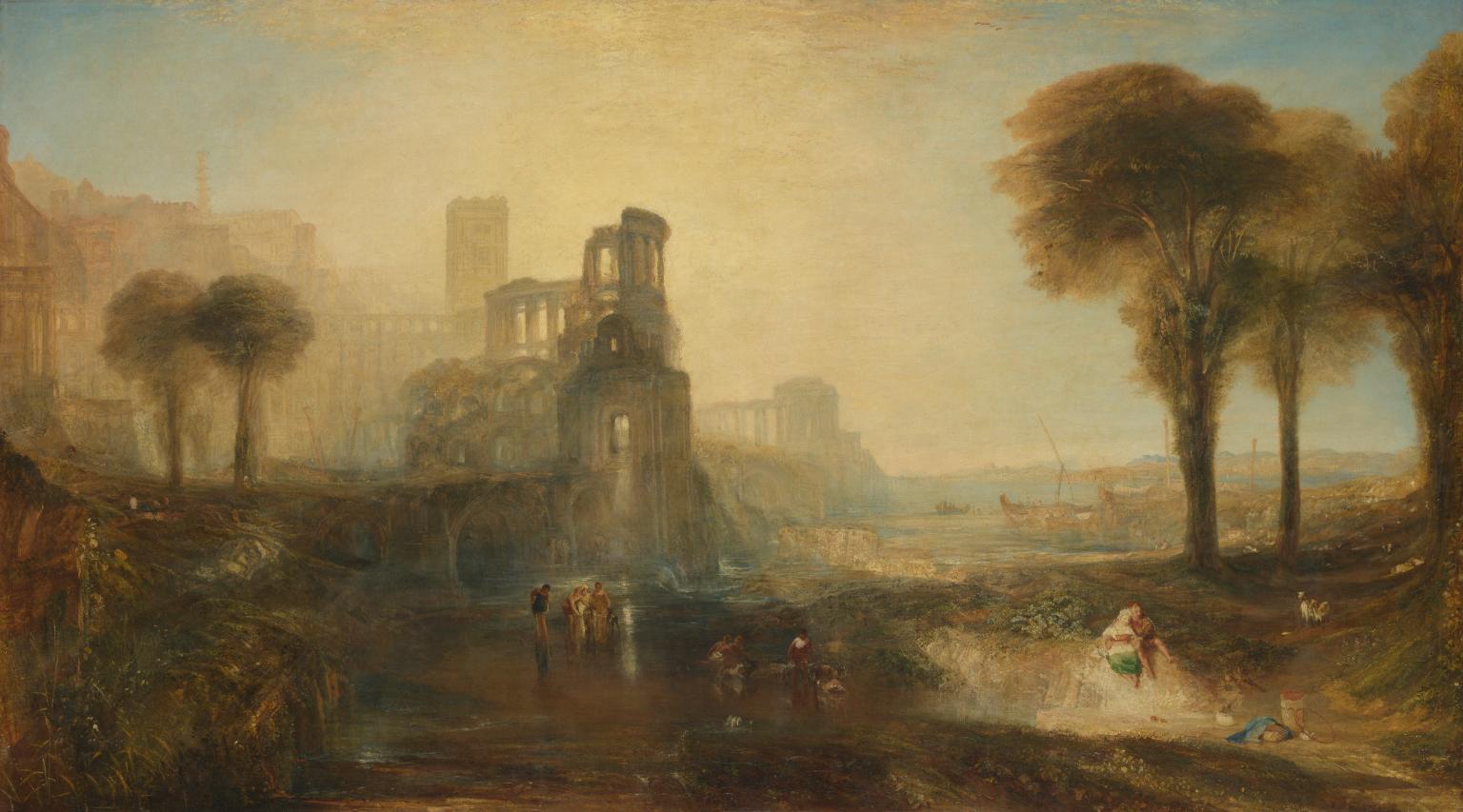
- Artist: Joseph Mallord William Turner
- Date: exhibited 1831
- Medium: Oil paint on canvas
- Dimensions: support: 1372 x 2464 mm
- Museum: Tate Britain
- Collection record: Tate Britain website
Listen to the free audio guide
About this artwork
This is the painting *Caligula’s Palace and Bridge* by Joseph Mallord William Turner. It was finished in 1831, oil on canvas, and shows a once‑glorious Roman bridge turned to ruin. While Caligula’s legend had it as a floating bridge of boats, Turner prefers the image of a crumbling stone arch overgrown with weeds, a visual metaphor for the fleeting nature of imperial glory.
Turner exhibited the work alongside his own verses from “Fallacies of Hope”. That same year, Europe had just witnessed a wave of revolutions, so the painting’s message about the inevitable decline of arrogant rulers hit home. Critics at the time praised the scene’s “magical” atmosphere, and it was paired next to John Constable’s *Salisbury Cathedral from the Meadows*—a juxtaposition critics called “fire and water.”
An engraving by E. Goodall added a few playful children in the foreground, but restoration work has shown those figures were likely painted over later by Turner himself. The canvas survives largely intact, its weathered edges reminding us that even the grandest bridges cannot escape time.
See it in person
Caligula’s Palace and Bridge is in the collection of Tate Britain on Millbank, London — free to enter. Point your phone at any artwork there and audioguide.london plays a free audio guide in six languages — no app download needed.