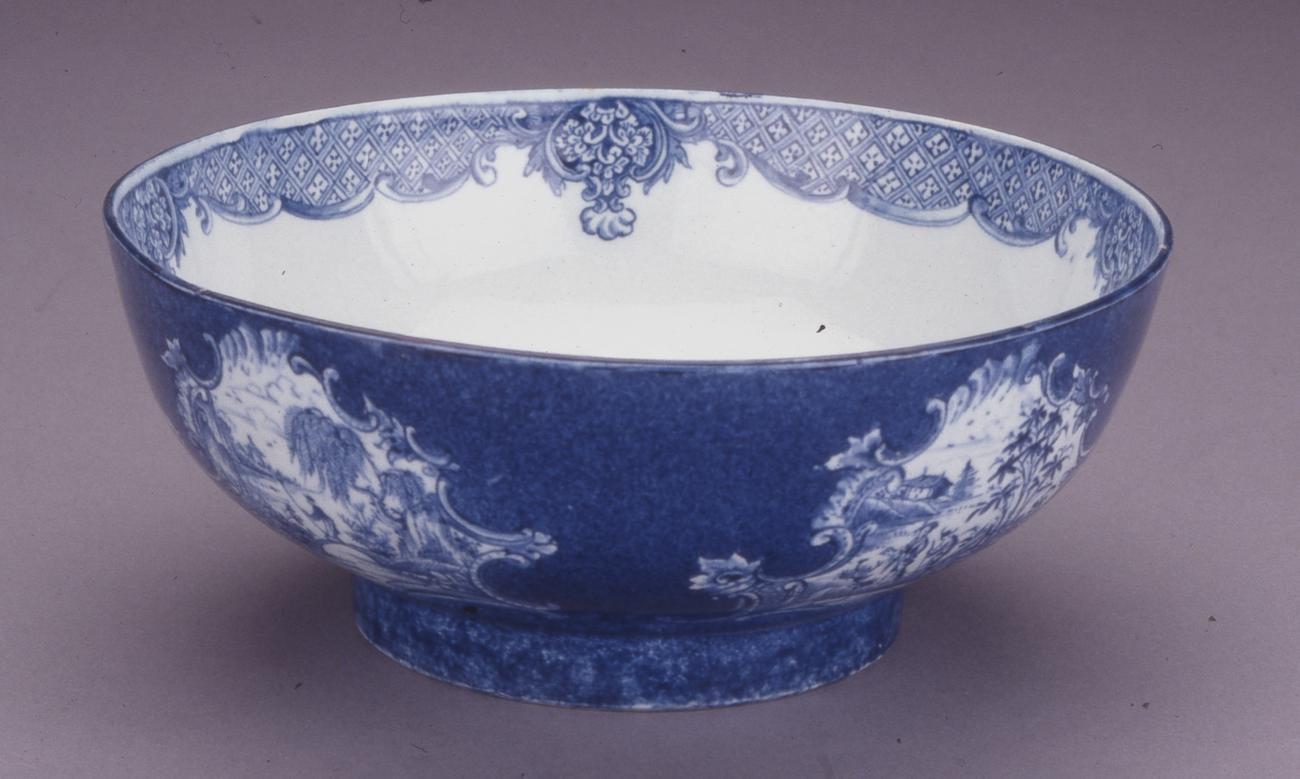
Bowl
- Gallery: Room 46
- Maker: Workshop of Piero Bergantini
- Made in: Faenza
- Date: 1515-1520 (circa)
- Object type: bowl
- Materials: earthenware
- Museum number: 1878,1230.405
- Museum: The British Museum
- Collection record: British Museum website
- Image © The Trustees of the British Museum, shared under a CC BY-NC-SA 4.0 licence.
Listen to the free audio guide
In the museum now? Point your phone at the next object and hear its guide.
About this object
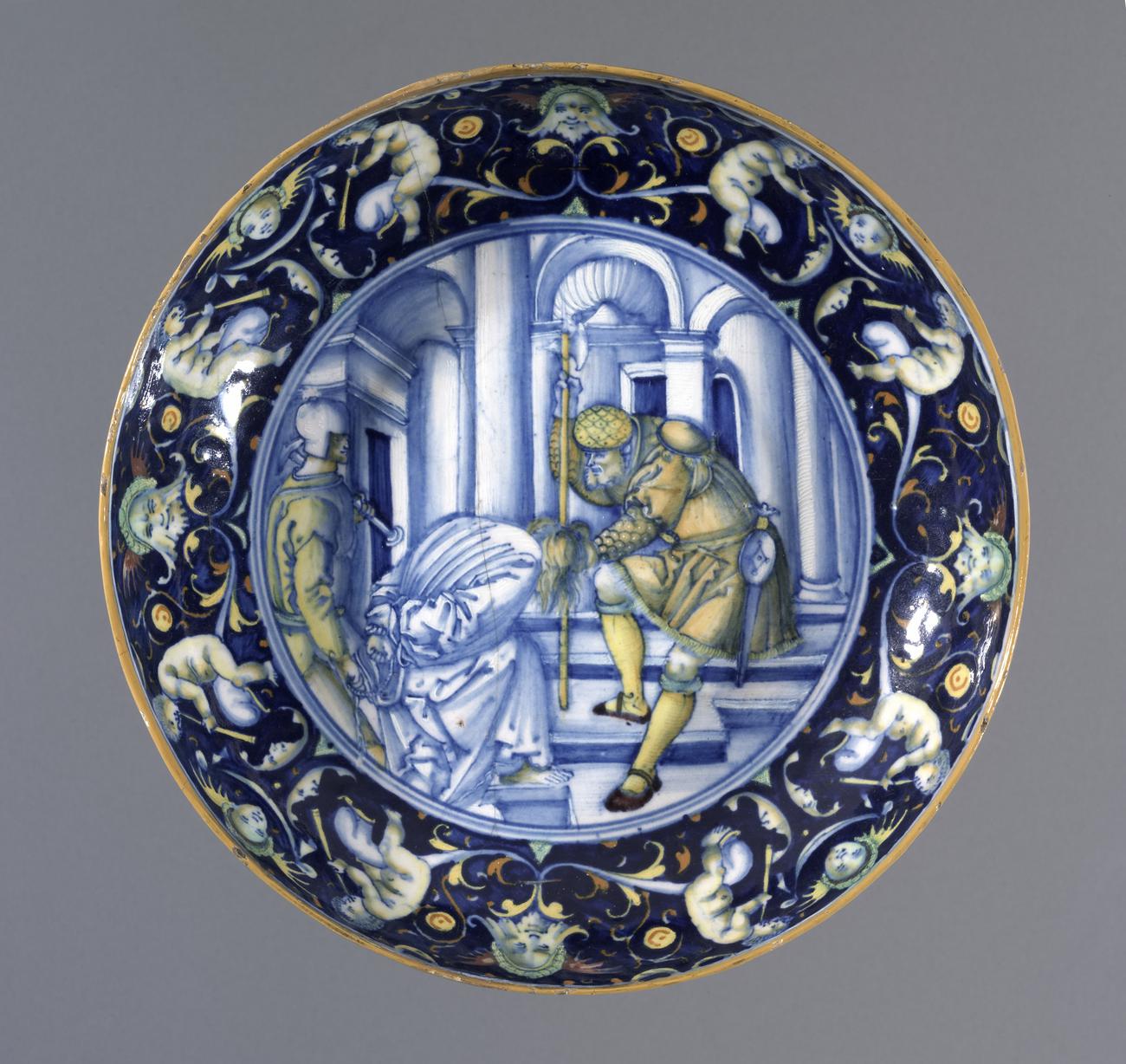
Before you stands a beautifully decorated earthenware bowl, painted with intricate scenes in blue and red pigments on a tin-glazed surface. Created in early 16th-century Faenza, Italy, it features a compelling image of Christ being manhandled by soldiers, drawn from Dürer's or Marcantonio's prints of "Christ before Annas." The background is a complex architectural setting, possibly meant to replace the absence of surrounding figures from the original print. Around the bowl's sides, you’ll notice charming whimsical figures like winged putti, masks, and moons—a common feature in Renaissance decorative art.
On the reverse, rows of pointed arches add symmetry and balance. The base bears the inscription "IN FAENCA," likely a marketing tool to advertise its Italian origin. This bowl was part of a new style of Renaissance maiolica known as istoriato—story-telling through ceramic art. The work showcases the fusion of northern European narrative traditions with Italian decorative refinement. Scholars attribute the piece to the workshop of Piero Bergantini, placing its creation around 1515–1520.
See it in person
Bowl is on display in Room 46 at the British Museum on Great Russell Street, Bloomsbury, London — free to enter. Choose British Museum on audioguide.london and take a photo of it to hear this free audio guide in six languages — no app download needed.
New, in beta. British Museum support has just launched and is still improving: over 1,000 objects so far, with more added all the time.