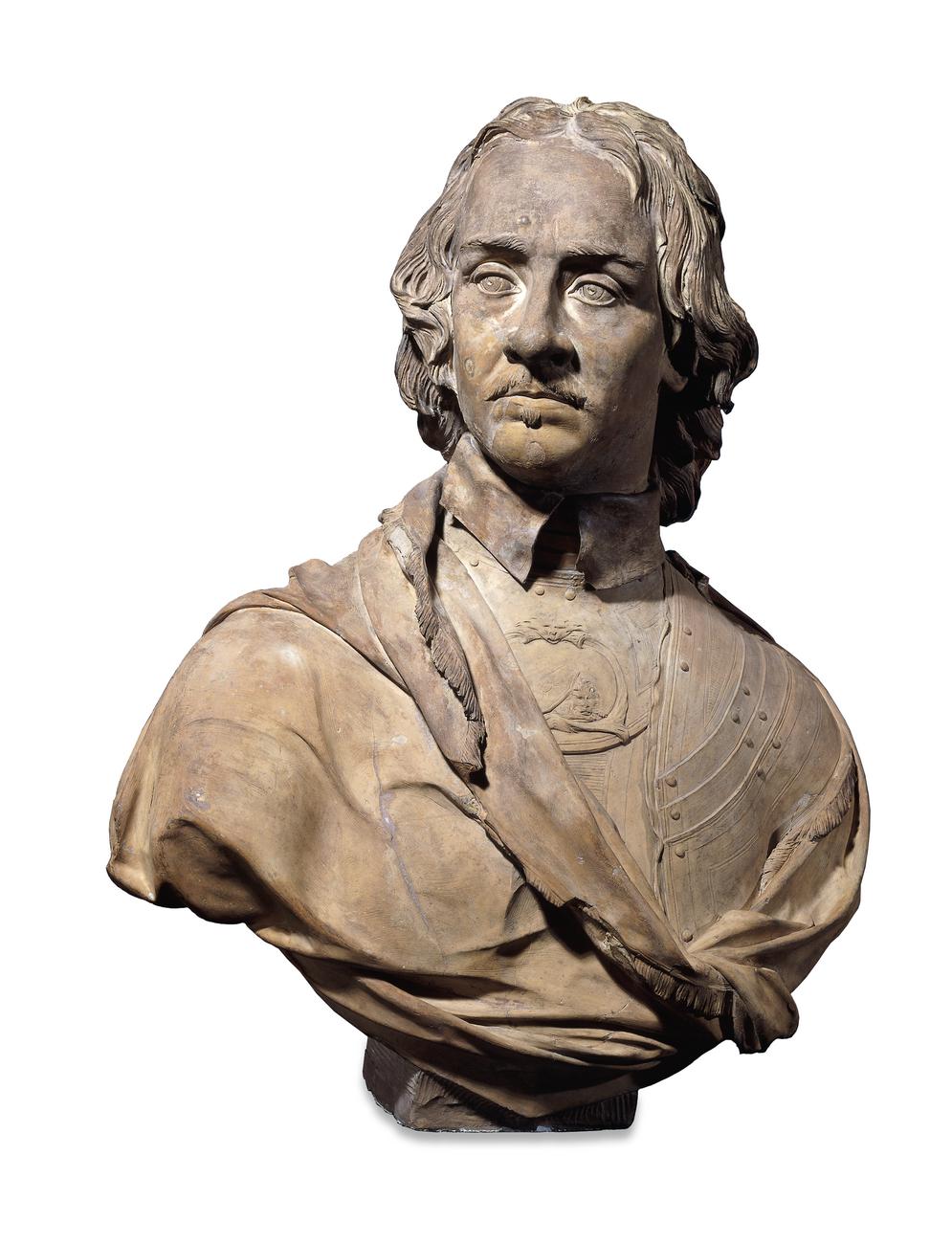
Bust of Oliver Cromwell
- Audio guide stop: 491
- Gallery: Room 46
- Maker: Louis François Roubiliac
- Made in: London (England)
- Date: 1730-1760 (citca)
- Object type: portrait bust
- Materials: terracotta
- Museum number: 1762,0528.7
- Museum: The British Museum
- Collection record: British Museum website
- Image © The Trustees of the British Museum, shared under a CC BY-NC-SA 4.0 licence.
Listen to the free audio guide
About this object
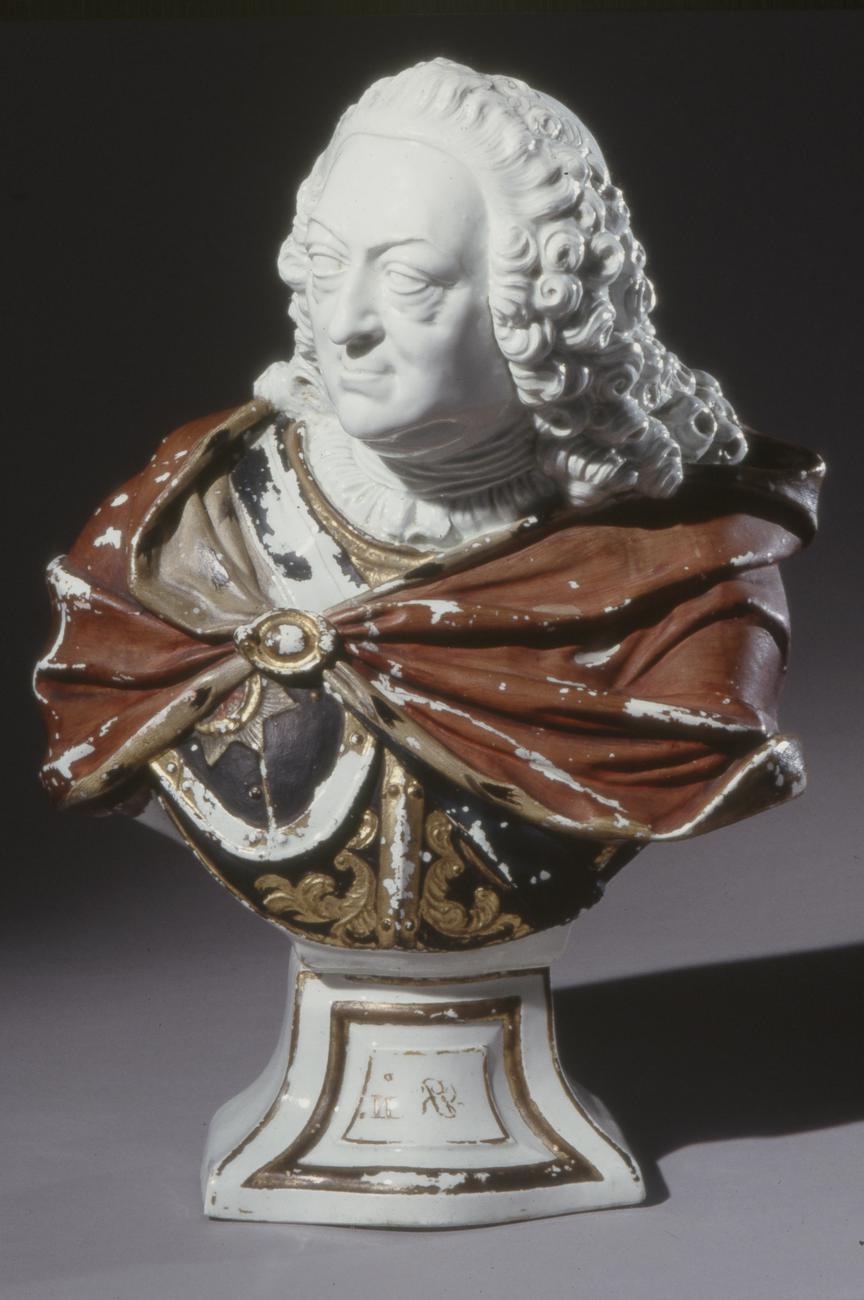
Before you stands a striking terracotta portrait bust of Oliver Cromwell, crafted by the French sculptor Louis François Roubiliac. Created in London probably between 1730 and 1760, it shows Cromwell leaning slightly to the right, wearing armor beneath his drapery.
The material, terracotta, was carefully cast and hand-modeled. Over time, the surface has worn, leaving only faint traces of a dark brown layer once covering the face and hair. Though hollow inside, the bust is cleverly designed — the hair and collar hide a subtle join, a technique used in other terracotta works in the collection.
This bust was donated in 1762 by Dr. Matthew Maty, who acquired it at Roubiliac’s posthumous sale. It’s part of a long tradition of Cromwell portraits, showing the 17th-century leader’s enduring influence even after the era of the Civil War and Protectorate. Roubiliac's version captures the powerful, thoughtful gaze that made Cromwell a central figure in English history.
See it in person
Bust of Oliver Cromwell is on display in Room 46 at the British Museum on Great Russell Street, Bloomsbury, London — free to enter. Choose British Museum on audioguide.london and type its audio guide stop number, 491, from the gallery label, or take a photo of it, to hear this free audio guide in six languages — no app download needed.
New, in beta. British Museum support has just launched and is still improving: over 1,000 objects so far, with more added all the time.