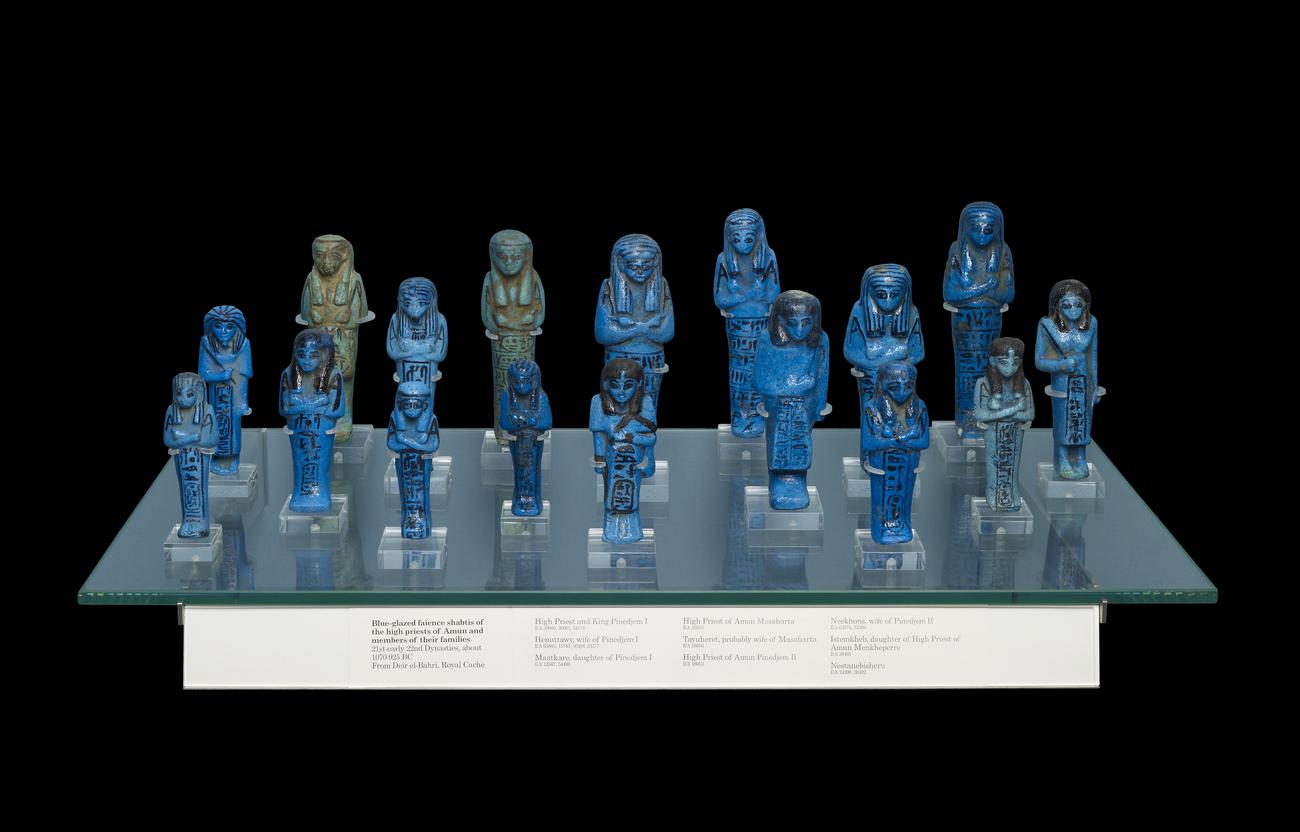
Blue-glazed shabti group
- Audio guide stop: 363
- Gallery: Room 63
- Culture: 21st Dynasty
- Object type: shabti
- Materials: glazed composition
- Museum number: EA30000
- Museum: The British Museum
- Collection record: British Museum website
- Image © The Trustees of the British Museum, shared under a CC BY-NC-SA 4.0 licence.
Listen to the free audio guide
About this object
Before you is a group of blue-glazed shabti, small figures that once held an important role in ancient Egyptian funerary practices. The figures are made of glazed composition and feature rich, striking blue glazing that still gleams after thousands of years.
You’ll notice a painted inscription on the front of the figures. It is written in hieroglyphs, a script used to record sacred and official texts. Specifically, the inscription reads: “khpr-kha-ra stp-n-imn” — a phrase that relates to service in the afterlife. These figures are connected to a high-ranking official named Panedjem I, whose name appears in the text.
This group dates to the 21st Dynasty and was uncovered at Thebes in Upper Egypt. The figures now belong to the collection through a purchase made from the Rev. Greville John Chester.
See it in person
Blue-glazed shabti group is on display in Room 63 at the British Museum on Great Russell Street, Bloomsbury, London — free to enter. Choose British Museum on audioguide.london and type its audio guide stop number, 363, from the gallery label, or take a photo of it, to hear this free audio guide in six languages — no app download needed.
New, in beta. British Museum support has just launched and is still improving: over 1,000 objects so far, with more added all the time.