Avenue at Chantilly
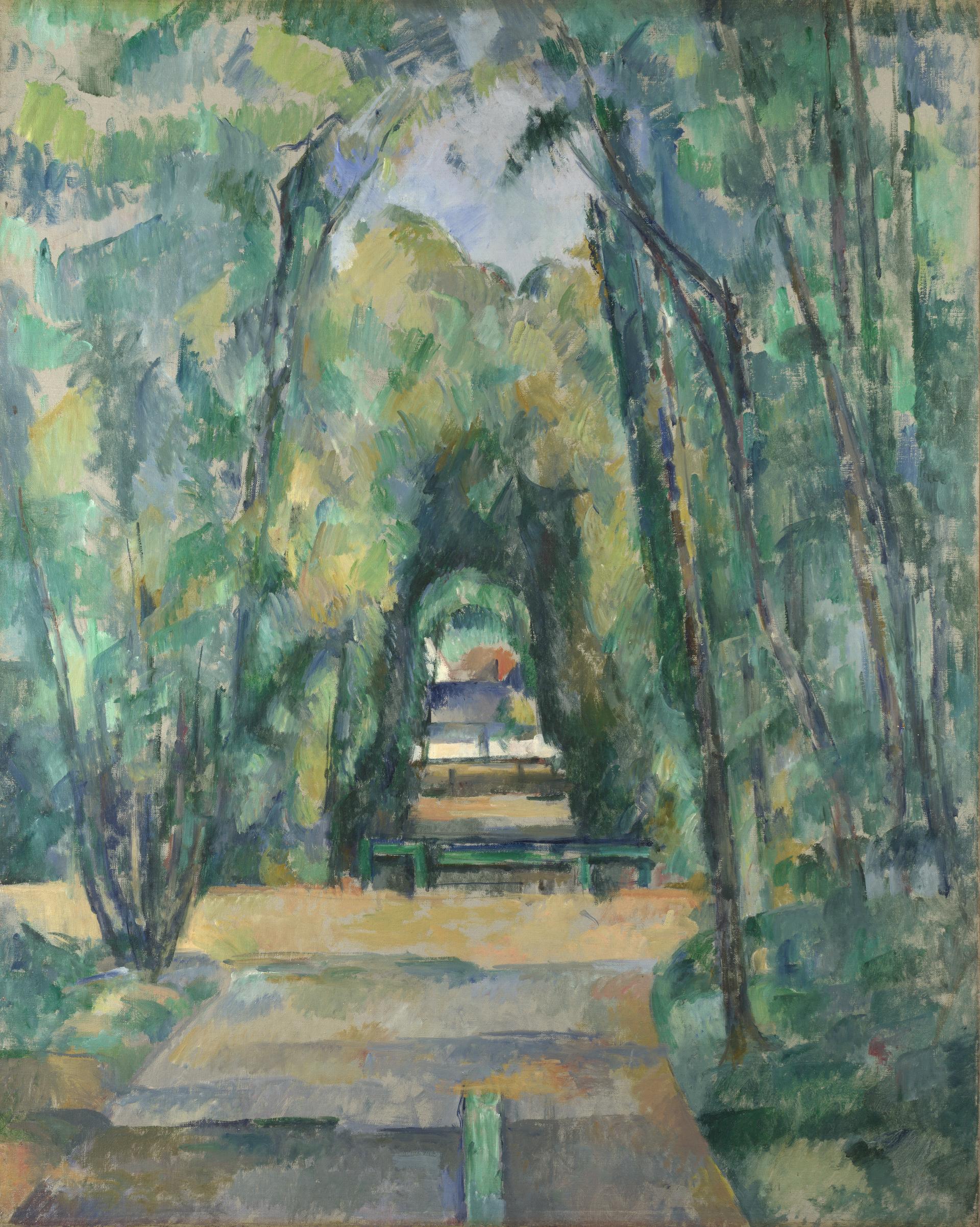
- Artist: Paul Cezanne
- Date: 1888
- Medium: oil on canvas
- Museum: The National Gallery
- Collection record: The National Gallery website
Listen to the free audio guide
About this artwork
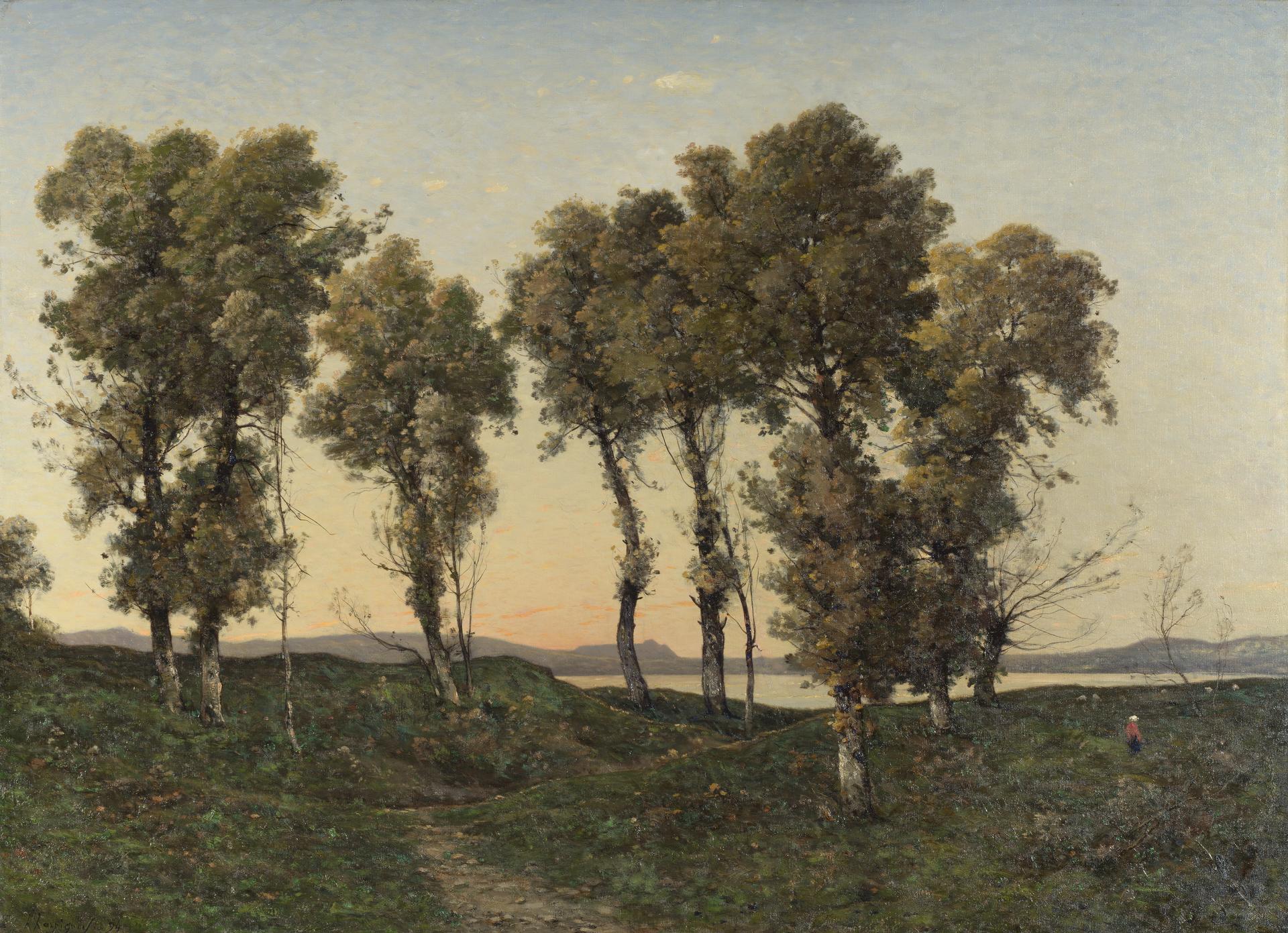
This is the "Avenue at Chantilly" by Paul Cezanne. Painted in 1888, this oil on canvas work shows a serene landscape of Chantilly, some 24 miles north of Paris. It's one of three similar paintings produced during Cezanne's stay there.
Notice how he focused on the avenue or path running through the forest rather than the famous castle in the distance? That's because the symmetry and spatial depth of this view must have appealed to him more. He built up the landscape as a mosaic of carefully organised patches of colour, using warm ochre and reds to contrast with cooler blues, greens, and greys.
Look closely at how variations of tone suggest the play of light on foliage. Alternating bands of light and shade lead us in, while darker touches of blue and green define the structure of the trees and fences. This is a classic example of Cezanne's attempt to represent three-dimensional space and volume on a flat surface.
See it in person
Avenue at Chantilly hangs in The National Gallery on Trafalgar Square, London — free to enter. Point your phone at any artwork there and audioguide.london plays a free audio guide in six languages — no app download needed.