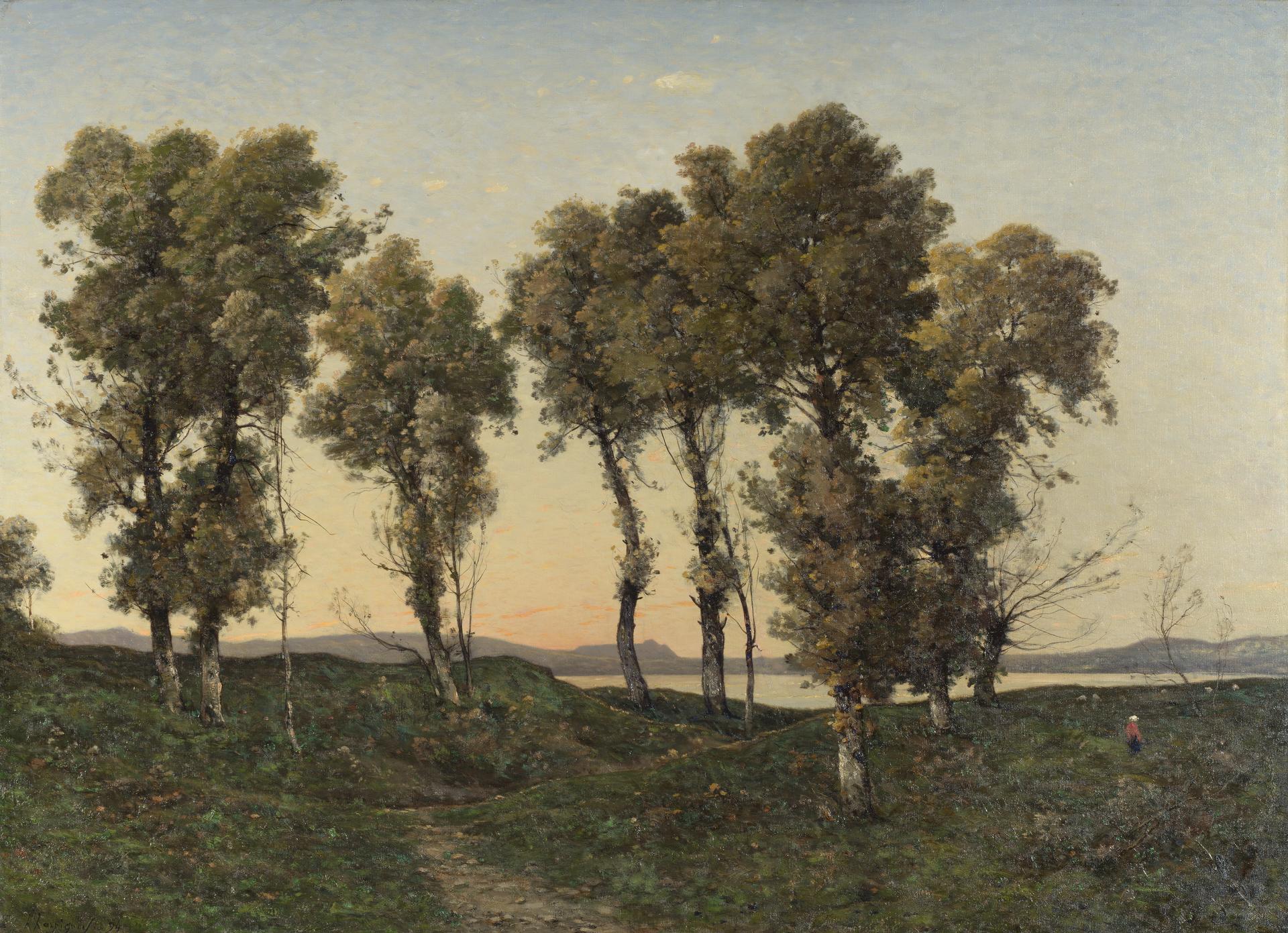
Autumn Evening
- Artist: Henri-Joseph Harpignies
- Date: 1894
- Medium: oil on canvas
- Museum: The National Gallery
- Collection record: The National Gallery website
Listen to the free audio guide
About this artwork
This is the "Autumn Evening" by Henri-Joseph Harpignies, painted in 1894. It's a beautiful example of Harpignies' style, which blends classical influences with a sense of modernity. Notice how the artist has captured the fleeting moment when autumn leaves are beginning to turn brown on the poplar trees.
The scene itself is likely a product of Harpignies' imagination, but inspired by his love for the countryside of Yonne, south of Paris. He was known for his ability to evoke a sense of harmony and tranquility in his landscapes, which sets him apart from other contemporary artists who were focusing on gritty realism.
Take note of the way Harpignies has used colour here. The subtle reds and pinks in the sky lift the heavy greens and browns of the foreground, creating a sense of depth and atmosphere. It's a technique he shared with his friend Corot, but one that Harpignies mastered in his own unique way.
The tiny figure of the woman on the right is an interesting touch. She's painted in expertly judged dots and dabs of colour, and her sole purpose is to animate the scene through her presence. It's a subtle nod to the classical artists of Rome, who often included figures and animals in their landscapes to add life and energy.
Overall, "Autumn Evening" is a beautiful example of Harpignies' skill and artistry. Despite being considered old-fashioned by the 1890s, it remains a stunning work that showcases his ability to balance classical influences with modern sensibilities.
See it in person
Autumn Evening hangs in The National Gallery on Trafalgar Square, London — free to enter. Point your phone at any artwork there and audioguide.london plays a free audio guide in six languages — no app download needed.