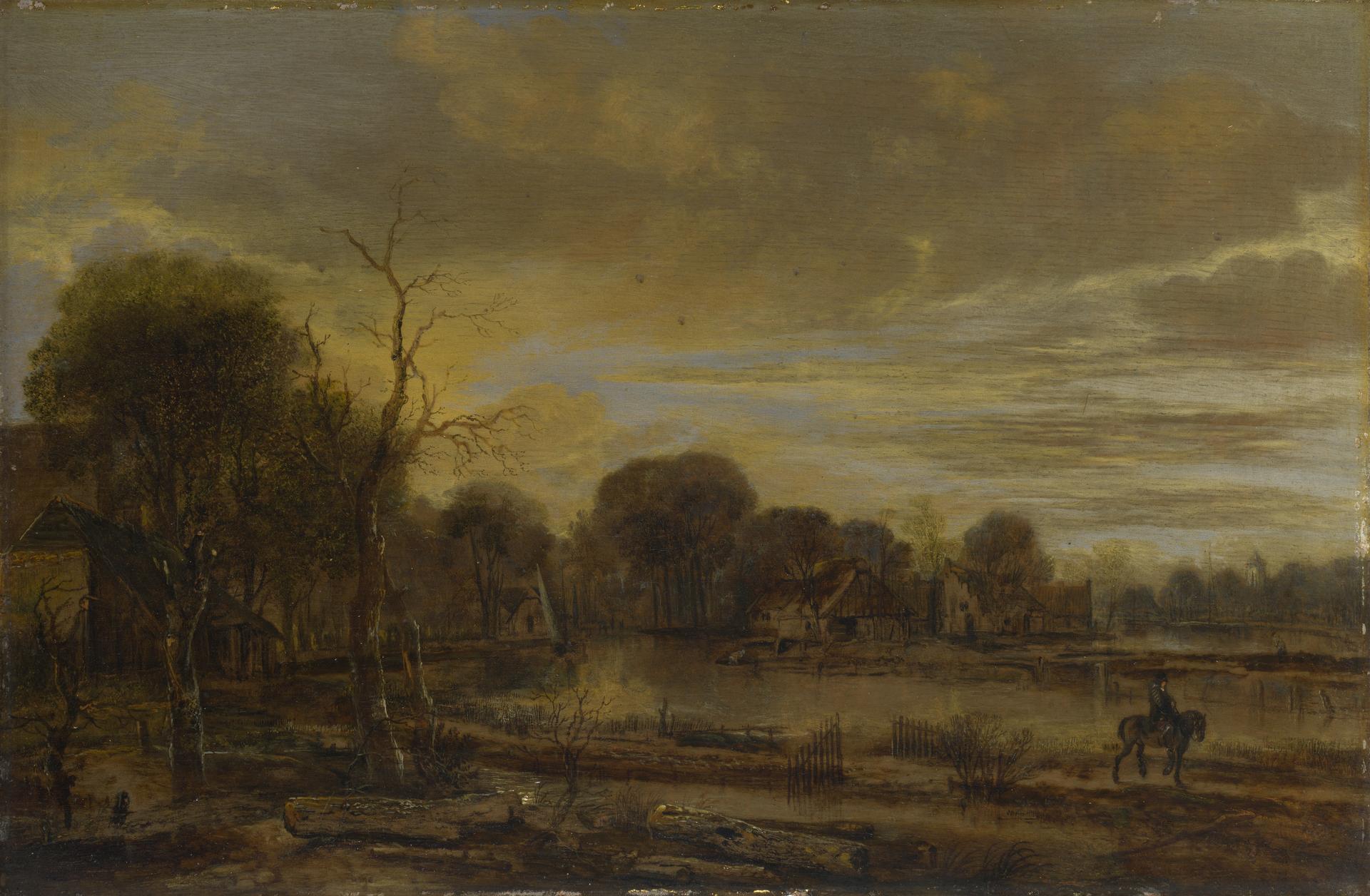
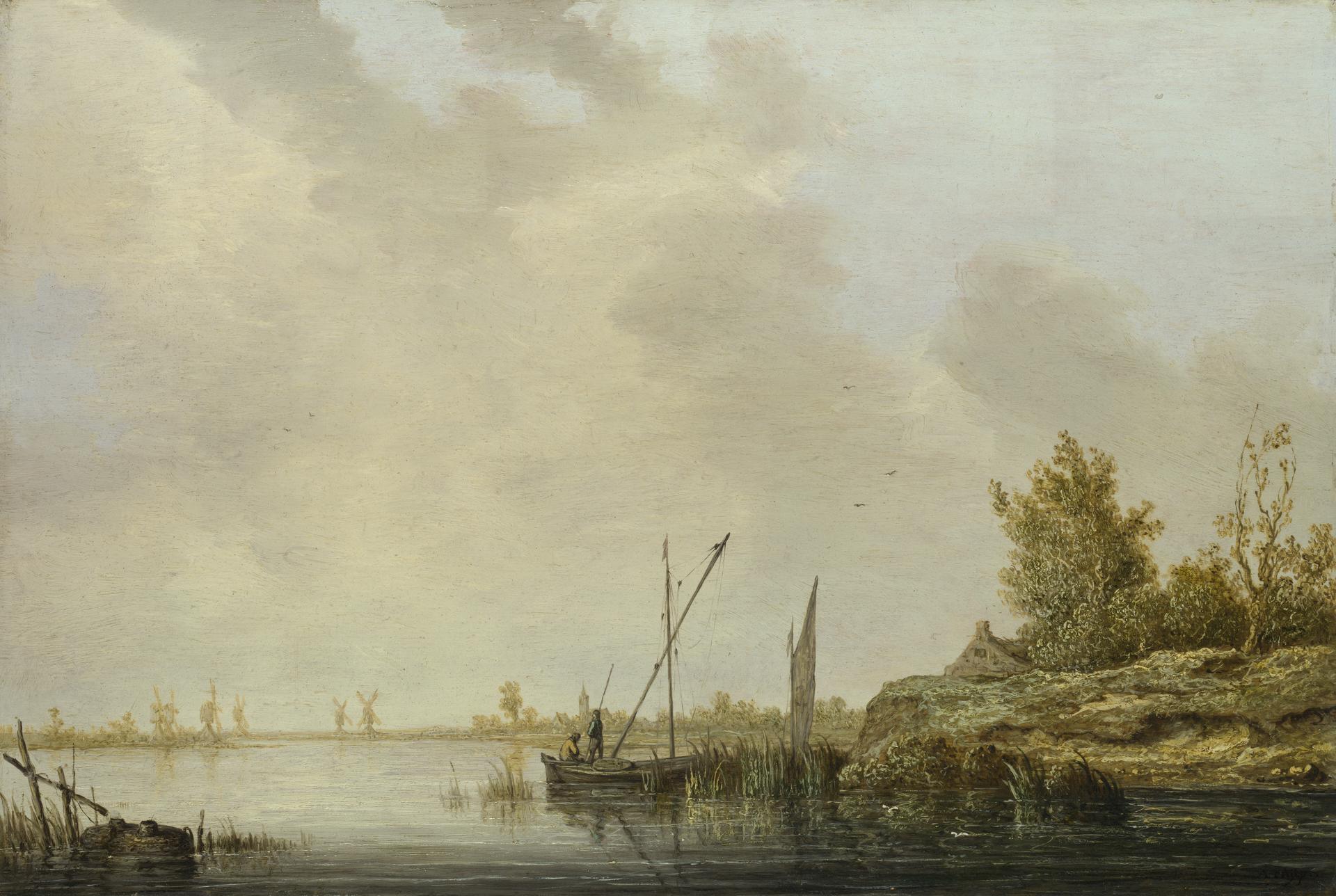
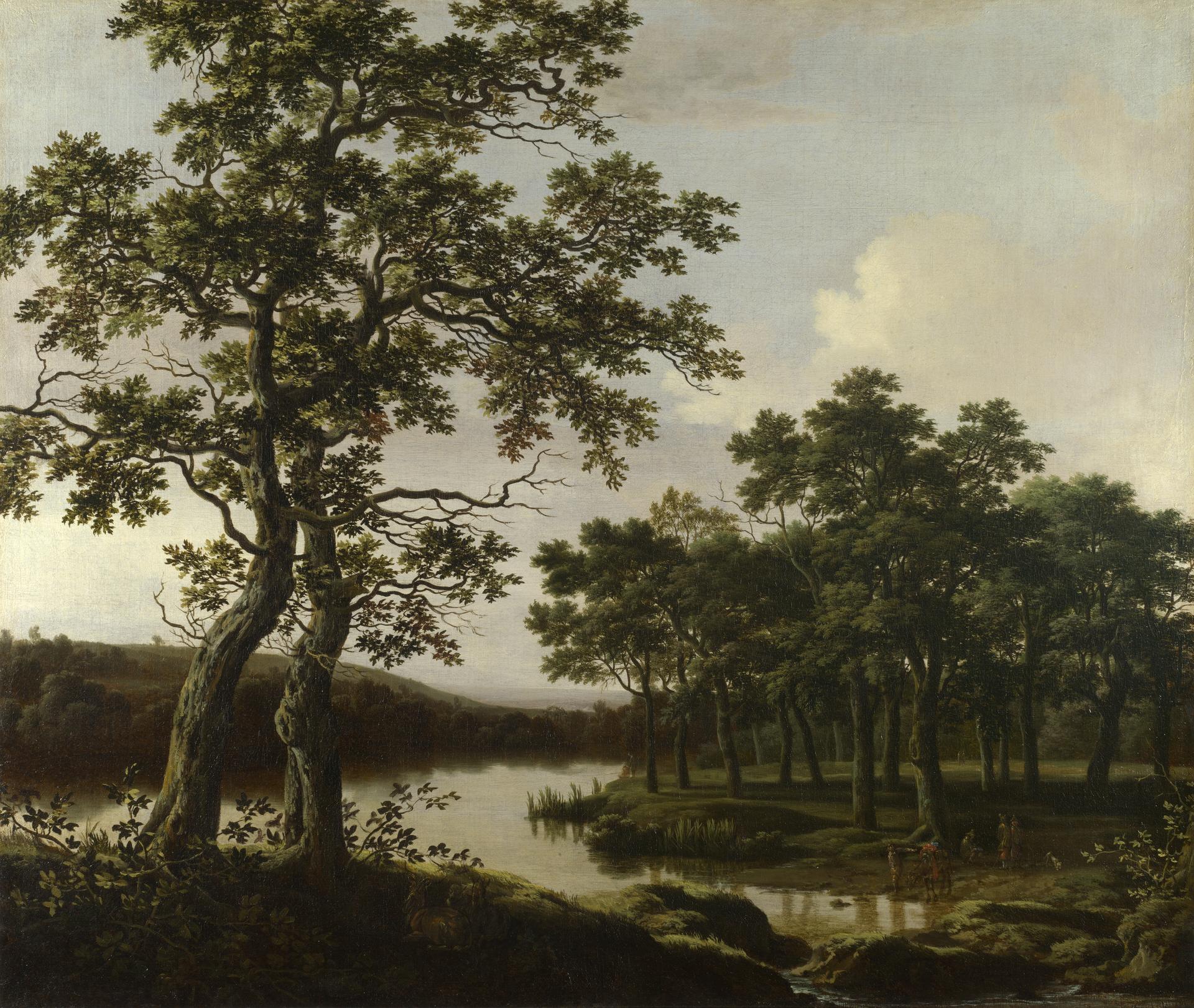
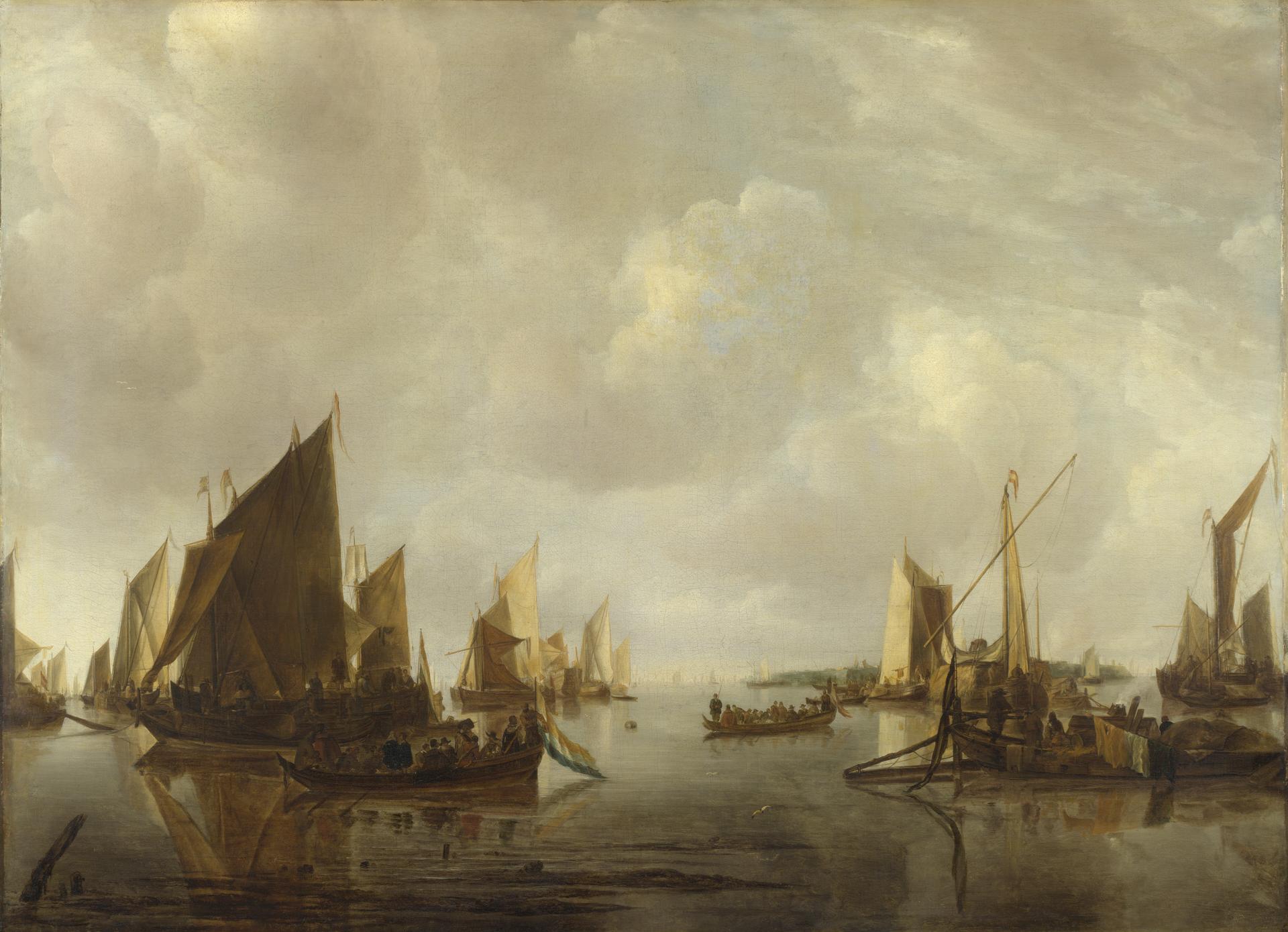
A River Scene
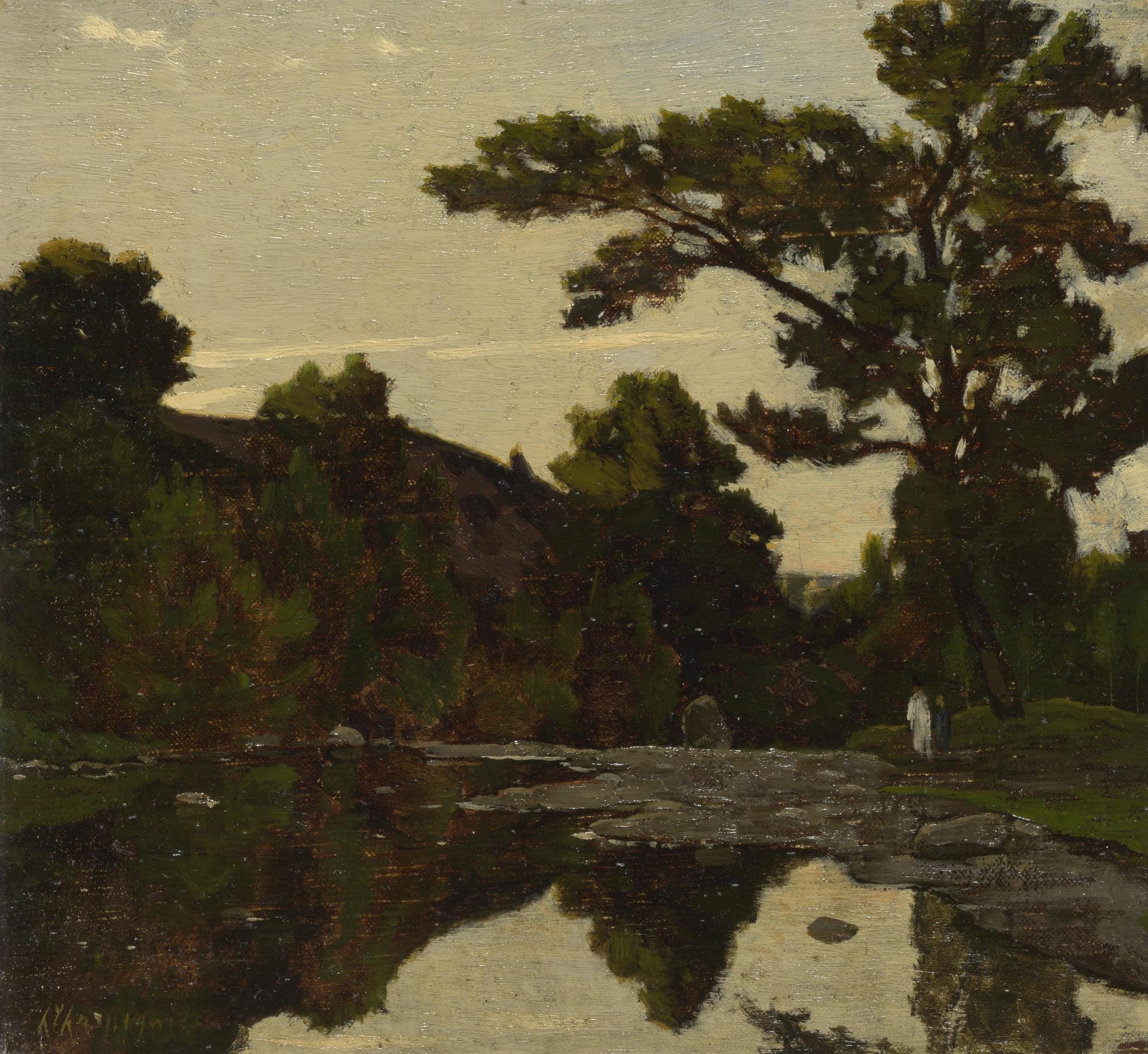
- Artist: Henri-Joseph Harpignies
- Date: about 1850-70
- Medium: oil on canvas
- Museum: The National Gallery
- Collection record: The National Gallery website
Listen to the free audio guide
About this artwork
This is "A River Scene" by Henri-Joseph Harpignies. Painted in the mid-19th century, it's a beautiful example of how Harpignies was interested in capturing real life through his art. At first glance, you might think this painting has a certain romantic appeal to it - look at those silhouetted trees against that luminous sky, and the reflections in the glowing water.
If you take a closer look, you'll notice the intricate details of the landscape. The straight edge made by the flat stones and pebbles suggests a waterfall down into a deeper valley. And have a look at those greens and browns among the trees - it's amazing how Harpignies was able to capture such depth and detail in his painting.
The two figures walking away from us add a touch of mystery to the image, don't you think? We don't know where this scene is set - it may be imaginary, based on sketches Harpignies made when exploring the countryside he loved. He was an expert on trees, by the way - his paintings often feature accurate and detailed depictions of them.
Harpignies' landscapes are actually more aligned with the harmonious scenes of nature painted by his friend and fellow artist Corot, rather than the gritty realists like those in the Barbizon group. And it's clear that he was inspired by the classical artists of Rome - Claude and Poussin, to be exact.
See it in person
A River Scene hangs in The National Gallery on Trafalgar Square, London — free to enter. Point your phone at any artwork there and audioguide.london plays a free audio guide in six languages — no app download needed.