Attic kylix
- Maker: Attributed to The Briseis Painter
- Culture: Attic
- Made in: Attica (Greece)
- Date: 480BC (circa)
- Object type: kylix
- Materials: pottery
- Museum number: 1843,1103.92
- Museum: The British Museum
- Collection record: British Museum website
- Image © The Trustees of the British Museum, shared under a CC BY-NC-SA 4.0 licence.
Listen to the free audio guide
In the museum now? Point your phone at the next object and hear its guide.
About this object
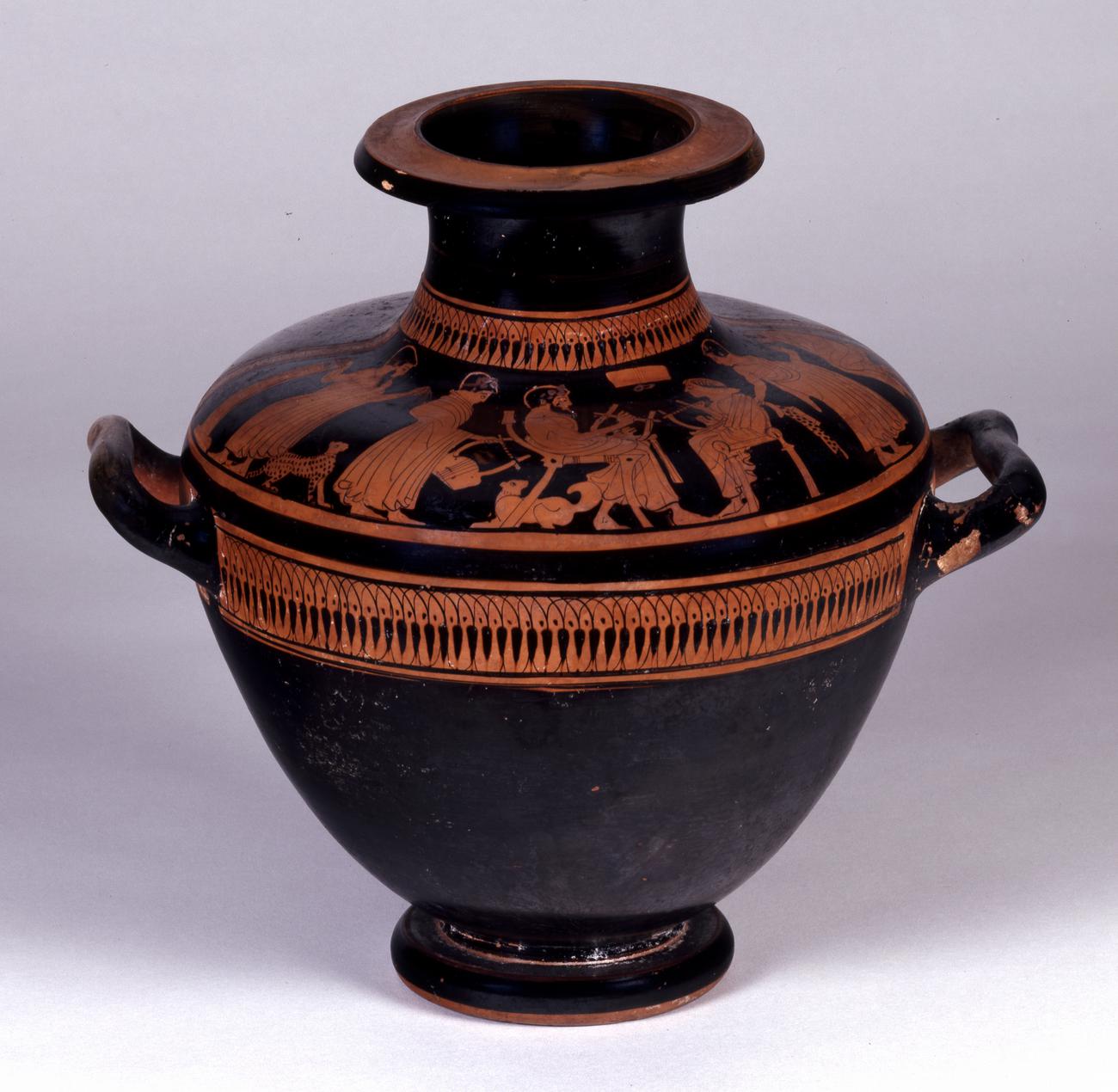
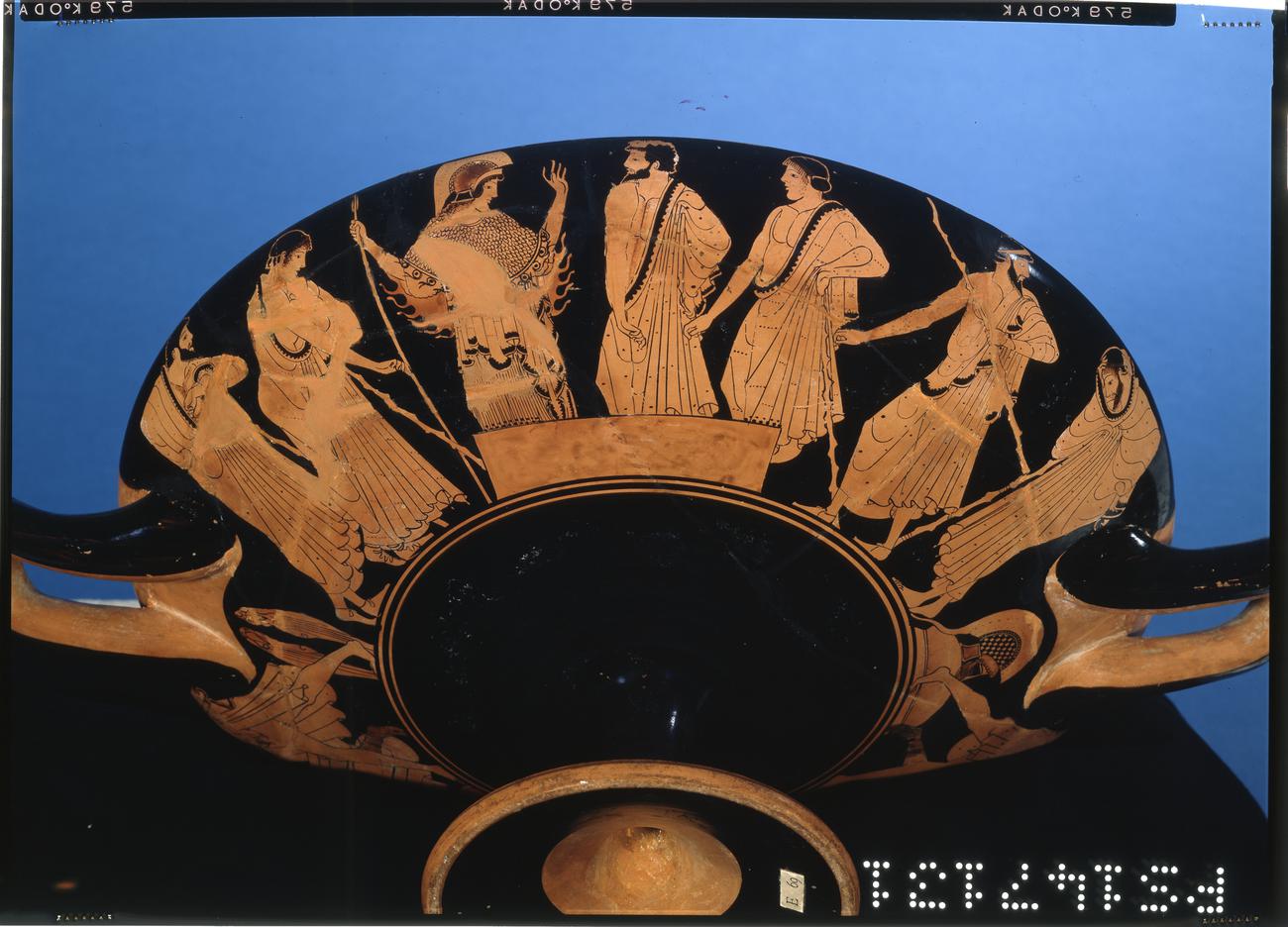
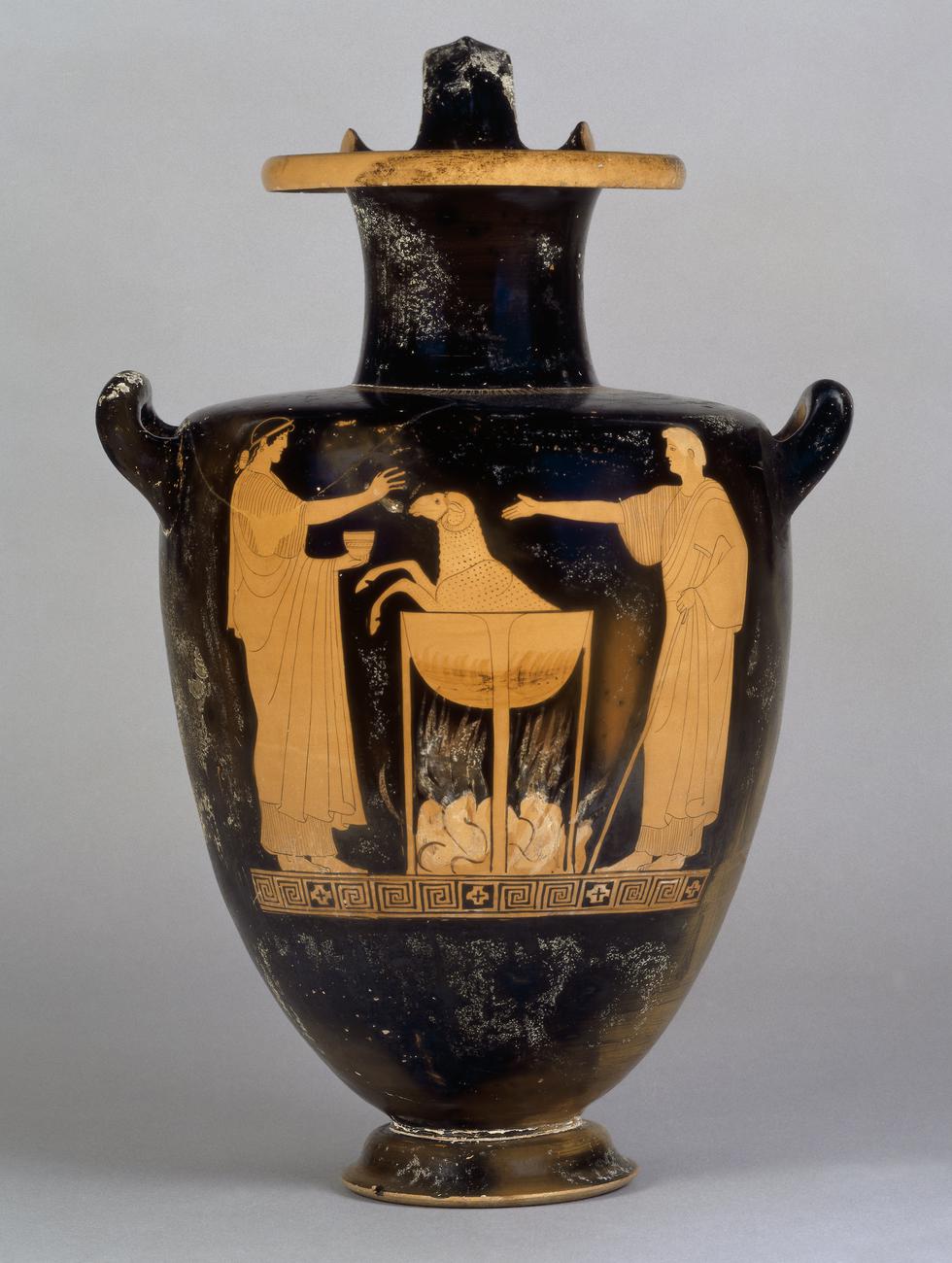
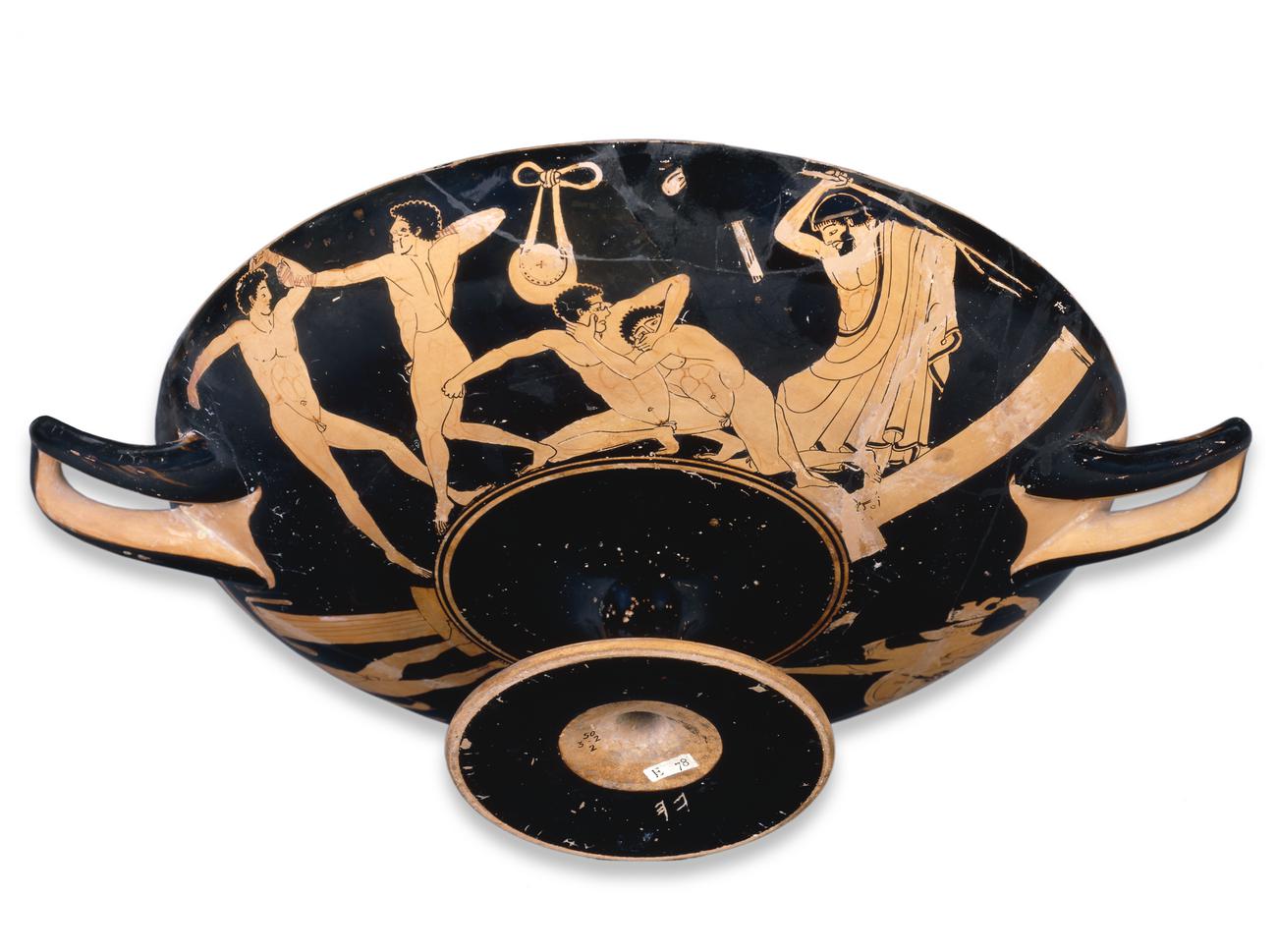
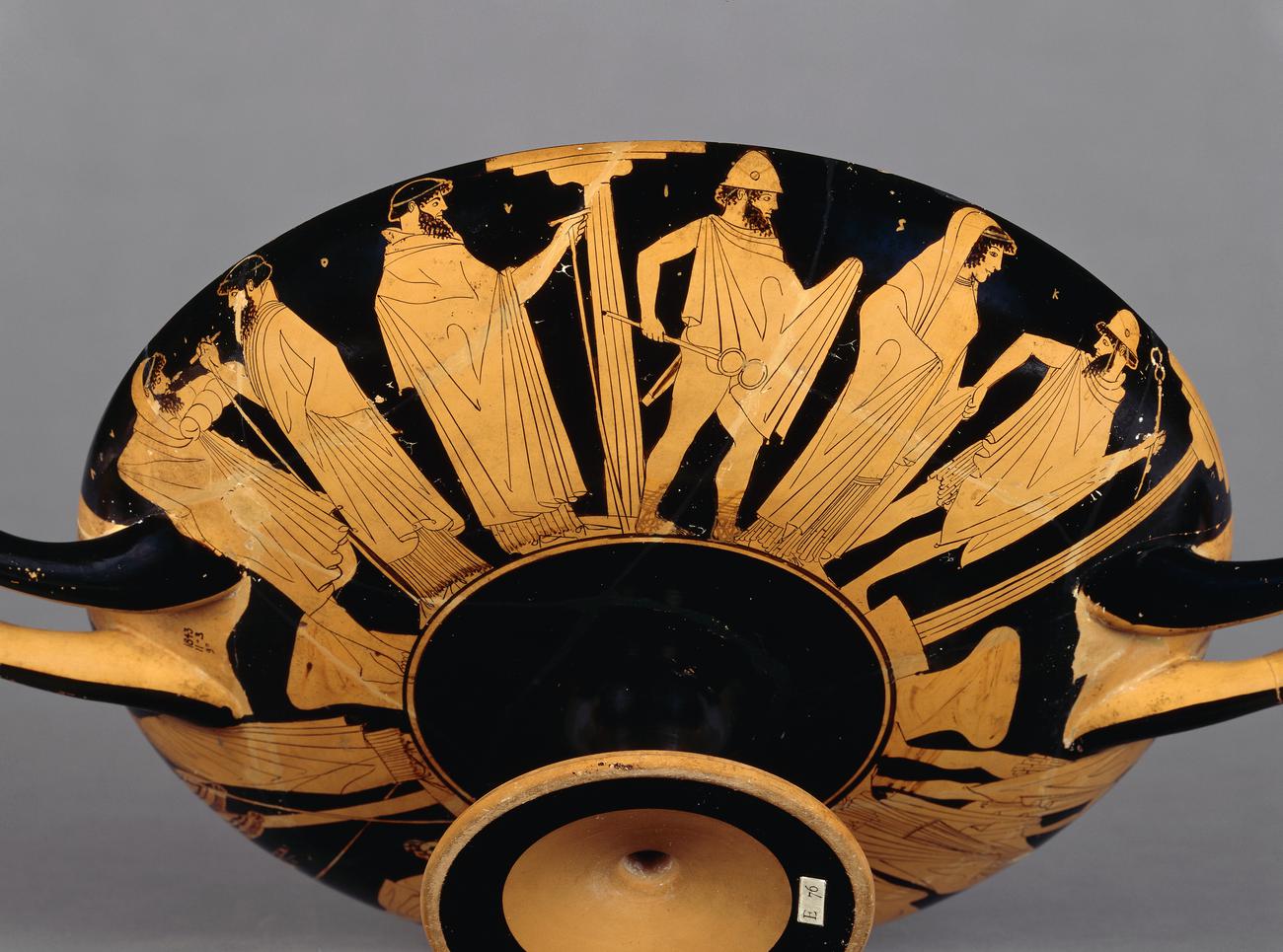
This is an Attic kylix, a type of drinking cup crafted around 480 BC in ancient Attica, Greece. The artist is commonly attributed to the Briseis Painter, a name given due to the depiction of the captive woman Briseis from Homer’s Iliad.
Turn your attention to the exterior scenes. On one side, a woman is being led away from a man—possibly Achilles—within what appears to be a camp tent. On the opposite side, the same woman seems to be returned, with two older men and prominent figures likely representing Agamemnon, the Greek commander. These figures are shown with elaborate garments, including cloaks, hats, and heraldic sticks, which highlight their status and role in the scene.
The interior of the cup features two seated men engaged in a conversation, their gestures suggesting an intense exchange. The painting is masterfully rendered using red-figure style against a black-glazed background, showcasing the high artistic standards of this era.
This kylix provides a glimpse into the storytelling and visual language of ancient Greek pottery—where myth, history, and daily life converged in striking pictorial form.
See it in person
Attic kylix is on display at the British Museum on Great Russell Street, Bloomsbury, London — free to enter. Choose British Museum on audioguide.london and take a photo of it to hear this free audio guide in six languages — no app download needed.
New, in beta. British Museum support has just launched and is still improving: over 1,000 objects so far, with more added all the time.