Attic hydria
- Maker: Attributed to The Copenhagen Painter
- Culture: Attic
- Made in: Attica (Greece)
- Date: 480BC-470BC
- Object type: hydria
- Materials: pottery
- Museum number: 1843,1103.76
- Museum: The British Museum
- Collection record: British Museum website
- Image © The Trustees of the British Museum, shared under a CC BY-NC-SA 4.0 licence.
Listen to the free audio guide
In the museum now? Point your phone at the next object and hear its guide.
About this object
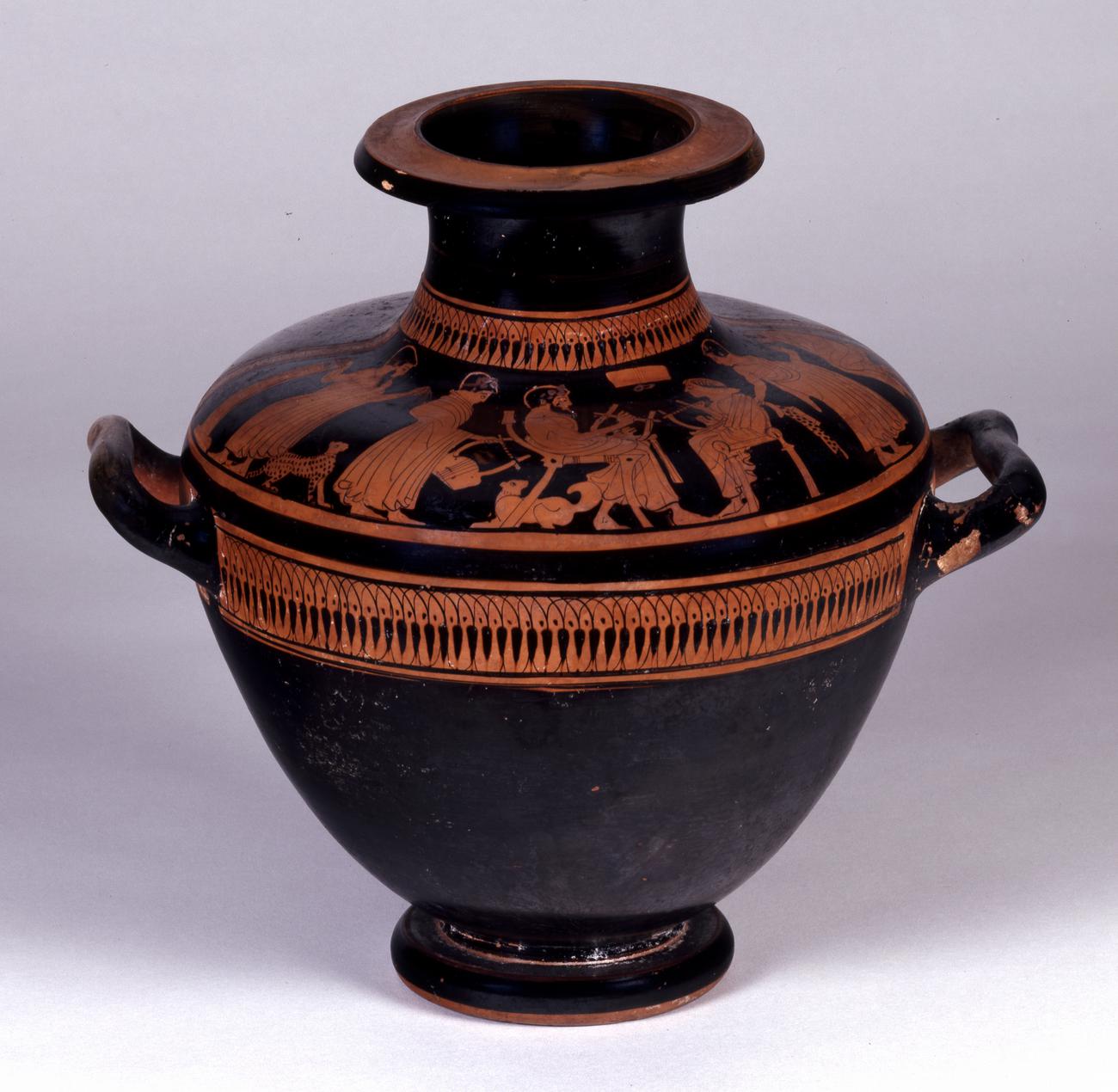
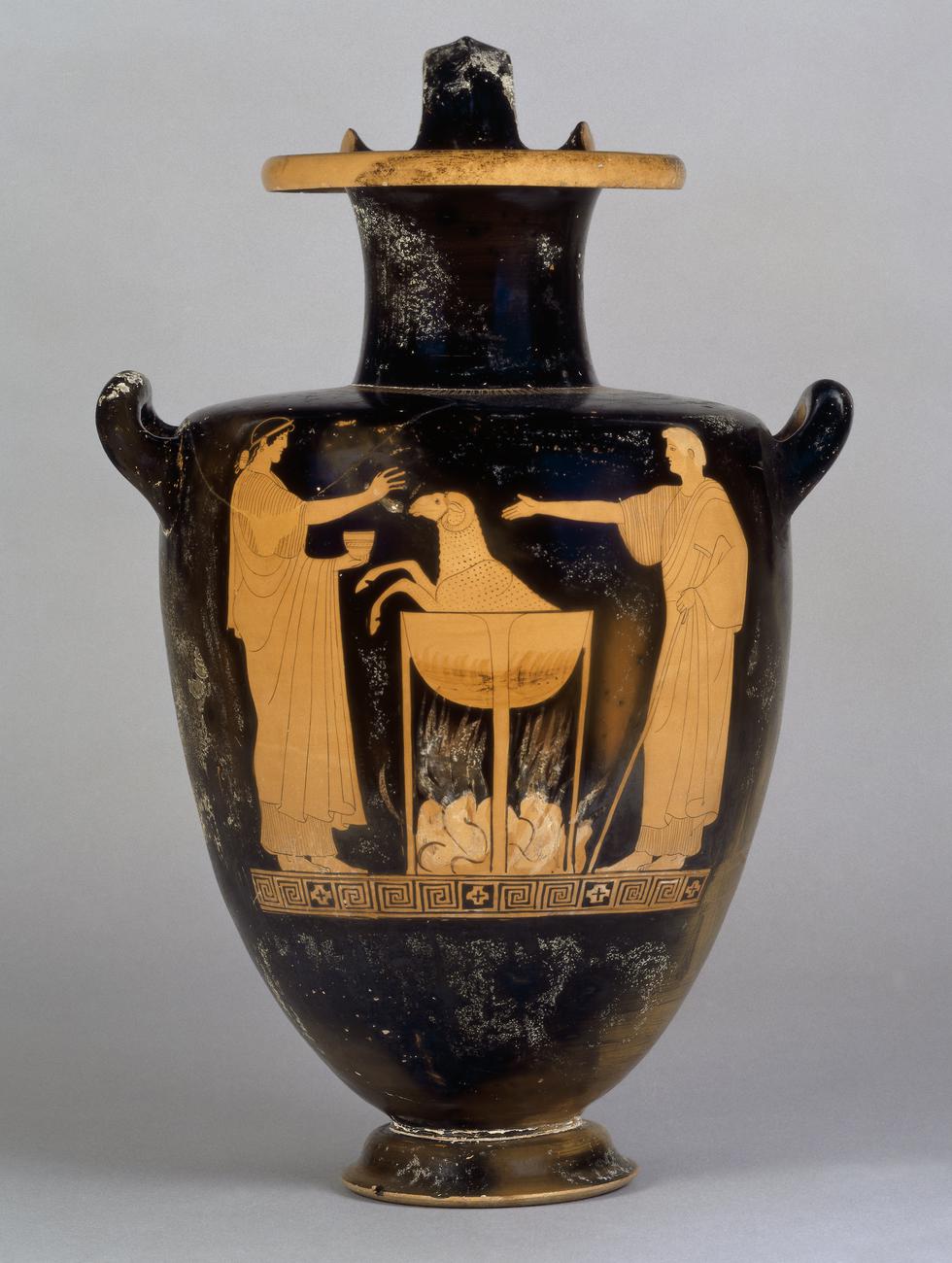
This is an Attic hydria, a type of Greek storage jar, painted around 480 to 470 BCE. At the center of the scene is a cauldron resting on a tripod over a fire, with a ram leaping upward toward Medea, who is shown applying a potion to it. Her long sleeves, mantle, and flowing hair mark her as a powerful figure.
On the right stands Jason, his grey beard and wrinkled face showing age. He gestures toward Medea with a tall staff, appearing to command the scene. Names in Greek are inscribed near each figure.
The painter used purple, white, and brown to bring life to the story. Purple marks the flames and inscriptions, while the ram's leap and Medea’s potion hint at a mythical tale of transformation. Similar scenes have been found in other pottery, often tied to the story of how Jason’s daughters were tricked into rejuvenating him through magic.
This piece was likely made in Attica and later discovered in Vulci.
See it in person
Attic hydria is on display at the British Museum on Great Russell Street, Bloomsbury, London — free to enter. Choose British Museum on audioguide.london and take a photo of it to hear this free audio guide in six languages — no app download needed.
New, in beta. British Museum support has just launched and is still improving: over 1,000 objects so far, with more added all the time.