Astronomical clock
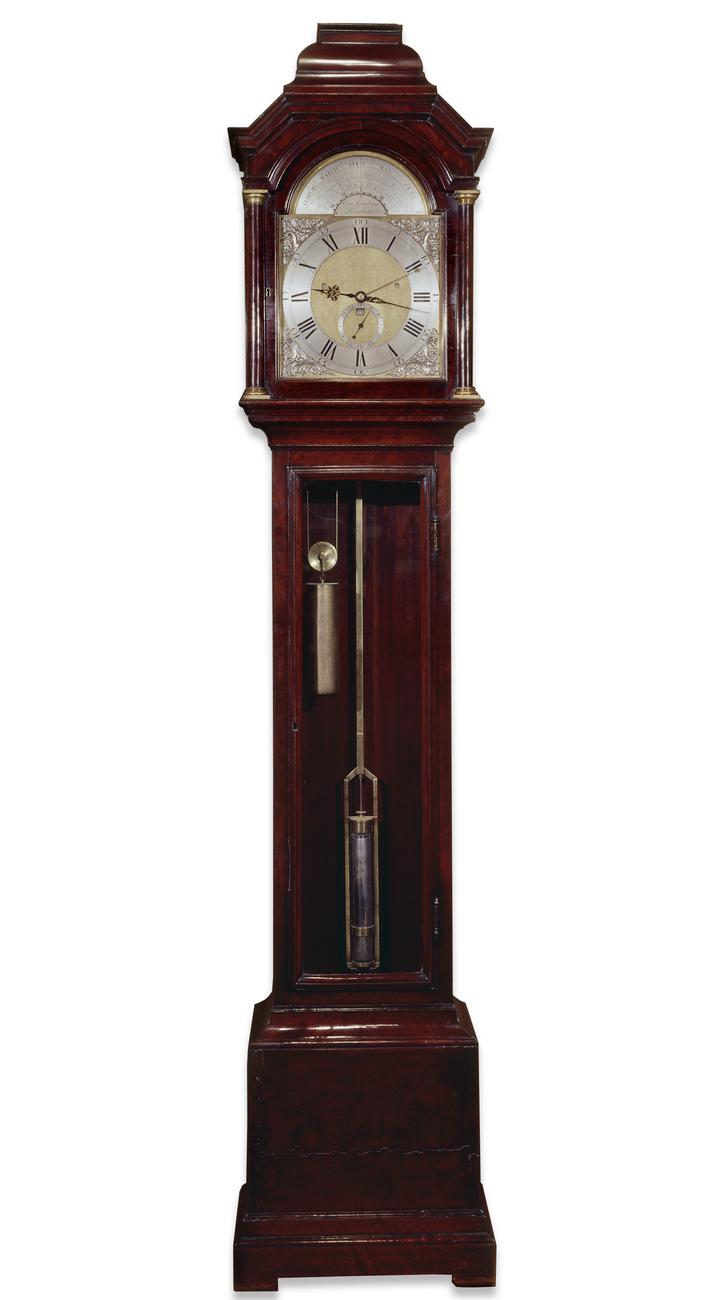
- Gallery: Room 39
- Maker: George Graham
- Made in: London (England)
- Date: 1740-1750
- Object type: astronomical clock, calendar clock, equation clock
- Materials: mahogany; copper alloy (brass); steel; mercury (pendulum)
- Museum number: 1958,1006.2132
- Museum: The British Museum
- Collection record: British Museum website
- Image © The Trustees of the British Museum, shared under a CC BY-NC-SA 4.0 licence.
Listen to the free audio guide
In the museum now? Point your phone at the next object and hear its guide.
About this object
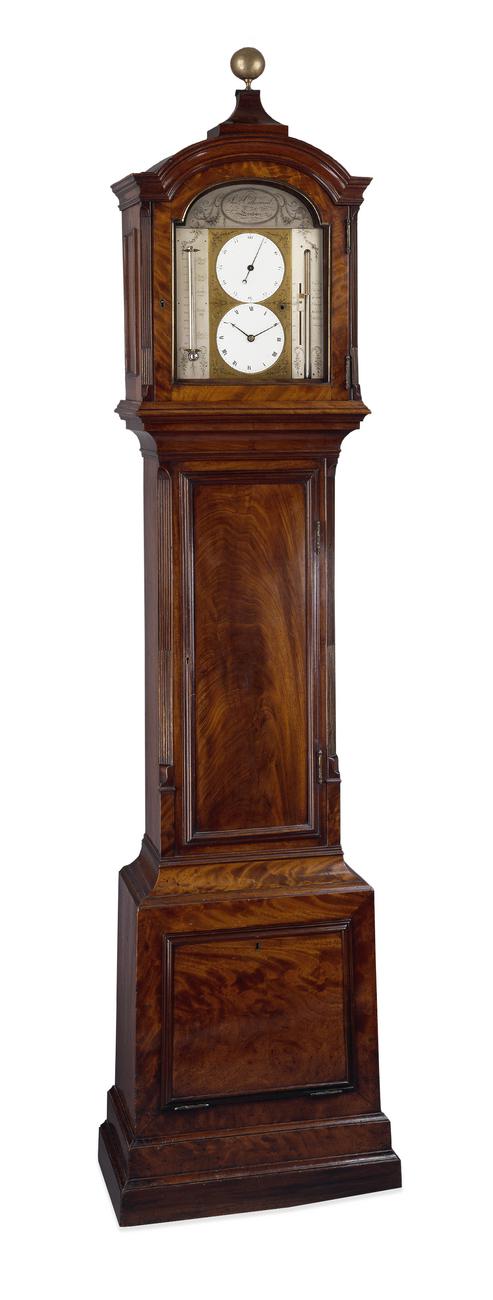
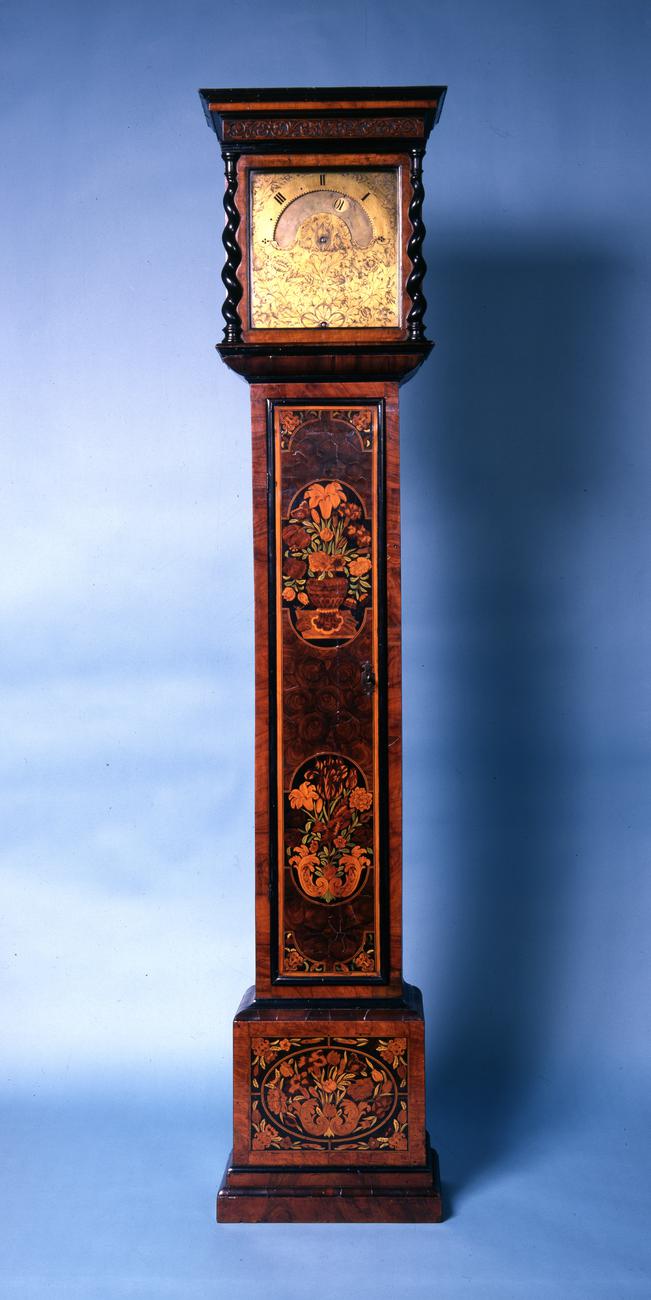
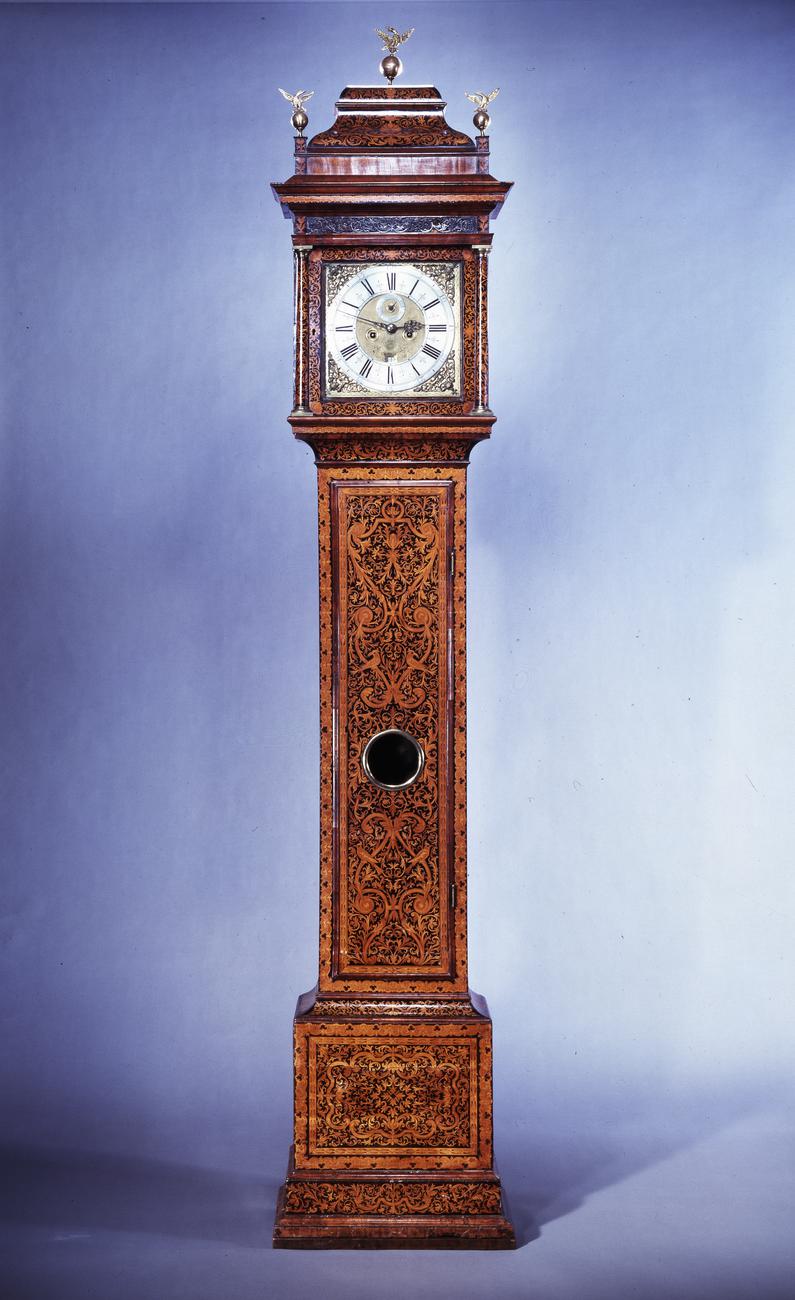
Before you stands a remarkable example of eighteenth-century horology: an astronomical clock crafted by George Graham in London between 1740 and 1750. This longcase regulator is constructed with a solid mahogany case and features a silvered-brass dial adorned with elegant silver spandrels.
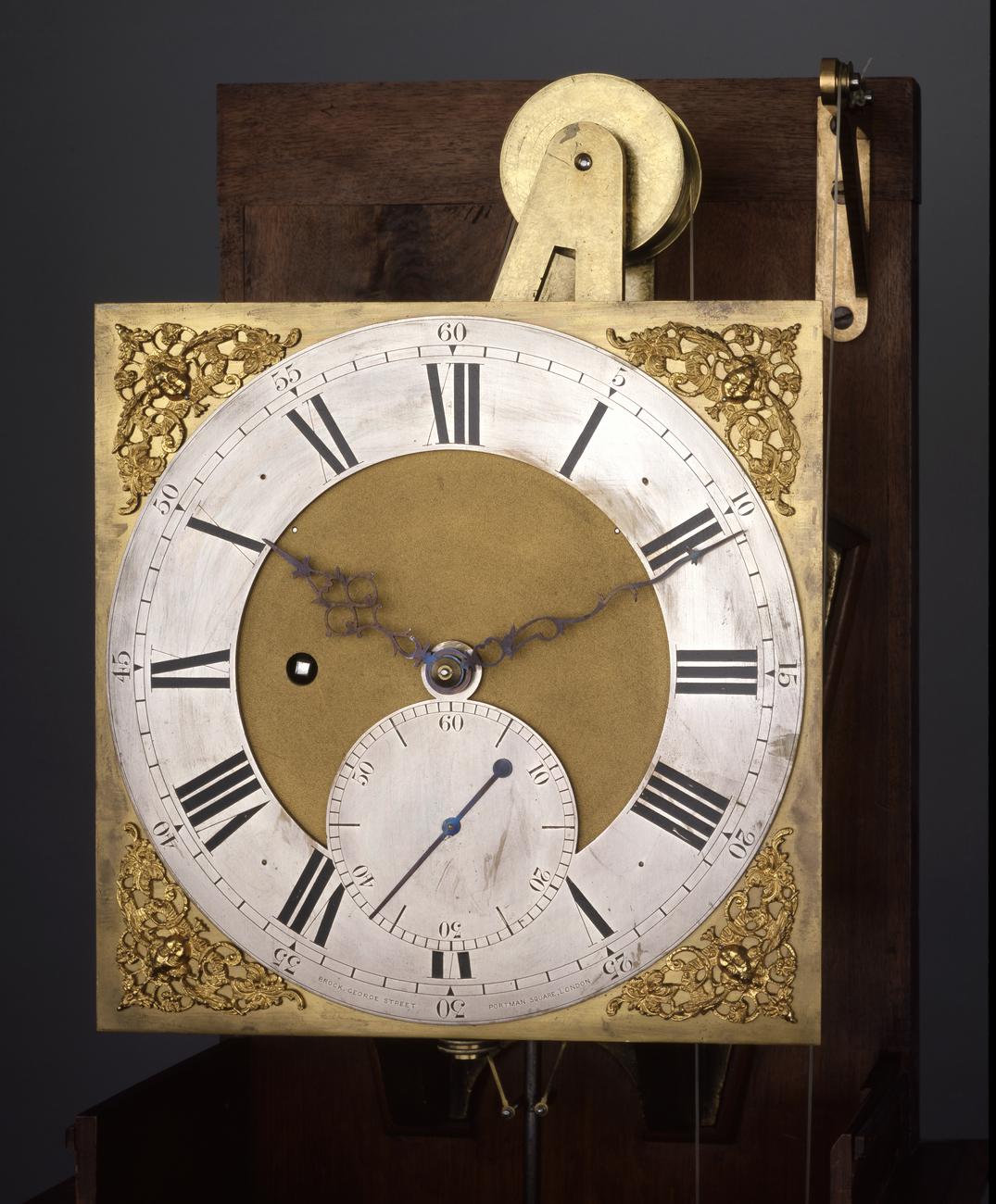
Look closely at the central area—gilded and framed to emphasize its importance. The clock is equipped with two-minute hands: one in blued steel shows the mean solar time, while the other in gold displays the true solar time as seen on a sundial. The dial also includes a calendar aperture and a rotating dial above that tracks the annual cycle, including sunrise hours, the sun's position in the zodiac, and the equation of time for each day of the year.
Graham, a respected maker and Fellow of the Royal Society, pioneered temperature compensation in this clock through a mercury pendulum, ensuring consistent accuracy. This intricate timepiece reflects the scientific and artistic achievements of its era and is a treasured artifact of the Ilbert Collection.
See it in person
Astronomical clock is on display in Room 39 at the British Museum on Great Russell Street, Bloomsbury, London — free to enter. Choose British Museum on audioguide.london and take a photo of it to hear this free audio guide in six languages — no app download needed.
New, in beta. British Museum support has just launched and is still improving: over 1,000 objects so far, with more added all the time.