Amaravati double sided relief
- Audio guide stop: 610
- Gallery: Room 33a
- Made in: Amaravati
- Date: 1stC BC (obverse face); 3rdC (reverse face)
- Object type: drum-slab
- Materials: limestone
- Museum number: 1880,0709.79
- Museum: The British Museum
- Collection record: British Museum website
- Image © The Trustees of the British Museum, shared under a CC BY-NC-SA 4.0 licence.
Listen to the free audio guide
About this object
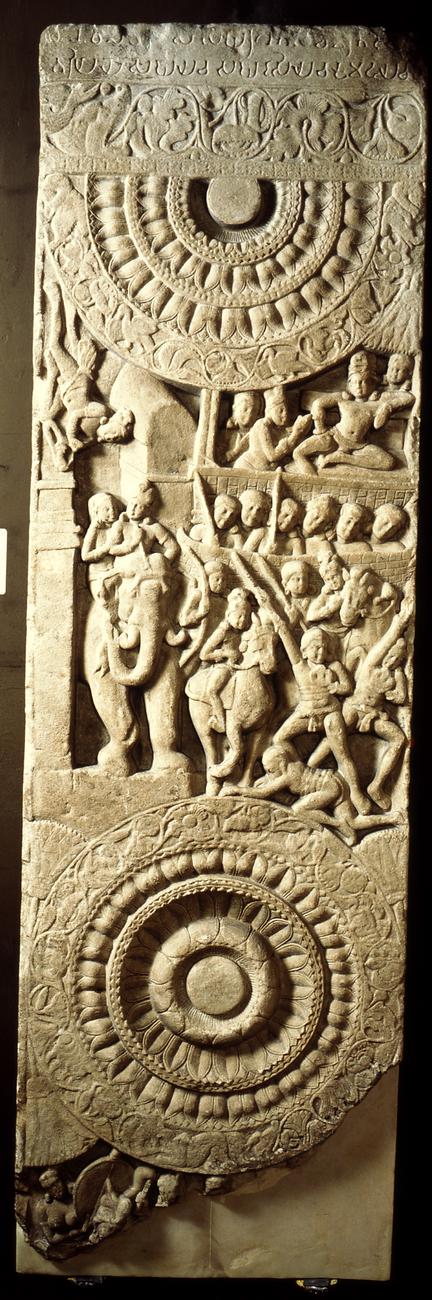
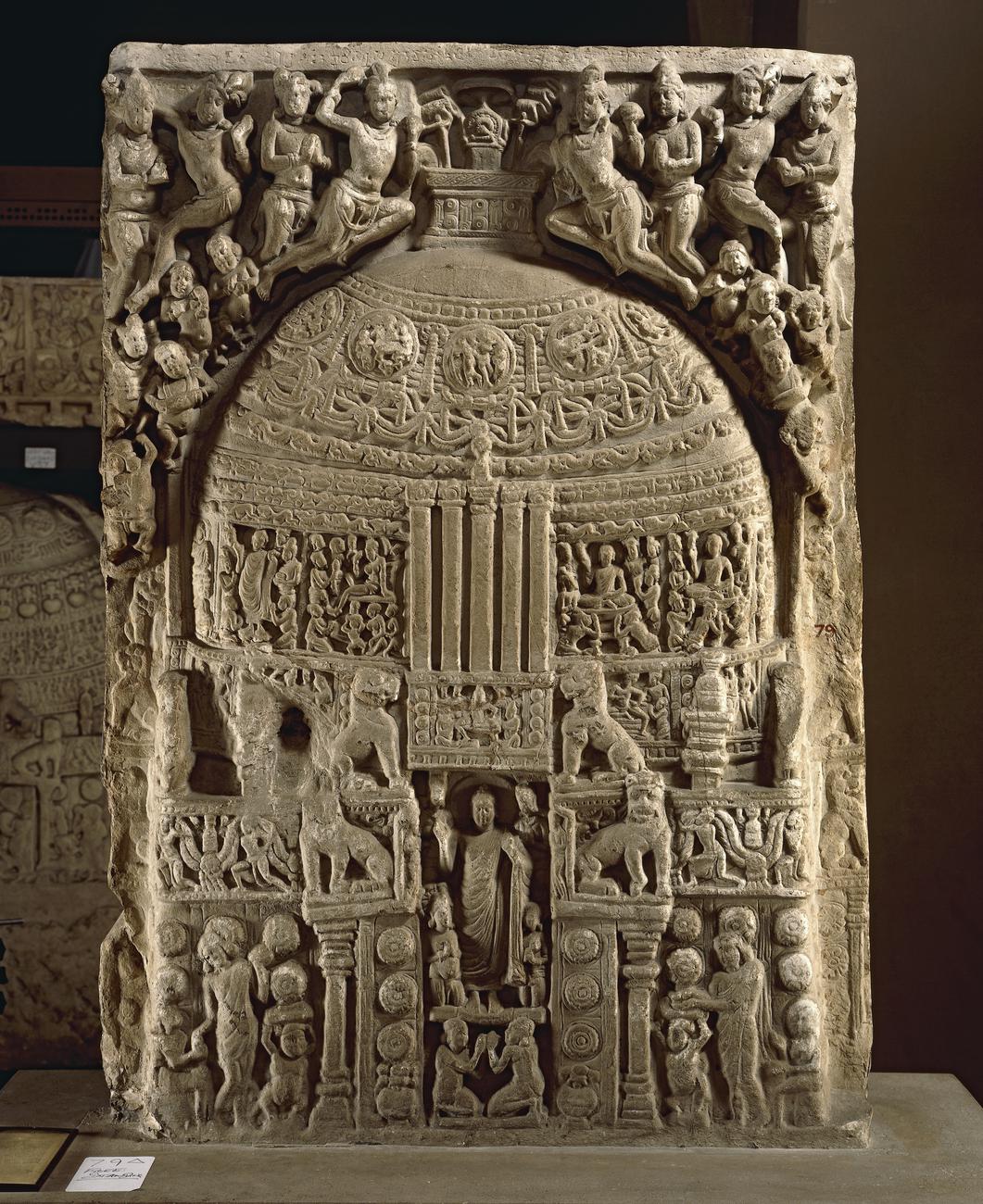
This is the Amaravati double-sided relief, a stunning drum-slab carved from pale limestone. Each side tells a visual story of Buddhist devotion and artistry.
Looking at the back, you’ll see a central hollow representing the Bodhi tree, the sacred site of the Buddha’s enlightenment. Above are flying beings, and on either side, kneeling worshippers. The step leading to the tree features a symbol of the Buddha: his footprints.
Flip the piece, and on the front, there is a stūpa, or shrine, with a standing Buddha figure at the entrance. Flying figures surround the dome, some music players, framing relief panels. These panels show key events in the life of the Buddha—including his first teaching and his dramatic Great Departure.
Created in Amaravati, a major center of Buddhist art, this relief offers a glimpse into ancient spiritual storytelling and skilled carving traditions.
See it in person
Amaravati double sided relief is on display in Room 33a at the British Museum on Great Russell Street, Bloomsbury, London — free to enter. Choose British Museum on audioguide.london and type its audio guide stop number, 610, from the gallery label, or take a photo of it, to hear this free audio guide in six languages — no app download needed.
New, in beta. British Museum support has just launched and is still improving: over 1,000 objects so far, with more added all the time.