Aeneas and the Sibyl, Lake Avernus
- Artist: Joseph Mallord William Turner
- Date: c.1798
- Medium: Oil paint on canvas
- Dimensions: support: 765 x 984 mm
- Museum: Tate Britain
- Collection record: Tate Britain website
Listen to the free audio guide
About this artwork
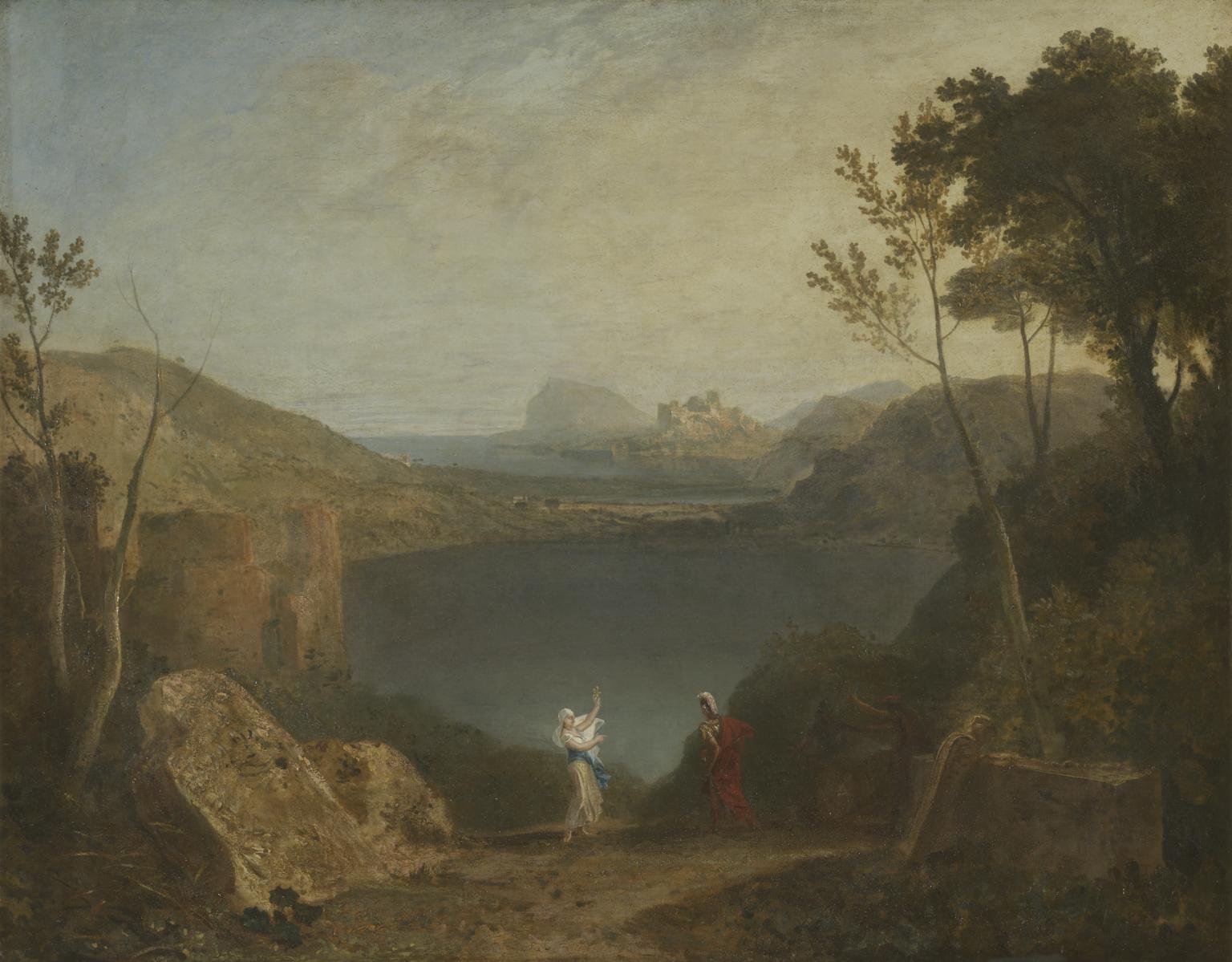
This is the "Aeneas and the Sibyl, Lake Avernus" by Joseph Mallord William Turner. Created around 1798, it’s one of Turner's earliest forays into mythological scenes, rendered in oil on canvas. The painting pulls us into Virgil’s *Aeneid*: Aeneas, the Trojan hero, seeks passage into the Underworld to meet the spirit of his father. He is guided by the Cumaean Sibyl, a priestess of ancient prophecy, who agrees to escort him across the eerie waters of Lake Avernus. The lake, a volcanic crater on the Italian coast, was long thought to be the gateway to the realm of the dead, adding a layer of dramatic, almost supernatural atmosphere to the scene.
Turner’s composition balances the ominous shoreline with crumbling ruins and a distant temple, suggesting the threshold between life and death. The use of subtle light and shadow hints at the transition Aeneas is about to undergo. Although modest in size—just over 30 by 38 inches—it packs a powerful narrative punch and marks the beginning of Turner’s fascination with myth, landscape, and the uncanny power of nature. The work entered the nation’s holdings as part of the Turner Bequest in 1856, ensuring it remains a key example of his early style and storytelling ambition.
See it in person
Aeneas and the Sibyl, Lake Avernus is in the collection of Tate Britain on Millbank, London — free to enter. Point your phone at any artwork there and audioguide.london plays a free audio guide in six languages — no app download needed.