A Disaster at Sea
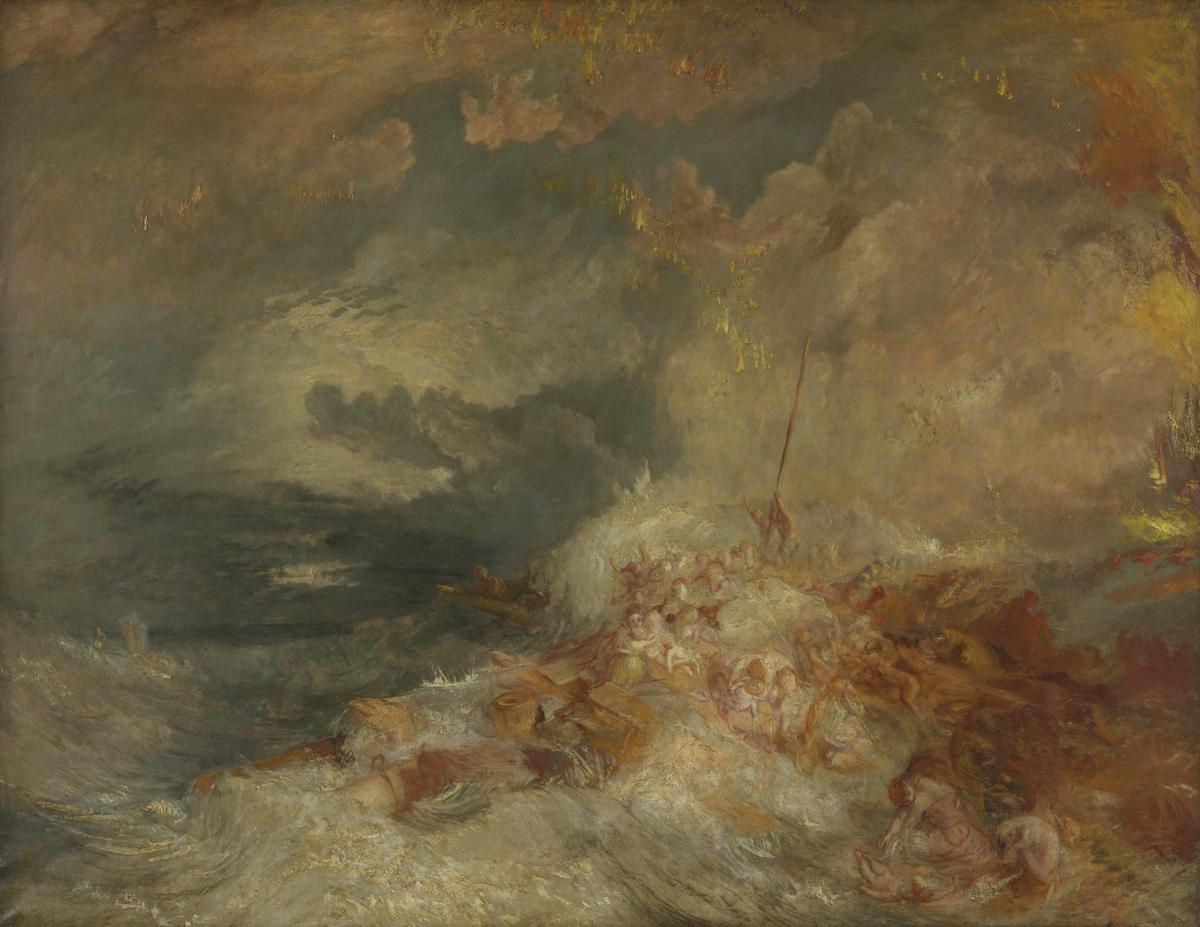
- Artist: Joseph Mallord William Turner
- Date: ?c.1835
- Medium: Oil paint on canvas
- Dimensions: support: 1714 x 2203 mm
- Museum: Tate Britain
- Collection record: Tate Britain website
Listen to the free audio guide
About this artwork
This is the “A Disaster at Sea” by Joseph Mallord William Turner, an unfinished oil on canvas from about 1835. Turner was fascinated by the raw power of the sea, and here that fascination turns into a haunting narrative of a ship in peril. The painting likely captures the wreck of the *Amphitrite*—a ship that left London for New South Wales in August 1833 carrying 108 convicted women and 12 children. When it ran aground near Boulogne, the captain turned down rescue offers, and the vessel broke apart, leaving only three survivors. Recent research even suggests the scene could depict the *Hibernia*, which set out from Liverpool in December 1832, caught fire in the South Atlantic, and saw 153 of 209 emigrants die because there weren’t enough lifeboats.
Turner’s brushwork here is dramatic: dark, brooding clouds roll over the waves, a smoldering ship looms against the night sky, and smoke curls from its wreckage. The unfinished state gives the piece a sense of immediacy, as if the tragedy has just unfolded. It’s a powerful reminder of the human cost of 19th‑century sea travel and of the relentless forces of nature that Turner masterfully rendered.
See it in person
A Disaster at Sea is in the collection of Tate Britain on Millbank, London — free to enter. Point your phone at any artwork there and audioguide.london plays a free audio guide in six languages — no app download needed.