30th Dynasty architecture
- Gallery: Room 4
- Culture: 30th Dynasty
- Date: 370BC (circa)
- Object type: architecture
- Materials: greywacke
- Museum number: EA22
- Museum: The British Museum
- Collection record: British Museum website
- Image © The Trustees of the British Museum, shared under a CC BY-NC-SA 4.0 licence.
Listen to the free audio guide
About this object
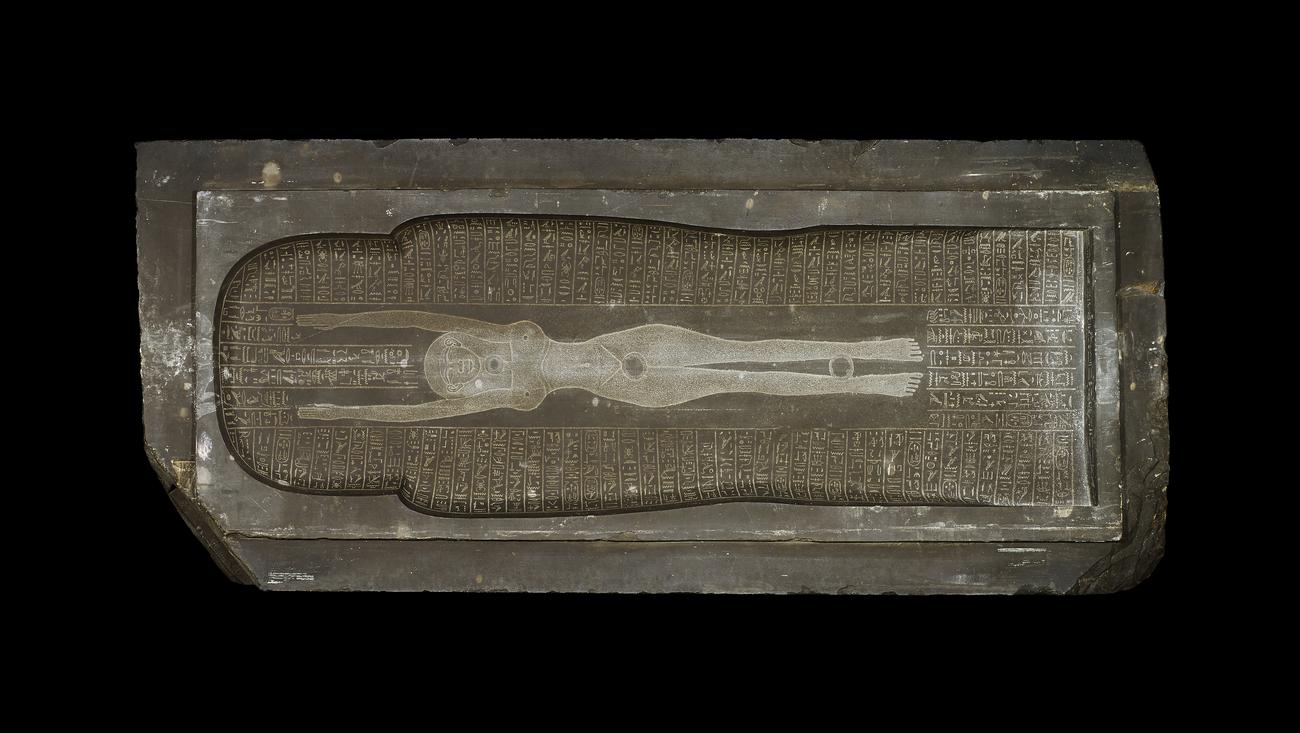
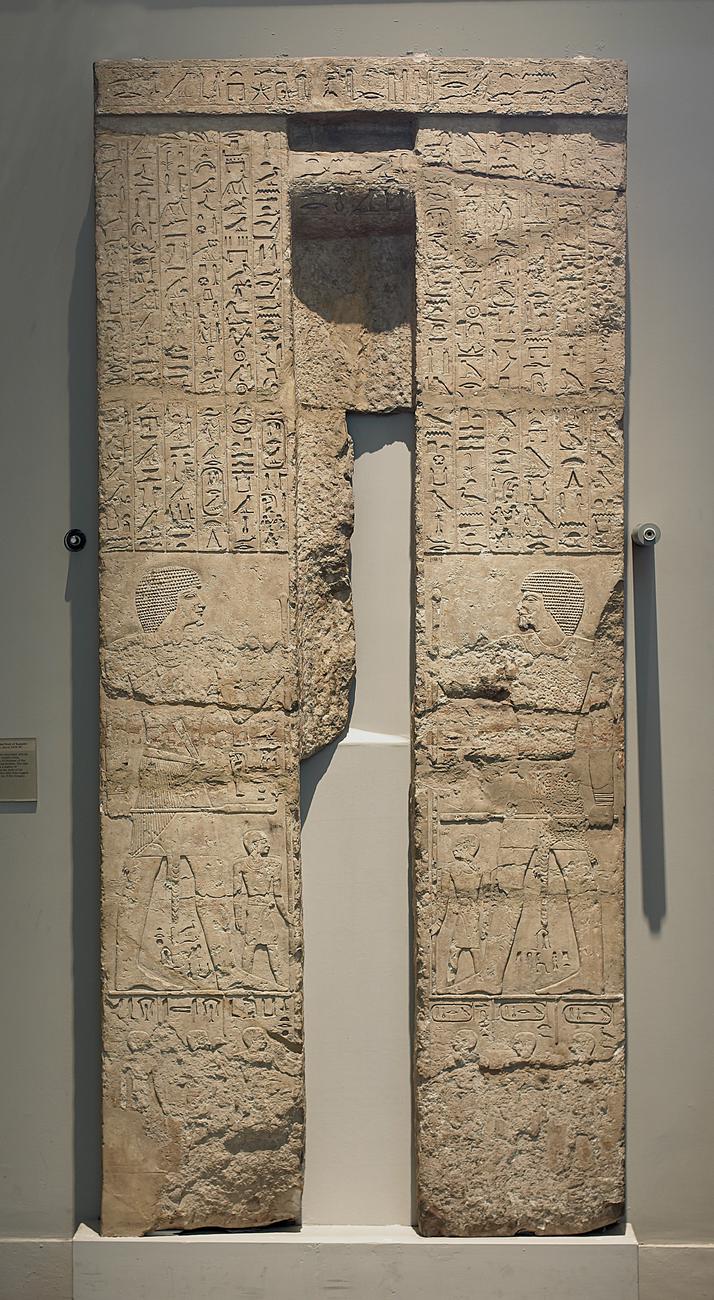
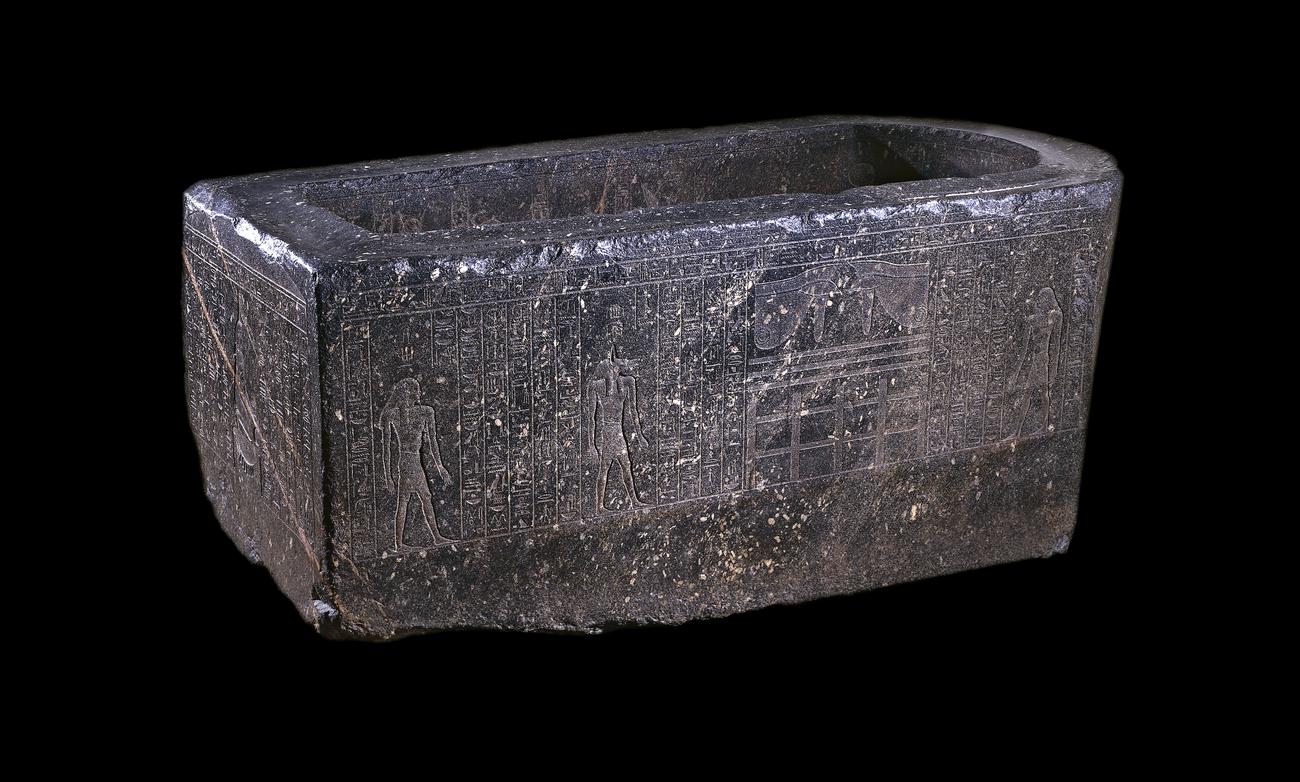
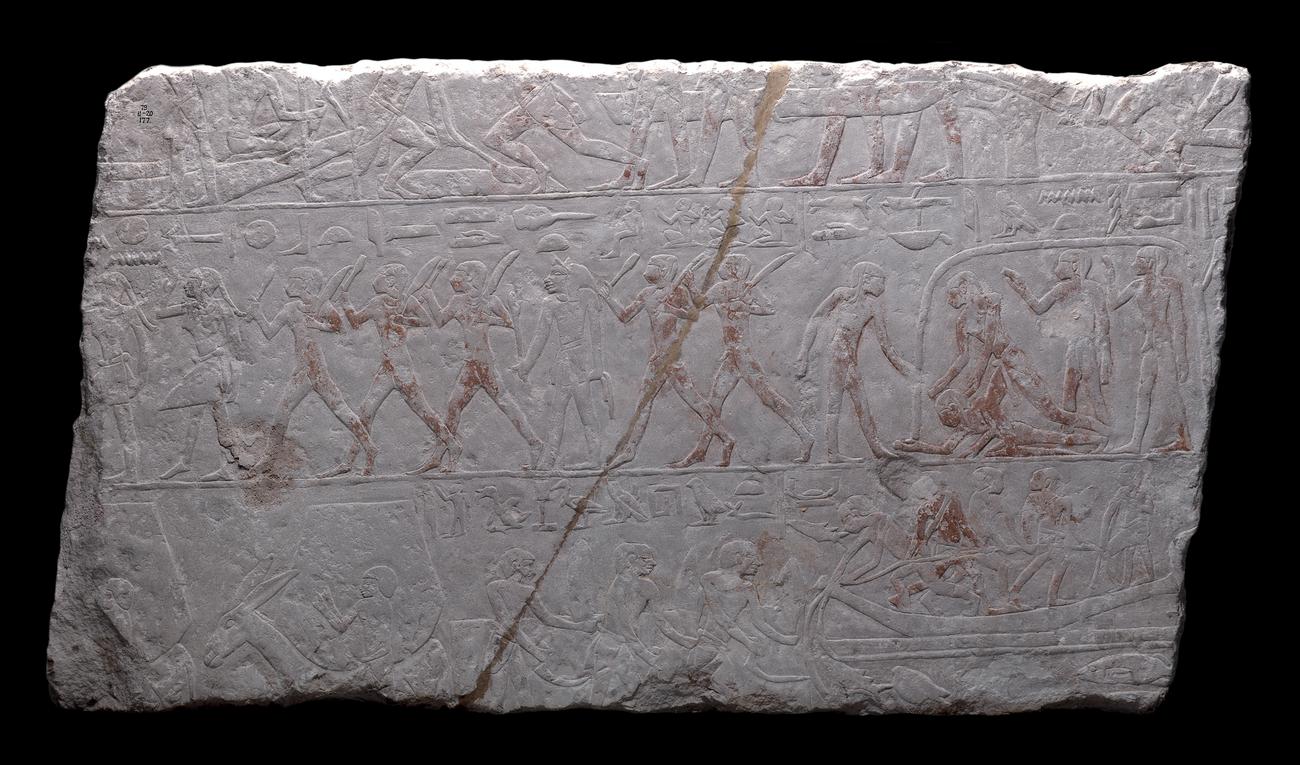
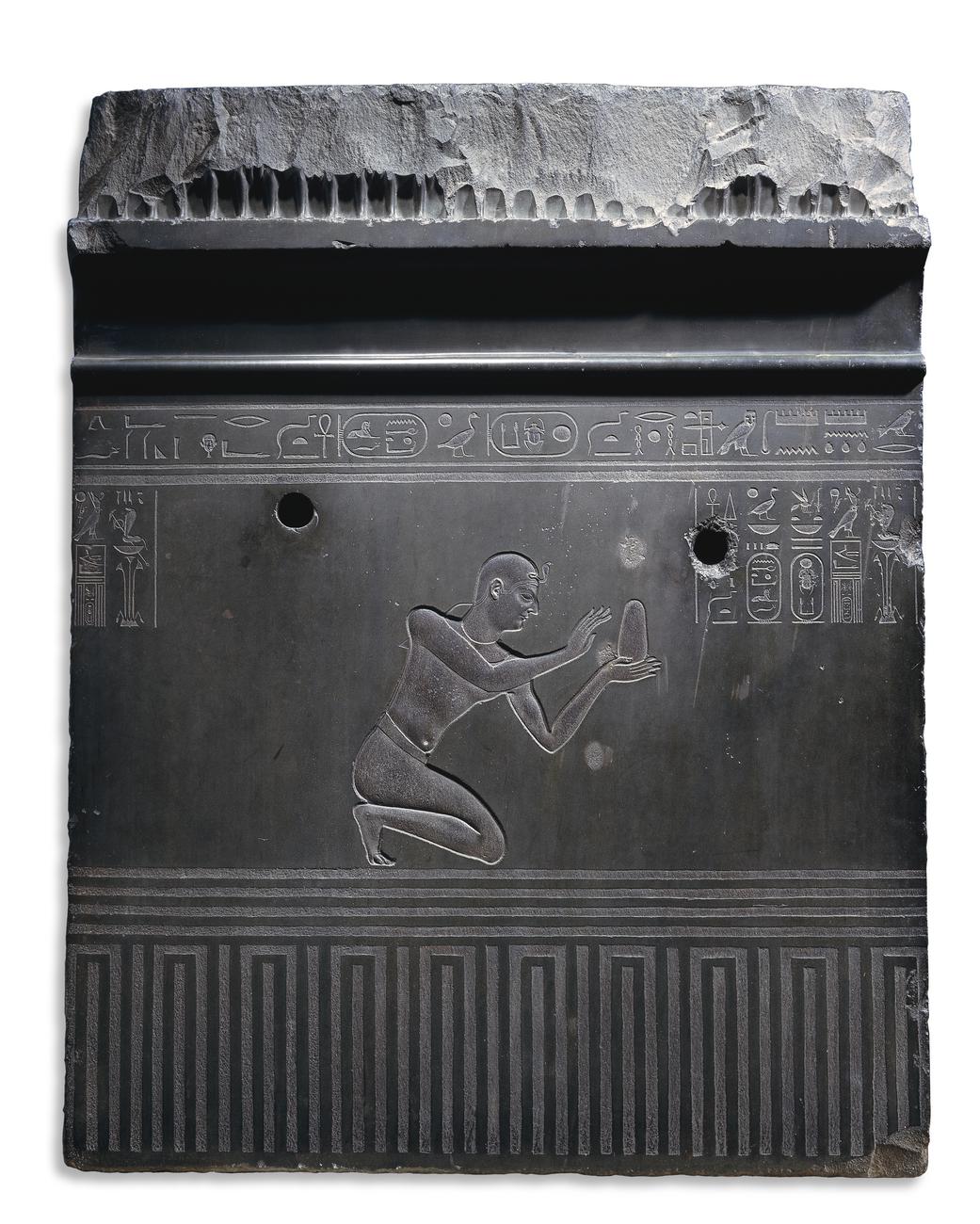
This architectural slab, dating to around 370 BC, comes from Egypt's 30th Dynasty. It is carved in sunk relief from greywacke stone and features scenes of offerings made by the king to deities.
Looking closely, you'll see an animal-headed god on one side, with King Nectanebo I kneeling before him. The other side would have originally displayed a row of cobras, though now only traces remain. Above the offerings, a row of falcons once graced the cornice — only their lower legs are preserved.
The style reflects typical 30th Dynasty characteristics, including long, waving fingers and a blocky body form. The king’s portrait, shown with a tight-fitting cap and uraeus, is particularly striking — a rare and detailed depiction of Nectanebo I.
This slab is one of five similar architectural fragments, likely from a structure in Heliopolis. Their matching size and decoration suggest they once formed a low wall between temple columns.
See it in person
30th Dynasty architecture is on display in Room 4 at the British Museum on Great Russell Street, Bloomsbury, London — free to enter. Choose British Museum on audioguide.london and take a photo of it to hear this free audio guide in six languages — no app download needed.
New, in beta. British Museum support has just launched and is still improving: over 1,000 objects so far, with more added all the time.