26th Dynasty sarcophagus
- Gallery: Room 4
- Culture: 26th Dynasty; Roman Period
- Date: 530BC (circa)
- Object type: sarcophagus
- Materials: siltstone
- Museum number: EA32
- Museum: The British Museum
- Collection record: British Museum website
- Image © The Trustees of the British Museum, shared under a CC BY-NC-SA 4.0 licence.
Listen to the free audio guide
About this object
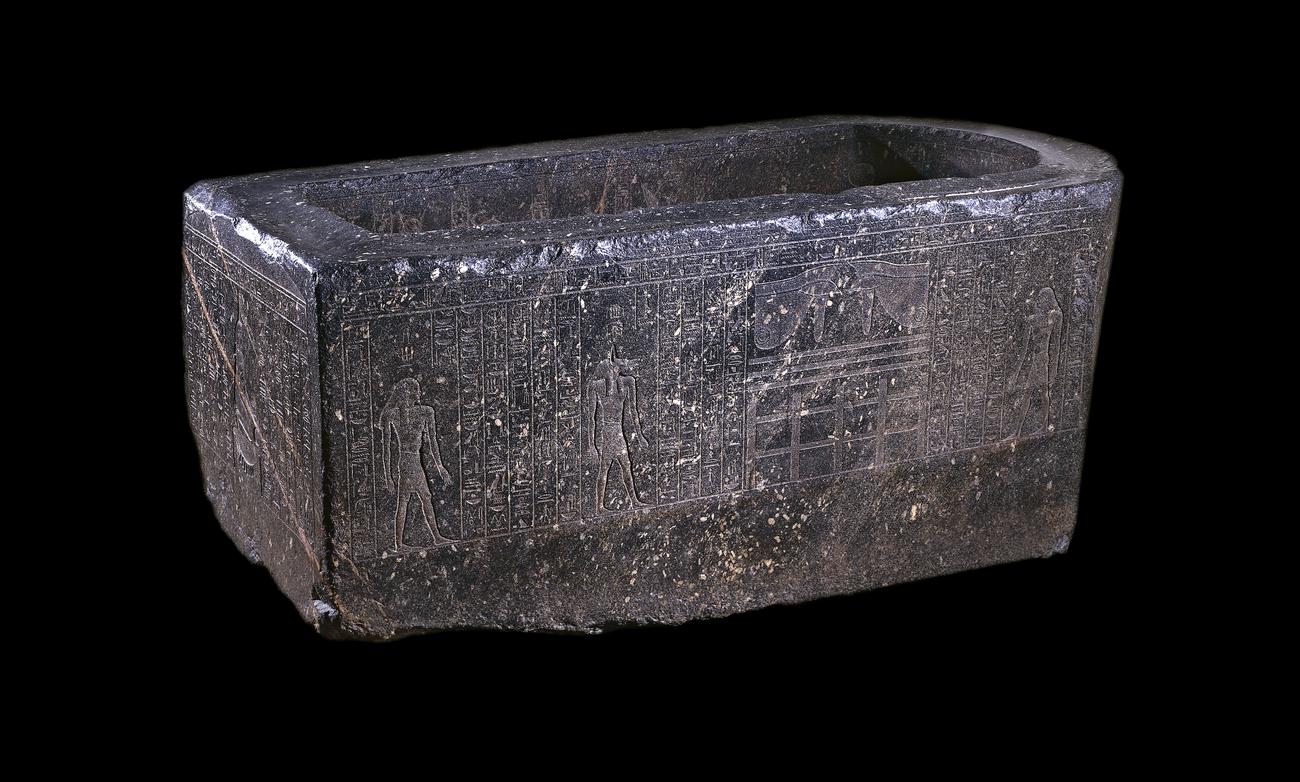
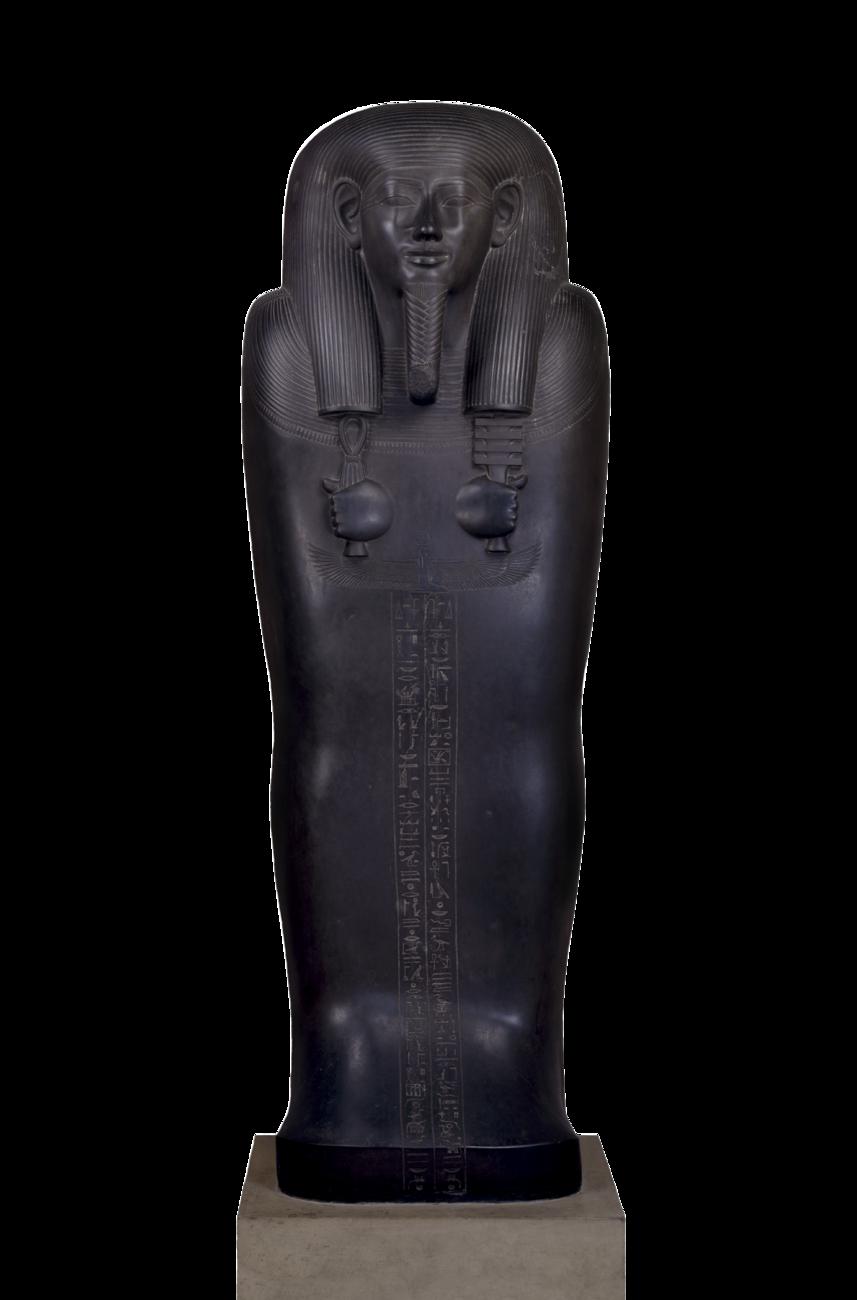
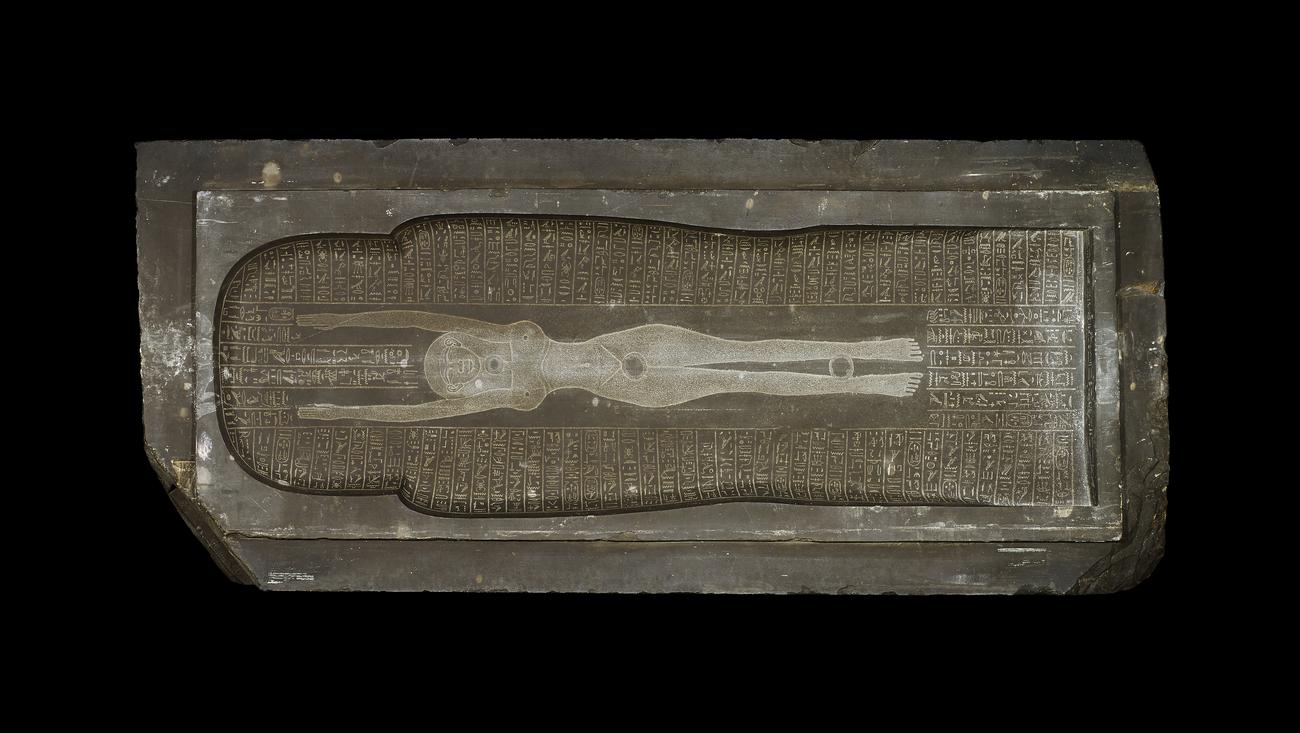
This is a black siltstone sarcophagus from the 26th Dynasty, carved for a woman named Ankhnesneferibra, a God's Adorer of Amun. Her title means she held a special religious role connected to the god Amun.
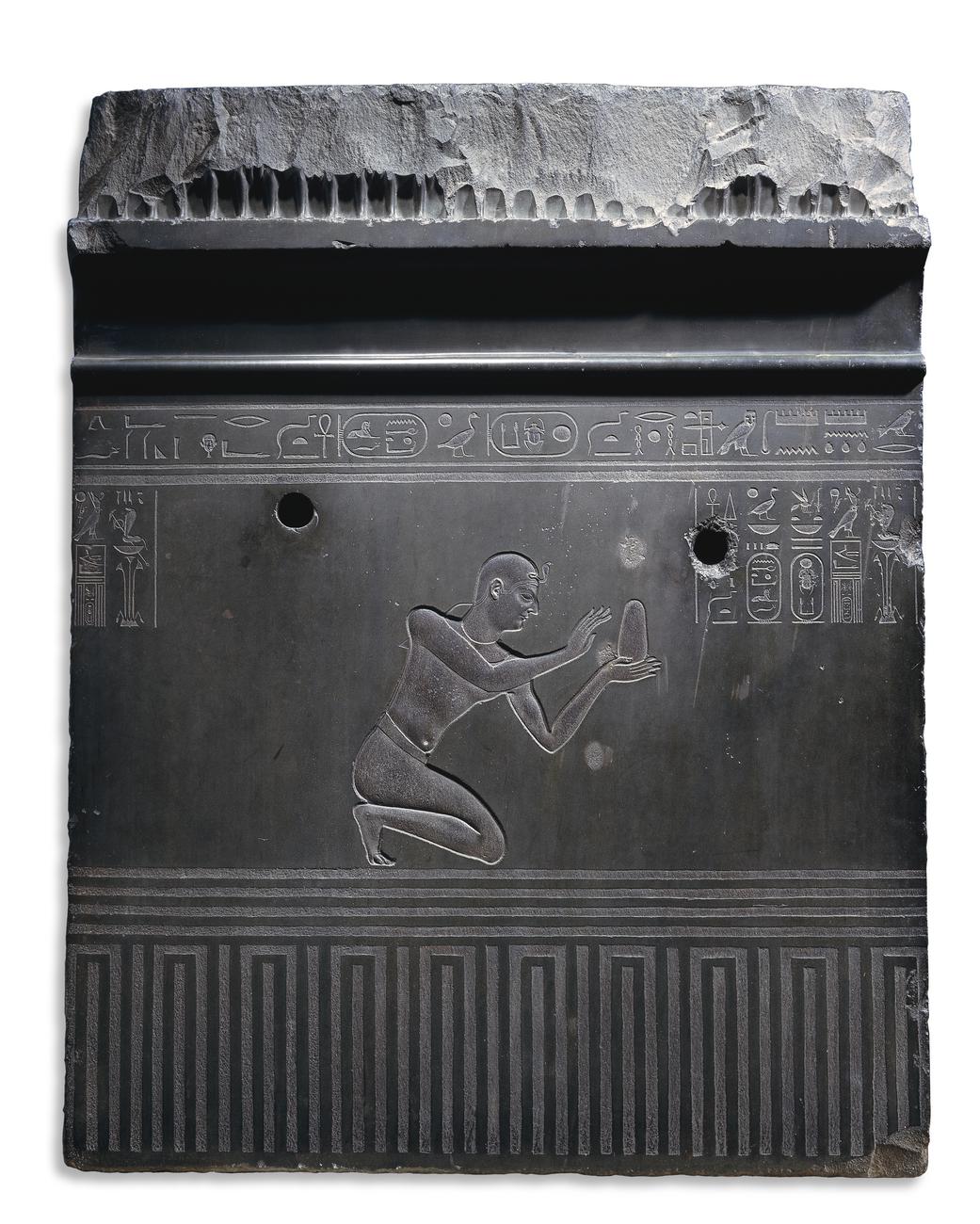
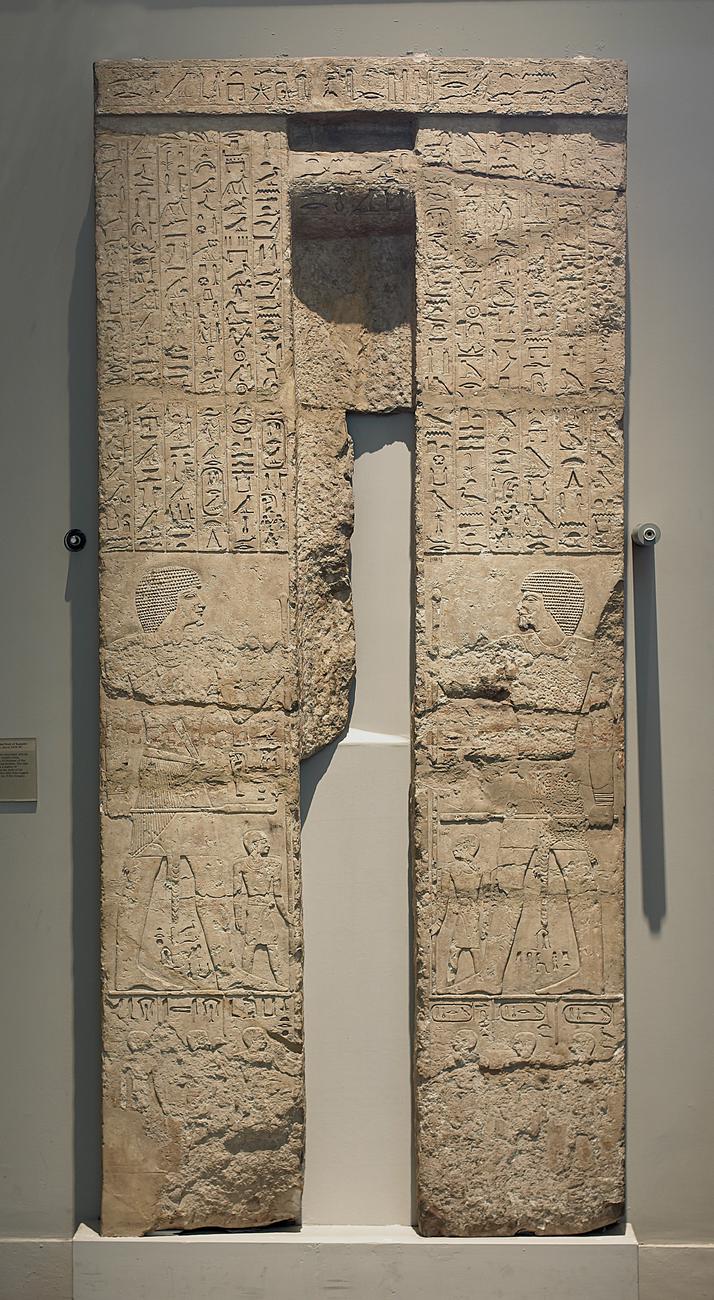
The outer and inner surfaces are covered in hieroglyphic inscriptions, carved vertically. These texts include prayers and invocations taken from sources like the Pyramid Texts—some of the oldest religious writings in ancient Egypt. Inside, the base features a relief of Hathor, the cow-eared goddess associated with the afterlife.
Later, during the Roman Period, a priest named Amenhotep-Pimontu reused the sarcophagus. He added a new row of hieroglyphs near the top and altered the inscriptions to reflect his own identity. The sarcophagus was carved from a single block of stone, with smooth outer surfaces and a shaped interior to fit the body.
Now you can see the deep hieroglyphs and the rough band at the base—possibly marking how deep the coffin once sat in the burial chamber.
See it in person
26th Dynasty sarcophagus is on display in Room 4 at the British Museum on Great Russell Street, Bloomsbury, London — free to enter. Choose British Museum on audioguide.london and take a photo of it to hear this free audio guide in six languages — no app download needed.
New, in beta. British Museum support has just launched and is still improving: over 1,000 objects so far, with more added all the time.