18th Dynasty statue
- Gallery: Room 4
- Culture: 18th Dynasty
- Date: 1350BC (circa)
- Object type: statue
- Materials: granodiorite
- Museum number: EA75
- Museum: The British Museum
- Collection record: British Museum website
- Image © The Trustees of the British Museum, shared under a CC BY-NC-SA 4.0 licence.
Listen to the free audio guide
About this object
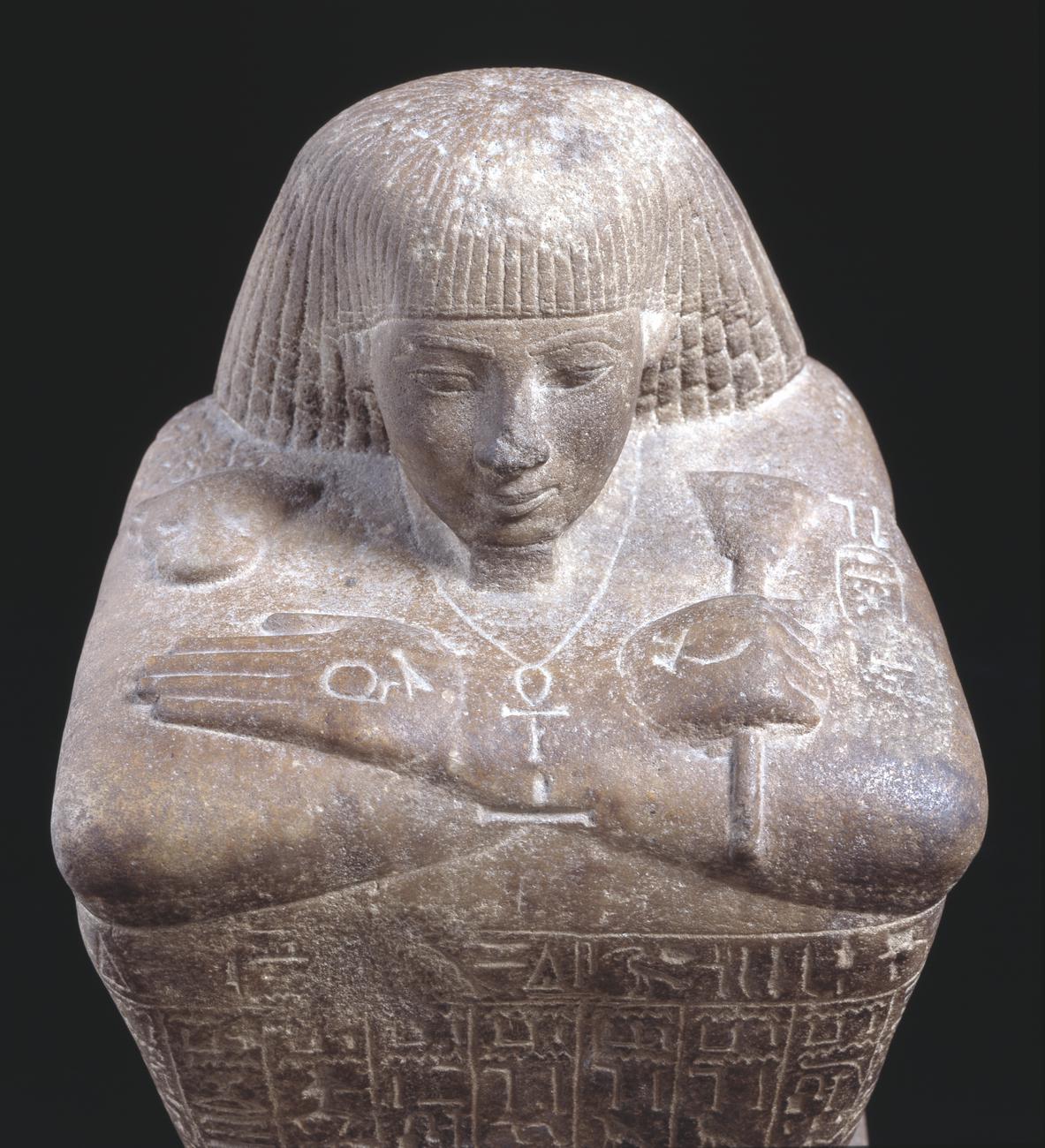
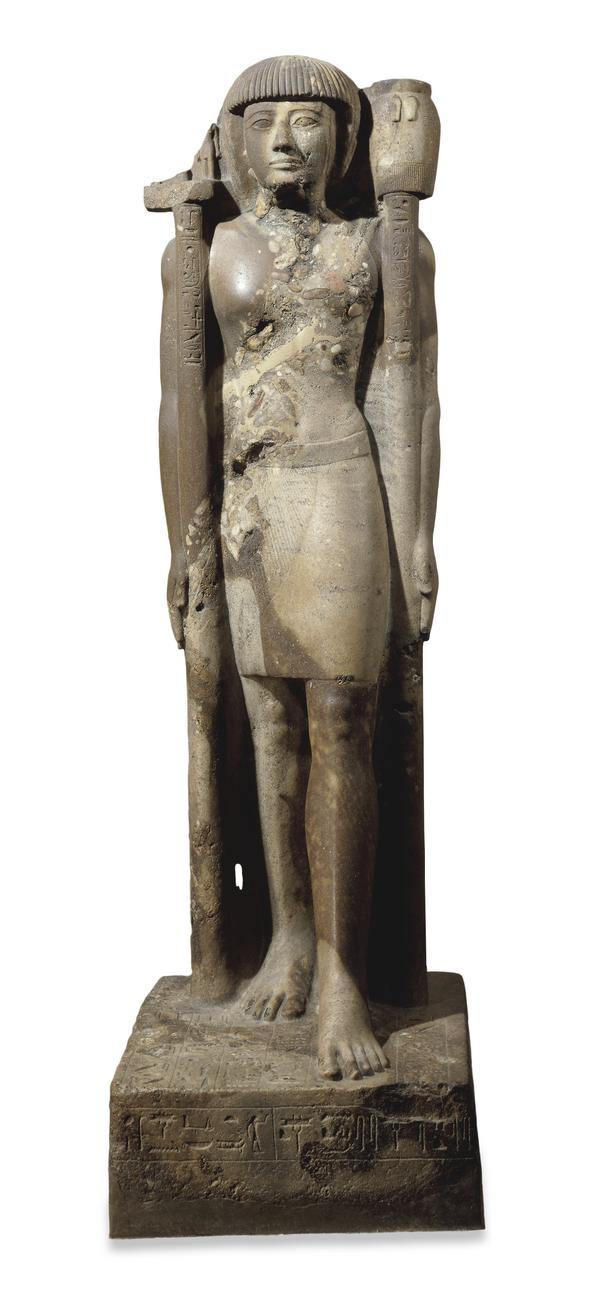
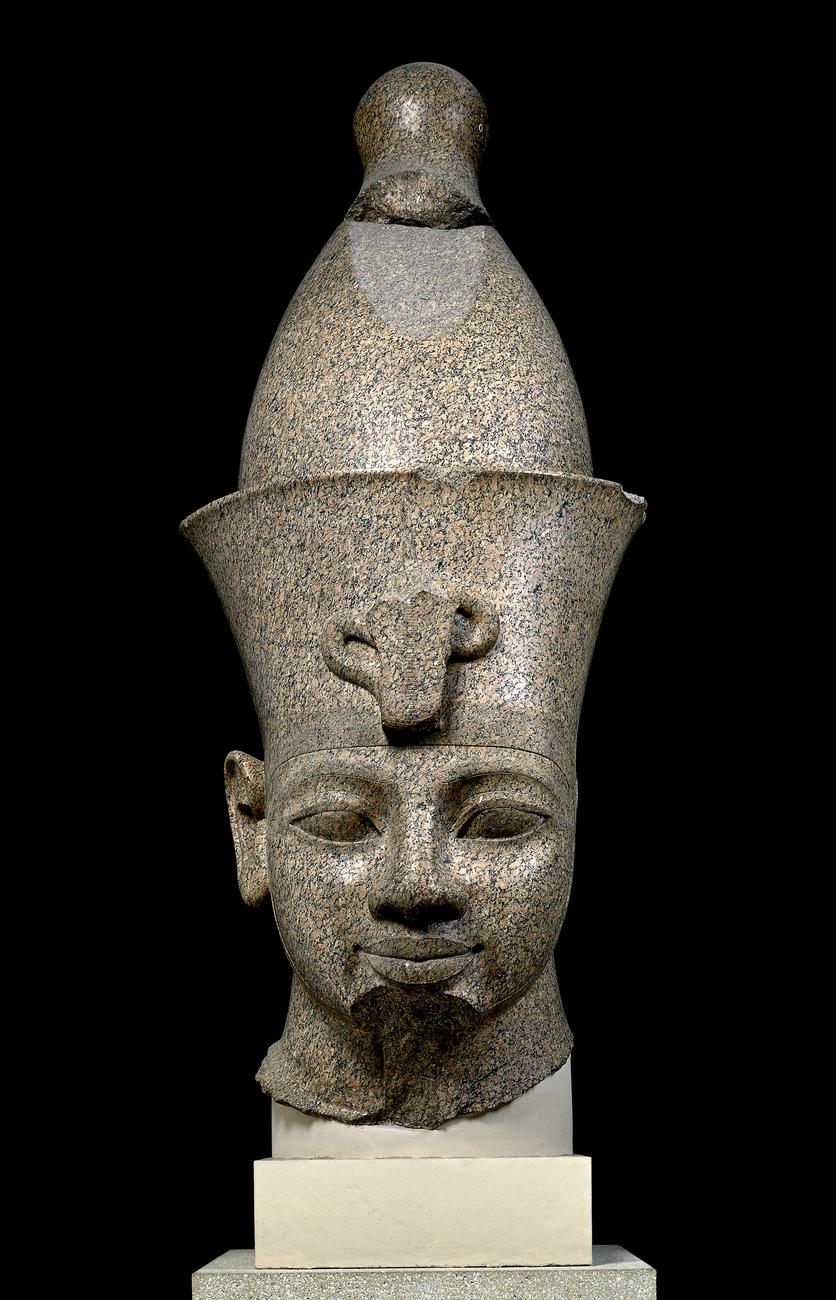
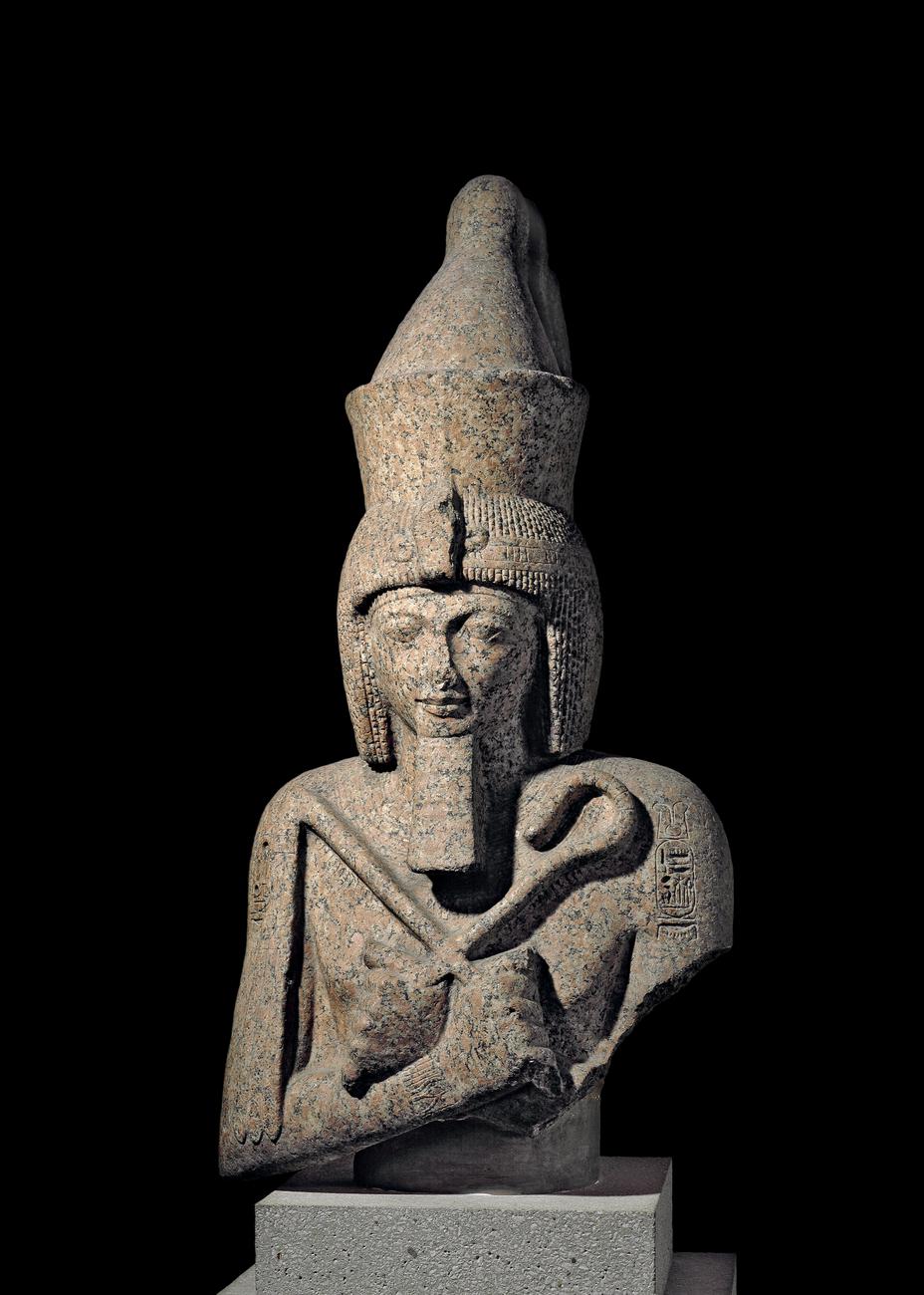
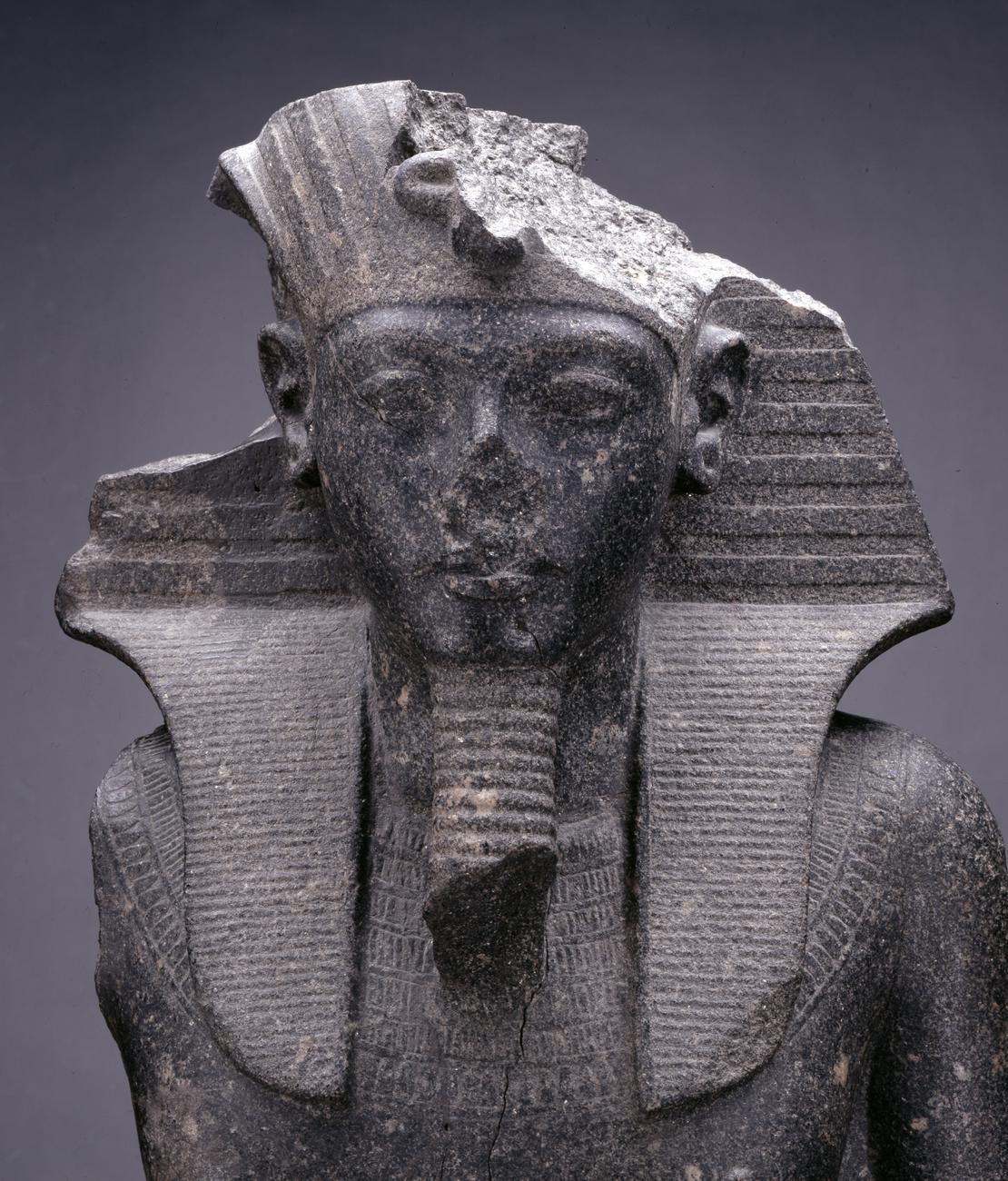
Before you stands a powerful granodiorite statue from ancient Egypt's 18th Dynasty, crafted around 1350 BC. It is the upper part of a grand figure depicting the young pharaoh Tutankhamun. His head is crowned with a royal nemes headcloth, and he wears a false beard and a pleated kilt. His right foot is lifted as if preparing to move forward.
The artwork is notable for a decorative pillar emerging from the statue. This pillar features low-relief carvings of lotuses, grapes, pomegranates, grain, and ducks—symbols of prosperity. The original base of the statue, adorned with papyrus motifs, is now lost.
The back pillar bears an inscription in hieroglyphs, naming King Horemheb. Though this sculpture was likely made for Tutankhamun, the inscriptions were added during Horemheb’s reign, possibly over a previous text. Scholars debate whether the transition was seamless or intentional.
This piece connects to broader traditions of temple sculpture at Karnak, where statues like this served religious festivals, symbolizing abundance and divine power—key themes in Egyptian culture.
See it in person
18th Dynasty statue is on display in Room 4 at the British Museum on Great Russell Street, Bloomsbury, London — free to enter. Choose British Museum on audioguide.london and take a photo of it to hear this free audio guide in six languages — no app download needed.
New, in beta. British Museum support has just launched and is still improving: over 1,000 objects so far, with more added all the time.